Tuesday, January 14, 2025

Still Praying for a Ceasefire


I've waited to write a blog today because of expected news about a ceasefire between Israel and Gaza. If this finally occurs it will be an answer to protests and prayers that have continued for 15 months. 

 Six months, almost to the day, from the beginning of our visit to Israel in 2023 the terrorist organization Hamas began an attack on southern Israel from Gaza. Within hours 1200 Israelis were dead and hostages were hurried back into the tunnels of Gaza. Many innocent people died, some of them who had worked for mutual understanding and peace for years. 

Israel retaliated almost immediately and the destruction of the Gaza territory has continued  unabated except for a brief ceasefire to exchange hostages and prisoners. A report just issued claims that about 64,000 Gazans have died, a significantly higher number than enumerated by the Palestinian health authority. By my math that's more than 50 Palestinians for every Israeli killed and thousands of the dead are children. At the same time hospitals, schools, places of worship, museums and archives have been obliterated. It is Winter in Gaza and people are living in tents with barely enough food to survive. People die every day, some from military attacks, some from starvation. 


We had a wonderful time in Israel as Ruth's sister and brother-in-law, residents in Israel for more than 30 years, took us from one end of the country to the other, at times passing close to Gaza as we travelled. They now live in the United States, having retired, but they were traumatized by what unfolding in the months before they returned to North Ameria, 

We saw them last week when they were in Canada and we chose not to discuss what has transpired because we have very different outlooks. We're all Christians and we all decry anti-Semitism, but Ruth and I are appalled by the level of destruction in Gaza and feel passionately about the Israeli response. I suppose we have a shared desire that this senseless loss of life come to an end in the land that is so important to the three great monotheistic religions. 

So, we wait, and hope, and pray. Here is the BBCs report today on what the ceasefire might entail: 

What could be in a ceasefire deal between Israel and Hamas?

It is hoped that a ceasefire deal will mean an agreement to stop the war which has been raging in Gaza.It is also expected to see an exchange of hostages and prisoners.Hamas seized 251 hostages when it attacked Israel in October 2023. It is still holding 94 captive, although Israel believes that only 60 are still alive.Israel is expected to release about 1,000 Palestinian prisoners, some jailed for years, in return for the hostages.

How would the ceasefire work? 

This ceasefire is expected to happen in three stages, once a deal is announced. Details are still being ironed out. Until an agreement is finalised, it is subject to change.

First stage 

A Palestinian official told the BBC that in the first stage, 34 hostages - expected to be civilians - would be exchanged for Palestinian prisoners. Three hostages would be released straight away, with the rest of the exchange taking place over six weeks.During this stage, Israeli troops would also begin pulling out of populated areas in Gaza.The Palestinian official said detailed negotiations for the second and third stages would begin on the 16th day of the ceasefire. 

Second stage 

In the second stage, the remaining hostages - soldiers and reservists - would be released, in return for a number of Palestinian prisoners.Of the 1,000 Palestinian prisoners Israel is thought to have agreed to release, about 190 are serving sentences of 15 years or more. An Israeli official told the BBC that those convicted of murder would not be released into the occupied West Bank.During this stage, Israel would also allow displaced people now in the south of Gaza to return to the north.Almost all of Gaza's 2.3m population have had to leave their homes because of the fighting.

Third stage 

The third and final stage would involve the reconstruction of Gaza - something which could take years. The Israeli official said Israeli forces would remain in a buffer, or security, zone inside Gaza during any ceasefire.


Monday, January 13, 2025

Hospitals for the Soul


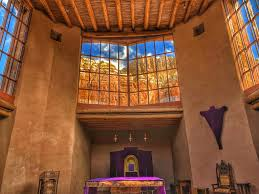
Monastery of Christ in the Desert


Christ in the Desert Chapel 


 In the morning, while it was still very dark, [Jesus] got up and went out to a deserted place, and there he prayed. And Simon and his companions hunted for him.  When they found him, they said to him, “Everyone is searching for you.”

Mark 1:35-37 NRSVue

1 Come and find the quiet centre in the crowded life we lead,

find the room for hope to enter, find the frame where we are freed:

clear the chaos and the clutter, clear our eyes, that we can see 

all the things that really matter, be at peace, and simply be.

Voices United 374 

On Friday I was in this curious bricks-and mortar retail store that sells books and little else. Imagine that such a place still exists! I was seeking Aflame: Learning from Silence,  the latest by Pico Iyer, a travel writer who has now written a couple of books on the contemplative life. I discovered that while they had it on order it won't be released until later this month. 

Lo and behold, Saturday's Globe and Mail newspaper -- I still get one newsprint paper a week, Luddite that I am -- had a feature article by none other than Pico Iyer. The Opinion section caption under the above photo was Soul Places: What we'll lose as monasteries disappear. The full page piece within had the bold headline HOSPITALS FOR THE SOUL. The article began: 

To get to the Monastery of Christ in the Desert, just past Georgia O’Keefe’s Ghost Ranch in northern New Mexico, you have to bump for 13 miles on barely paved tracks. Signs warn of “FALLING ROCKS” and “FLASH FLOODS” and the update posted by the guestmaster monk online alerts visitors each day to treacherous road conditions. “All-wheel drive vehicles are advised...”

Some of you may recall that I have written about visiting Christ in the Desert monastery and the Ghost Ranch retreat house called Casa del Sol some years ago. In fact, years ago while on what was largely a silent retreat at Casa del Sol -- in January --I set out in my rental car without either all-wheel drive or snow tires to drive those 20+ kilometres to Christ in the Desert, passing an SUV with both where the driver was dealing with a flat tire. I did stop and ask if he needed assistance and he assured me that AAA was on the way!

 This quixotic venture may have been bordering on madness but it was a remarkable experience into the silence and astonishing beauty of the Chama River valley with a soupcon of mild terror. 


            A reproduction of this painting of the Chama River by Georgia O'Keeffe is in our home

Iyer reflects on his experiences in various places of spiritual renewal, so many of them connected to time-honoured religious orders: 

Over more than three decades, I’ve stayed in monasteries in Japan, in Western Australia, in southern England and in California. Indeed, I’ve made more than 100 solitary retreats just in the New Camaldoli Benedictine hermitage in Big Sur, Calif. – sometimes even staying with the monks in their enclosure.

I never come away from the place anything other than refreshed, clarified and full of joy; though I’m not a Christian, the monks open their hearts and doors to me without hesitation, faithful to St. Benedict’s call to hospitality. At the same time, I’m a perfect example of what I increasingly worry about; I’m happy to stay for a few days, offering the small voluntary donation the monastery suggests, but I’ve made no formal commitment to a place that has changed my life. Over the 33 years I’ve been staying there, I’ve seen the number of oblates – lay people who vow to honour the congregation’s principles as much as they can in everyday life – surge from 700 to 800; in that same time, the number of full-time monks has shrunk to almost single digits.

We’re surrounded, of course, by ever more New Age sanctuaries, retreat centres and yoga-inflected spas, yet what will be lost, I often wonder, if formal monasteries and convents based on lifelong commitments close down? Unlike new spiritual centres, they are not as a rule centred around a single teacher, a doctrine every guest is encouraged to follow, or some theory of existence discovered five years ago; they’re tested millennia-old establishments that don’t depend on one fallible human or yesterday’s revelations. 

This resonates with my sensibilities when I stepped away from busy/hectic ministry to recollect myself in solitude and prayer. So often in these holy places, far from the madding crowd, I felt enveloped in the presence of God the Creator, Redeemer, Sustainer. They were truly "hospitals for the soul", noting that both hospital and hospitality come from the same root and hospitality is a Benedictine imperative.  

 While the range of my experience doesn't come close to Pico Iyer's I have been on retreat in Britain and France, along with a number of places in the United States and Canada. I was able to do this because of the funding available as a United Church minister through congregations and the denomination and I am very grateful. I appreciate what he is musing about here regarding the profound sense of tradition underlying the immediate gift of these settings, as well as the conundrum about the ongoing existence of such places. 

I haven't spent time in a monastery or convent or retreat centre since retirement, although we have intentionally sought out prayerful silence through these years. I am grateful for the reminder by Pico Iyer and now I'll need to decide whether to purchase yet another book...you know which way I'm leaning. 


Sunday, January 12, 2025

Baptism on a Frosty Morning


The baptism of Jesus

As the people were filled with expectation and all were questioning in their hearts concerning John, whether he might be the Messiah, John answered all of them by saying, "I baptize you with water, but one who is more powerful than I is coming; I am not worthy to untie the strap of his sandals. He will baptize you with the Holy Spirit and fire.

His winnowing fork is in his hand to clear his threshing floor and to gather the wheat into his granary, but the chaff he will burn with unquenchable fire."

Now when all the people were baptized and when Jesus also had been baptized and was praying, the heaven was opened, and the Holy Spirit descended upon him in bodily form like a dove. And a voice came from heaven, "You are my Son, the Beloved; with you I am well pleased."

Luke 3:15-17, 21-22

We tend to think of the ever-expanding Summer season as a quiet time in congregational life but these next few weeks before the beginning of Lent could be described as the doldrums of the Christian year for liturgical churches. The hangover from Christmas activities, lots of sickness, travel for oldsters, often results in lower attendance and a heapin' helpin' of "whatever."

Into this floats the Baptism of Christ, a Sunday that seemed a bit incongruous to me living in frosty Canada. It conjures up images of a polar bear swim or the crazy Russian tradition of immersion in ice water on the Feast of Epiphany, which is next Sunday in the Orthodox calendar. No thank you. 

There was supposed to be a baptism at Trenton United this morning but illness in the family meant that this sacrament was postponed. Baptisms are few and far between in the United Church these days as our congregations age and fewer younger households feel compelled by extended family expectations to "have the kid done." I baptized lots of children, teens, and some adults where it was a meaningful experience rooted in Christian faith. I was also uneasy at times because it did seem to be a matter of convention or pressure. 

When I served in Halifax I was contacted by a young couple from a wealthy Halifax family living in Toronto about flying in the next weekend to have their newborn baptized. They were not church attenders anywhere, nor did their local family worship with us anymore, but this was their traditional congregation. I suggested that this was a sacrament of commitment and that they might get connected with a faith family in Toronto first, then we could talk, but their sense of entitlement was astonishing. They even suggested that there would be a nice financial contribution to the church if we accommodated them. I was diplomatic but firm. I wonder how John the Baptist would have responded? I notice that the lectionary reading leaves out John's rather un-pastoral "brood of vipers" declaration aimed toward certain religious folk. 

I had many heart-warming and holy moments baptizing little ones and often sensed the presence of the Holy Spirit. I certainly did wonder many times whether by baptizing babies we had diminished the fire of radical commitment in our desire to model inclusion.  

Polar dip, anyone? 

One of the key elements in The Celebration of Baptism or The Renewal of Baptismal Faith is a declaration of faith made by the candidate or on their behalf.  The baptismal vows offered in this resource reflect an understanding of baptism as both a gift from God and call to Christian discipleship.  While the order and wording of the vows may vary according to context, it is important that they reflect the following core elements:

a. profession of faith in the triune God;

b. commitment to seek justice and resist evil;

c. commitment to follow the way of Jesus Christ;

d. commitment to the mission and ministry of the Church.

from Baptism Preamble in Celebrate God's Presence UCC


Saturday, January 11, 2025

The Wampum Belt & an Openness to Learning


Lots of United Church folk have participated in the Kairos Blanket Exercise (KBE), an experiential teaching tool that explores the historic and contemporary relationship between Indigenous and non-Indigenous peoples in the land we now know as Canada. Developed alongside Indigenous elders and educators the KBE has been offered thousands of times in churches, schools, and community centres.Part of the presentation is about two-row wampum, a wampum belt that symbolizes a treaty agreement betwween Indigenous peoples and European colonizers.


I'm currently reading the book Nation to Nation: A Millenium in North America by Kathleen DuVal. She explores the value of beaded wampum as a form of currency when many European countries had not yet developed standardized currency or accepted gold and silver as literal "coin of the realm." There was no paper money either. Wampum was a sort of legal tender and it was also symbolic of much more in terms of identity and reciprocity. 


Duval points out that when the Dutch supposedly purchased Manhattan from the Munsees in 1626 for $26 worth of beads it was actually a transaction involving wampum. It was the basis for an agreement allowing the Dutch to establish a trading post but the Munsees continued to live there. Rather than this being an example of naive "savages" making a bad economic deal it was meant to establish a good-faith relationship. I've never heard this explained before and it is reminder of the way history is often written by colonizers.

Those of us from European backgrounds, including religious institutions, have so much to learn about relationships with Indigenous peoples and the opportunities are there, if we open to exploring them. 

In August of 2012, at the 41st General Council, The United Church of Canada acknowledged the presence and spirituality of Aboriginal peoples in the United Church by revising the church's crest. 

The crest changes include incorporating the colours often associated with the Aboriginal Medicine Wheel. The Medicine Wheel, which reflects respect for diversity and interdependence, is often represented in the four traditional colours of yellow, red, black, and white, which incorporate important teachings from the four directions, the four stages of life, and the four seasons. The placement of these colours will vary according to the traditions of the nation. 

The Medicine Wheel teaches us to seek balance in the physical, mental, emotional, and spiritual aspects of the circle of life. The crest changes also include the addition of the Mohawk phrase "Akwe Nia'Tetewá:neren" [aw gway--  nyah day day waw-- nay renh], which means "All my relations."


Friday, January 10, 2025

Fire Storm


 I have never watched an episode of the successful TV series, Fire Country and never will. It's about a convict who joins a prison firefighting program to shorten his sentence. While the premise seems implausible, in the States prison inmates are often coopted into what amounts to slave labour for businesses and companies, so why not firefighting. The IMDB synopsis offers: "A huge untapped potential, but ruined by the high school level melodramatic dialogue. Viewers tune in for the fire action, not the silly high school drama."  I managed to figure that our from seeing the occasional trailer. I have to admit, though, that the developers have tapped in to the grim reality of the growing threat of wildfires in California, where it is set, as well as British Columbia where it is filmed.

A television series may be populated by good-looking heroes who save the day but we are watching in real time the terrible destruction wreaked by wildfires that can't be contained. Five of them are currently burning around and in Los Angeles, one of the largest cities in the United States and they are basically uncontained. As I write an estimated 10,000 buildings, mostly homes have been destroyed, hundreds of thousands of residents are now fire refugees, and people have died. Schools, places of worship, shops and restaurants have been reduced to ashes. I have no doubt that the efforts of firefighters have been heroic but they quickly ran out of water and their efforts were no match for the fierce winds fanning the flames. The wealth or stardom of some of the residents in areas of LA did not insulate the residents from destruction. 


One of last year's celebrated books was John Vaillant's Fire Weather.One of the reviews called it "prescient" because it vividly addresses the almost incomprehensible scope and ferocity of wildfires and the previously unimaginable threat not only in remote areas but to towns and cities. 

Once again I saw an article using the phrase "biblical in proportions" to describe the devastation in California and once again I was mildly annoyed. The implication is that this is somehow related to a severe judgement by the Creator, akin to the flood in Genesis. Of course, in that story God promises never to punish humanity in this way again. There is no assurance in this covenant that humans won't be able to do this to themselves and there is little doubt that what is happening in terms of severe weather events is accelerated by climate change. No place is prepared for the enormity of these events and politicians are either deniers (the Orange Menace, PP) or unwilling to make changes that might annoy their constituents. So why blame God, even if it is a mindless use of a term? Granted the scenes from the fires do seem apocalyptic. 

We can pray for those who have experienced terrible loss and those who put themselves in harm's way to battle these fires. We can also pray that our leaders will step up and make heroic decisions for the sake of all creatures and the future of the planet. 


Thursday, January 09, 2025

Jimmy Carter, Christian


Today is the state funeral for former US President Jimmy Carter at the Washington National Cathedral, a place of worship that seats four thousand. There is a clergy person whose sole responsibility is the logistically demands of such a service, including getting four former presidents and current President Joe Biden in and out of the building. The flower organizer began in this role in 1964 (she's now 83) overseeing several other funerals for presidents while this is the first state funeral for the talented organist who is in her 20s.  


 I have to wonder if Carter would give a slight shake of his head and offer a characteristic wry smile at all the pomp and circumstance that goes with this event. When Carter and his family worshipped in Washington during his presidency they joined a Baptist church near the White House and daughter Amy was baptized there at age nine. I like that the Carters transferred their membership from the Baptist congregation in his hometown in Plains, Georgia. According to the First Baptist website 

During the 48 months of his term, President Carter attended Sunday services at First Baptist more than 70 times, according to the National Archives. More than a dozen times he taught Sunday School to the church’s Couples Class from the Sanctuary balcony.

This was impressive attendance for the so-called Leader of the Free World. I doubt that Jimmy was golfing on those other Sundays.

We know that in his post-presidency life Carter returned to the small congregation in Plains where he grew up and taught Sunday School as well.  He eventually left the Southern Baptist Convention over their rigid views regarding women in leadership. In a 2000 newspaper interview he said

“I’m familiar with the verses they have quoted about wives being subjugated to their husbands. In my opinion, this is a distortion of the meaning of Scripture. … I personally feel the Bible says all people are equal in the eyes of God. I personally feel that women should play an absolutely equal role in service of Christ in the church.”

Carter may have been the most genuinely Christian of all presidents in terms of personal devotion, walking the walk in service to others, and even in his principles to avoid military conflict as president. He was proud of that record and felt that it was consistent with his devotion to the Prince of Peace. 

Later today there will be a funeral service at Maranatha Baptist Church in Plains, and he will be laid to rest on the family property. Again, thank God for the witness of Jimmy Carter. 


Wednesday, January 08, 2025

The Reality of Grief for God's Creatures


Southern Resident killer whale Tahlequah carries her dead calf near Puget Sound on Washington state's northwest coast on January 1. 
Candice Emmons/NOAA Fisheries

But we do not want you to be uninformed, brothers and sisters, about those who have died,[so that you may not grieve as others do who have no hope.  For since we believe that Jesus died and rose again, even so, through Jesus, God will bring with him those who have died.

1 Thessalonians 4: 13-15 NRSVue

If you believe in forever

Then life is just a one-night standIf there's a rock n' roll heavenWell you know they've got a hell of a band, band, bandThey've got a hell of a band

The Righteous Brothers

In 2018 an orca or killer whale in Puget Sound off Washington state  known as Tahlequah, captured our attention by carrying her dead calf for 17 days and more than 1600 kilometers in what certainly seemed to be an act of mourning.

Late this past December she gave birth again but researchers were immediatelyt concerned about the health of her latest calf and on New Year's Eve it was confirmed dead. Once again Tahlequah has been carrying her dead "child" and who knows how long this will continue.

We can't know the minds of other creatures yet it seems clear that many species including elephants, dogs, certain birds, and other cetaceans are aware of the deaths of their companions and family members and they grieve, sometimes with ritual behaviour. 

Humans mourn as well, often with specific rites including expectations for interrment and length of grieving. What I learned during my decades in ministry was that even when we have our conventions around funerals and memorial services they certainly aren't always the same and the nature of grief is unique to each person. 

Individuals who loved and cared for a lost loved one with devotion sometimes moved on relatively quickly, or so it seemed. In some circumstances the deceased was a miserable so-and-so who made every day difficult for those around him/her yet the sense of loss was profound and lasting within the family. Some expressed grief with great emotion and others just didn't. 

Having a Resurrection hope was great comfort for certain people yet not for others. I was often surprised by the elaborate notions of the afterlife that some held, perspectives that I didn't share and wondered how they developed them in the first place (see song lyrics above). I did my best to keep my eyebrows from shooting up!

In the past few weeks I've become aware of the deaths of two elderly women (more elderly than me!) who had been "promoted to glory", as the Salvation Army used to describe it. Both were former parishioners from different congregations so it was my role to be their pastor -- my job. Still, they were intelligent, creative, faith-full individuals and I was fond of both of them .I felt the pang of loss when I got the news. 

There are so many unique persons I have mourned over time, along with a few pets, and I suppose I carry them in my heart and mind, and I hope I always will. I wonder if it's appropriate to say a pray for Tahlequah in her grief? 

Tuesday, January 07, 2025

Governing Righteously & With Justice


 Give the king your justice, O God, and your righteousness to the king's son;

That he may rule your people righteously and the poor with justice;

That the mountains may bring prosperity to the people, and the little hills bring righteousness. 

He shall defend the needy among the people; he shall rescue the poor and crush the oppressor.

He shall live as long as the sun and moon endure, from one generation to another.

He shall come down like rain upon the mown field, like showers that water the earth.

In his time shall the righteous flourish; there shall be abundance of peace till the moon shall be no more. 

The kings of Tarshish and of the isles shall pay tribute, and the kings of Arabia and Saba offer gifts.

All kings shall bow down before him, and all the nations do him service.

For he shall deliver the poor who cries out in distress, and the oppressed who has no helper. 

He shall have pity on the lowly and poor; he shall preserve the lives of the needy.

He shall redeem their lives from oppression and violence, and dear shall their blood be in his sight. 

PSALM 72:1-7, 10-14 NRSVue

Many of you will know that yesterday, January 6th, was the Feast of the Epiphany in the Christian liturgical calendar. Following the twelve days of the Christmas season the church recognizes the journey and arrival of the Magi or Wise Men, astronomers and astrologers. They sought a king, the Messiah, and found the toddler Jesus, born a Jewish peasant. 

Sadly, January 6th is also a day of infamy in the United States when the former president, now inexplicably the president-elect, fomented an insurrection. The supposedly sacrosanct Capitol building was overrun by hooligans who wanted to subvert democracy and put an emperor or dictator -- not a duly elected president -- into control. While this effort failed, those who were convicted of crimes from that day may soon be pardoned. So much for democracy and the rule of law. 


I read the lectionary passages from yesterday which include the "arise your light has come" passage from Isaiah and the story of the Magi found only in Matthew's gospel. There were also verses from Psalm 72 which speak of a ruler who "shall deliver the poor who cries out in distress, and the oppressed who has no helper. He shall have pity on the lowly and poor; he shall preserve the lives of the needy." In no way does this biblical vision jibe with the relentlessly "us and them" rhetoric of the incoming president and his vice-president who have demonized immigrants and plan to deport millions of them. The president-elect has surrounded himself with unelected, self-serving billionaires to the extent that he has been tagged with the moniker "President Mump" in recognition of his new advisor who is apparently the wealthiest man in the world. 

It's curious that this Psalm 72 selection omits verse 8: 

May he have dominion from sea to sea
    and from the River to the ends of the earth.

This is the source of the official motto of Canada "mari usque ad mare" and why in 1867 we were declared a dominion. Yesterday, January 6th, also marked a significant regime change in this country and we'll see how far to the right Canadians are willing to travel in the days ahead. Will we continue a social contract where people are governed righteously and the poor with justice? 

1 Arise, your light is come! The Spirit's call obey;

show forth the glory of your God, which shines on you today.

                        Voices United 79


Monday, January 06, 2025

The Many Facets of Forgiveness


Yesterday I preached on forgiveness with the Trenton United congregation and afterward a member said that my message was helpful, for which I was grateful. I commented that I could speak on the subject for ten Sundays in a row (that won't happen!) to examine the many facets of of forgiveness.

Later in the day I saw that former pastor and scholar Richard Hays had died. I've read articles by Hays and appreciated his thoughtfulness but I hadn't realized that for years he was anti-LGBTQ2S and his work on this subject was often quoted by conservatives. His mind changed though because of his scholarly research but also because of interactions with LGBTQ2S students in the seminary where he taught and in different congregations. In 2024 his final book was published in which he explains his change of heart. According to RNS:

For much of his career, he was perhaps best known for his 1996 book, “The Moral Vision of the New Testament,” in which he argued that same-sex relationships were “one among many tragic signs that we are a broken people, alienated from God’s loving purpose.” His well-respected scholarly work was cited by Christian leaders who viewed same-sex relationships as sinful and who opposed LGBTQ affirmation in churches.

This past year, Hays publicly changed his mind — in what he described as an act of repentance for the way his work had been used to harm LGBTQ people and to divide Christians — in a new book, “The Widening of God’s Mercy: Sexuality Within the Biblical Story,” co-authored with his son, Christopher Hays, an Old Testament scholar. 

Many of us grew up as low-grade homophobes, if that's not an oxymoron. We may not have been particularly mean-spirited but we were often mildly mocking and dismissive without realizing that LGBTQ2S persons were in our families and congregations, afraid to come out, yearning to be accepted. We made what were shallow "love the sinner, hate the sin" pronouncements that were disingenuous. I was one of those persons and I regret it. My experience with friends and colleagues beginning in my seminary days in the late 1970s brought about my change of heart and mind and I trust that this change of perspective is consistent with the gospel of Jesus Christ. I'm grateful for their patience and guidance. 

Back to forgiveness. A pastor in the US, Zach W. Lambert, tweeted about his experience with Hays a few months ago:

Richard Hays (one of the world’s leading New Testament scholars) passed away yesterday. His final book, The Widening of God’s Mercy, came out just a few months ago. In this book, he details how his mind changed on LGBTQ+ inclusion and affirmation after building relationships with queer Christians and studying the Bible alongside affirming scholars. He also apologizes for his previously non-affirming stance. I was with him in October at an LGBTQ+ Christian conference where he reiterated his repentance and asked for forgiveness to a room filled with hundreds of queer people. Through tears, a young man shouted “thank you, Dr. Hays! We forgive you!!” It was a powerful moment that I’ll never forget. In his late 70s and with failing health, Dr. Hays could have easily chosen never to address his changing belief publicly or correct his earlier work. I’m so grateful he chose this brave path instead. I believe Richard is with Jesus now and hearing those beautiful words from his Savior, “well done, my good and faithful servant.”

Hays had his personal epiphany and on this Day of Epiphany we can ask God to widen our mercy in Christ's name.


Sunday, January 05, 2025

Forgiveness in the Year of our Lord 2025


When it was evening on that day, the first day of the week, and the doors were locked where the disciples were, for fear of the Jews, Jesus came and stood among them and said, “Peace be with you.” After he said this, he showed them his hands and his side. 

Then the disciples rejoiced when they saw the Lord. Jesus said to them again, “Peace be with you. As the Father has sent me, so I send you.” When he had said this, he breathed on them and said to them, “Receive the Holy Spirit.  If you forgive the sins of any, they are forgiven them; if you retain the sins of any, they are retained.”

John 20:19-23 NRSVue

This morning I am leading worship at Trenton United, our home congregation. We'll be ushering in the New Year on the demanding subject of forgiveness. I can say with confidence that during almost four decades in ministry I had more conversations with parishioners about forgiveness or unforgiveness than anything else, other than physical illness. I could add that it probably began when I was a chaplain intern at Kingston Penitentiary during seminary, which was forgiveness boot camp. 

I chose the story from Genesis about Joseph forgiving the brothers who sold him into slavery and the John passage where the Resurrected Christ tells his astonished disciples that there was a give and take to forgiveness. While the former has a Hollywood ending the latter has always intrigued and even mystifed me. 

I also shared about the forgiveness project of the early 2000s in schools in a conflcted area in Northern Ireland. Even though the Good Friday Peace Agreement was signed in 1998 anger and hatred continued to simmer and erupt. The school project was to establish Forgiveness schools with intentional practices for reconciliation, including kids in conflict putting on Forgiveness Glasses (above) to see their adversaries in different ways. Despite the skepticism of teacher and principals the tone of the schools changed.

In a world of anger, hatred, and violence at every level of human encounter we can pray that forgiveness is a "down to Earth" necessity and possibility, not "pie in the sky" wishful thinking. I suppose we're all in the school of forgiveness for a lifetime, seeking mercy, offering it to others, starting again. 


A poster in one of Irish schools begins with "in this class" but it could say "in this family" or "in this congregation...

In this class 

I am loved 

I am smart 

I am brave

I am thankful

I am forgiving

I AM CHOOSING LOVE

Saturday, January 04, 2025

Holidays & Partner Violence Shouldn't Go Together


Calgarians gather during a candlelight vigil for Ania Kaminski and her father Stanislaw Wardzala in the northwest Calgary community of Tuscany on Friday, January 3, 2025. Jim Wells/Postmedia

One of our neighbours, a smart and pleasant young woman worked Christmas Eve and Day, then New Year's Eve and Day. Ugh. She did so in her professional role as a mental health worker alongside police officers responding to situations of domestic disturbance and violence. Apparently nothing says "Merry Christmas and Happy New Year" like violent encounters with those you supposedly love.

 The gender-neutral term "intimate partner violence" is used commonly now but we know that the vast majority of these situations are men hurting and killing women. 

Over the holidays there were two high-profile cases in Canada, one in Calgary and the other in Halifax where men murdered their partners and killed the fathers of the two women. They then killed themselves, in one instance leaving three children orphans. It is hideous cowardice and far too common a scenario. 


Experts say that despite years of education and awareness campaigns there has been a steady rise in intimate partner violence. Some call it an epidemic, a crisis the Ontario government is reluctant to declare as such through the proposed Intimate Partner Violence Act, Bill 173.

As I've written before, there is little training or encouragement in Christian communities to address this ugly reality. For years conservative churches encouraged women figure out how to be better wives or just tough out the abuse of partners. While that is changing there has to be an awakening within denominations and congregations about this. Every congregation will have people dealing with partner violence in some way and shame is often an impediment to reaching out for help.  

I know, a gloomy topic at the beginning of the year but we can decry this sin and ask how we can make a difference. Holidays and IPV should never go together. 


Friday, January 03, 2025

Christ is Still in the Rubble


Rev. Isaac Munter

Do you recall the attention given to the Nativity display at a Lutheran church in the West Bank last year. It was called Christ in the Rubble and it invited us to consider the Christ Child amidst the destruction of war in that region rather than a traditional manger. The Rev. Dr, Isaac Munter, a Palestinian Christian, led a Christ in the Rubble: A Liturgy of Lament service on December 23, 2023 

If Jesus were to be born today, he would be born under the rubble in Gaza...[Christmas] is not about Santa, trees, gifts, lights, etc. My goodness, how we twisted the meaning of Christmas. How we have commercialized Christmas...Let it be clear: Silence is complicity, and empty calls for peace without a ceasefire and end to occupation, and the shallow words of empathy without direct action—are all under the banner of complicity...this genocide must stop now.

This year some North American congregations created their own Christ in the Rubble displays and I had mixed feelings. Drawing attention to the ongoing horror in Gaza and the West Bank is important yet the United States has provided billions in financial and military support to the government of Israel to continue its destruction. Canada has made the right noises about ending the bloodshed and has called for a two-state solution but this rings hollow. 

                                               Our Bombs Put Christ Under the Rubble

On a personal level I've wondered what more I could be saying and doing. There are Palestinian Christians who feel abandoned by the global Christian community. Many evangelical Christians are unwavering supporters of Israel yet give little or no attention to these brothers and sisters in Christ. It's been nearly 40 years since I first visited a Christian school in Bethlehem where the Palestinian principal made an empassioned plea for those of us present to support them in their oppression by Israel. This was an awkward moment with our lovely Jewish Israeli guide standing at the back of the room but I appreciate his outspokenness far more now than then.  

Again this Christmas the town of Bethlehem cancelled Christmas celebrations because of what is happening there and in solidarity with Gaza. While Christians are a tiny minority amidst a Muslim majority, starving and dying children are children regardless of colour or ethnicity or religion, precious to the Creator. 


Thursday, January 02, 2025

The Haenyeo & Respect for the Sea


O Lord, how manifold are your works!

    In wisdom you have made them all;
    the earth is full of your creatures.
25 There is the sea, great and wide;
    creeping things innumerable are there,
    living things both small and great.
26 There go the ships
    and Leviathan that you formed to sport in it.

Psalm 104: 24-26 NRSVue

 More than two weeks after the first of our seasonal company arrived the last of our loved ones and friends have departed. While we enjoyed all of them a rather holy quiet has descended upon our household. So now I can attend to today's blog entry!

Reflecting back on 2024 there are only a couple of documentaries that stood out for me, both of which I've watched twice now. Both have to do with people who have a deep affinity for the natural world, appreciate its spiritual gifts and derive a living from it. 

One is The Last of the Sea Women about the Haenyeo, the female divers of Jeju, a Korean island, who free dive to harvest seafood for a living. They have been described as real life mermaids, diving as deep as 10 meters without oxygen. This occupation dates back to the fifth century and is recognized by UNESCO because of its unique matriarchal heritage. 

                                                                    Shea Winter Roggio

In the documentary we learn about this dwindling group of courageous divers once more than 30,000, now around 4,500. In earlier times girls would begin to train as young as 11 or 12 but the dangerous and physically demanding work is no longer attractive. Most of the remaining divers are in their 60s, 70s, even 80s. Despite their age they are reluctant to give up diving, feeling a deep affinity with the sea. One woman describes what they do as a calling and its meaningful to see their camaraderie and humour.

This work also has a spiritual element. The women offer a prayer to the sea goddess Jamsugut before setting out and they join for an annual colourful shamanistic festival invoking safety and abundant fish.

As a Christian I don't worship a sea goddess yet I love time spent by the ocean and feel a deep spiritual connection to the vastness and power of this aspect of Creation. I have great respect for those who make a living from the sea and respect its bounty and power. 

The Haenyeo, lament the changes they have seen through their lifetimes. Shorelines are littered with plastic from Japan and China. The sea grasses are disappearing and the creatures are declining in number. They took part in protests against the release of radioactive water from the the Fukushima Daiichi nuclear power plan into the ocean. One of them travelled to the United Nations in Switzerland to plead their case for ensuring the safety of the ocean, to no avail. 

I watched a second time and came to an even greater appreciation for these feisty women and their spiritual tradition.