Friday, February 20, 2015

All the Things that Really Matter


Come and find the quiet centre
  in the crowded life we lead,
 find the room for hope to enter,
  find the frame where we are freed:
 clear the chaos and the clutter,
  clear our eyes, that we can see
 all the things that really matter,
  be at peace, and simply be.


This is a verse from one of my favourite hymns, as simple as it is. It speaks to me about the importance of setting our priorities in the midst of the demands of life. If we are prayerful and open -- a focus of this Lenten season -- God will inform our decision-making and purpose.

I thought of this hymn when I read Oliver Sacks piece in the New York Times yesterday. Sacks is the award-winning physician, a neurologist, who has chronicled his fascinating work in a number of books. The film Awakenings which starred Robin Williams is about Sacks. http://www.nytimes.com/2015/02/19/opinion/oliver-sacks-on-learning-he-has-terminal-cancer.html

Sacks, a robust and creative 81-year-old, has learned that he has terminal cancer and his time may be short. In the piece he offers

Over the last few days, I have been able to see my life as from a great altitude, as a sort of landscape, and with a deepening sense of the connection of all its parts. This does not mean I am finished with life. On the contrary, I feel intensely alive, and I want and hope in the time that remains to deepen my friendships, to say farewell to those I love, to write more, to travel if I have the strength, to achieve new levels of understanding and insight.

This will involve audacity, clarity and plain speaking; trying to straighten my accounts with the world. But there will be time, too, for some fun (and even some silliness, as well). feel a sudden clear focus and perspective. There is no time for anything inessential. I must focus on myself, my work and my friends...I cannot pretend I am without fear. But my predominant feeling is one of gratitude. I have loved and been loved; I have been given much and I have given something in return...
 
Reflections such as this one are a poignant invitation to all of us to realize our mortality and to "get real" about the days we have been given. The traditional words for the imposition of ashes on Ash Wednesday are "Remember that you are dust, and to dust you shall return." I don't use these words, and they are hardly cheery, yet they are so honest, even for those of us who believe in a resurrection promise.
 
Comments?
 

Thursday, February 19, 2015

For God's Sake, Keep it Down!


Monday, which was Family Day, none of our adult kids and their partners could be with us, so we drove north of Sharbot Lake to pay a last visit to the farm of a couple who have been friends for so long we consider them family. We have been going there for the better part of twenty years and I have mused about our experiences there many times. We love these hospitable folk and we have loved the silence and solitude of the fields and the bush and the river of their property. Of course "silence" does not refer to an absence of sound, because a barnyard is never soundless, nor for that matter are the forest and water. We did soak in the relative absence of noise, the sonic clutter of our culture.

We are happy for our friends that they will enter into a phase of life with less responsibility but we will miss these oasis moments. I have often found this a place of creativity and spiritual renewal. They assure us that their new home was chosen for the quiet.

As we drove home we listened to a podcast of the NPR program called On Being by Krista Tippett which was an interview with Gordon Hempton. http://www.onbeing.org/program/last-quiet-places/4557 Hempton is an acoustical engineer who has quixotically searched for the last places in the United States without human-made noise. He claims, rightly I think, that noiseless places are an endangered species and the number remaining can literally be counted on the fingers of his two hands. He describes the world as a "solar-powered jukebox" with lots of sounds, but he makes the distinction between the sounds of the natural world and the cacophony of noise we often struggle to filter.

Yesterday I came across a Guardian Online article about the increasingly adverse effects of noise on Brits:

People are becoming increasingly intolerant of loud music, barking dogs, noisy neighbours, road traffic and aircraft noise, a major government survey has found.According to a government survey of attitudes conducted once a decade, noise has risen from ninth to fourth since 2000 in the league table of perceived local environmental problems and is now on a level with air pollution and only behind dog fouling, litter and the loss of green belt land.
Research by the Department for Environment, Food and Rural Affairs found that 48% of the 2,750 people surveyed in England and Wales felt that their home life was being spoilt by noise, with one in five saying it kept them awake at night. But while the survey found little change in the proportion of people saying they are affected of unwelcome noise, 11-17% more people said they were significantly upset by it. “There has been a strongly statistically significant increase in the proportion of respondents who report being bothered, annoyed or disturbed to some extent by road traffic, neighbours , aircraft and building ... despite no material increase in the proportion of the population hearing noise from these four sources,” said the report.

Many of the important biblical figures, including Jesus, heard God in places away from the distractions and noise of daily life, and they lived in eras long before the incessant mechanical sounds of our time. How do we let God get a word in edge-wise if there is never any silence?

Do you need silence in order to creative or to have a sense of inner peace? If so, how do you find it? Does God speak to you in the silence?


Wednesday, February 18, 2015

Ashes-to-Go


I wish I had the courage the streets with a bowl of ashes today. And why, you might ask. This is Ash Wednesday -- rather early this year -- and we will have a service this evening in the quiet and comfortable safety of our chapel at Bridge St. Even though Ash Wednesday is "new" to the United Church it isn't really, because I have been doing this for more than 30 years in various congregations. It is more accurate to describe it as unfamiliar to a lot of Protestants, a liturgical tune a lot of us just don't feel comfortable humming. Yet I always find preparing for Ash Wednesday with its message of repentance and a renewed heart quite meaningful.

Still, Ashes-to-Go? In her recent book City of God: Faith in the Streets, Sara Miles tells of heading out in her San Francisco neighbourhood with the traditional Episcopalian (Anglican) Ash Wednesday liturgy, and ashes mixed with oil for imposition, or anointing. They wore albs as well, so they looked rather churchy.

There are a growing number of congregations in cities around the world which have decided that instead of waiting for people to show up they better get out where the people are. This really isn't so strange, if you think about it. Lots of the prophets did street minister, and that Jesus guy. The birthday of the church on the day of Pentecost involved the followers of Jesus getting kicked out of an upper room by the Holy Spirit and a spirited sermon being delivered by Peter. The apostle Paul did a lot of preaching and teaching in public squares because, well, there were no churches. There is even an Ashes to Go website and Facebook page http://ashestogo.org/about/

Ruth, my wife, heard about a church in Toronto which will take Ash Wednesday to the streets tomorrow and, sure enough, Holy Trinity Anglican has two services. One is in the evening in the church and the noontime service is on what will surely be the chilly streets of T.O.

Ashes to go...maybe next year.

What do you think of this? Just a fad, or something which really makes sense in a time when a growing number of people wouldn't darken the door of a church? Will you attend an Ash Wednesday service today?

Tuesday, February 17, 2015

Jesus Help Us

Horror: Released last night, a new video by ISIS showed the beheading of 21 Egyptian Coptic Christians on a beach in Libya

The level of barbarity on the part of ISIS or ISIL or whatever this murderous band of thugs is called apparently knows no bounds. The Syrian government attempted to negotiate the release of a pilot only to see him burned alive. Aid workers doing their best to help the sick and hungry have been brutally murdered. While Christians are aware of Jesus' caution about "eye for an eye" retaliation, turning the other cheek, even emotionally, is difficult to do.

Most recently a group of twenty one Coptic Christians from Egypt were beheaded on a beach in Libya by a new manifestation of ISIL. How is it that so many people, the majority young it would appear, can be recruited to commit such heinous crimes? Pope Francis is amongst those horrified by this cruelty and he interjected comments in a meeting about the death of these men. As he named his sadness he also noted the reported last words of a number of them which were "Jesus help me." Francis also offered that their martyrs blood confessed Christ.

We don't think of martyrs all that much any more, assuming that those who died for their faith lived in centuries long in the past. The word martyr means witness, and in some respects these slain men do bear witness to Christ because they were killed for their faith, as other Christians have been. But the madness of ISIS/ISIL is that they have murdered many Muslims as well because they somehow do not adhere to the beliefs of these terrorists. We know too that in Nigeria the majority victims of the Boko Haram militant Muslim group are Muslims.

The men slaughtered on the beach were Christians but they were in Libya simply to make a living. They weren't proselytizing or giving offense. Of course with rare exceptions none of the murdered were combatants or militant about their faith. This is madness.

Christ help us all.

Sunday, February 15, 2015

Senseless Deaths in Chapel Hill


Last week three young adults, a married couple and a sister of one of them were senselessly shot and killed in Chapel Hill North Carolina. The man who killed them was belligerent with neighbours and regularly started conflicts over parking. The police described the shootings as a parking dispute gone terribly wrong. This assessment has already been challenged because the three who died were Muslims and the dress of the women made it obvious that they were. The suggestion is that this was a hate crime and while parking may have been a trigger, no other people were shot and killed by the man. Word is that while the killer had angry exchanges with a number of the condo residents in his development he had also harassed members of this family for their dress.

Who knows what motivates some nut-bars, but Chapel Hill has been dealing with tension over the past few weeks at the University of North Carolina campus, where plans to allow the daily Muslim call to prayer from the chapel tower were quashed. There was a great outcry from some Christians including Franklin Graham, who encouraged people to stop donating to UNC unless the plan was dropped.

To the credit of the people of Chapel Hill, interfaith vigils have been held in support of the bereaved family and thousands of dollars have been raised for the funerals. But no amount of money brings back loved ones. By all accounts these three were bright young people, active in the community, and involved in charitable works. This is a huge loss.

Did you hear about this incident? What would the police and media response have been if it had been three white Christians shot by a brown-skinned Muslim? Any comments about this sad story?

Saturday, February 14, 2015

Transparently


At the Golden Globe awards this year the TV program Transparent won for best comedy or musical and best actor. Jeffrey Tambor was the award-winner for his portrayal of a father of three, a patriarch named Mort, who becomes a matriarch named Maura. Tambor is a funny guy but he is not just playing this role for laughs, and while I haven't seen any episodes he is apparently brilliant in this role.

If you saw Dallas Buyer's Club you know that Jared Leto was powerful in his portrayal of a transgendered person, and won an Academy Award. It's interesting that neither Tambor nor Leto are transgender but both these roles have been breakthroughs of understanding and acceptance.

In my last two congregations there have been transgendered persons. I have written about the girl who went to Sunday School in the church and returned as a young man twenty years later, unbeknownst to anyone. He was quite patient with me as we talked together about his journey and I was glad to be of support. I became aware of his desire to be true to himself, even if it meant misunderstanding and rejection. I was also rather befuddled, I must admit. I really don't get transgender, but here's the thing -- that's my problem.

Over the years I have come to realize that just because I don't get something it doesn't mean that it is wrong or abnormal or immoral. Unfortunately censure has been far too common in communities of faith. I have been part of that in the past, as many of us have. I'm not suggesting that I don't have a responsibility to exercise discernment. I just want to live the love of Christ for others as openly as I can and be careful about judgment and rejection. The United Church has been at the forefront of inviting understanding and acceptance for the T (transgender) in LGBTQ.


Has anyone seen Transparent? Would you be interested in watching the show?(I am) Have you altered outlooks and attitudes over time, even in circumstances you don't really understand?

Friday, February 13, 2015

A Good Life and a Compassionate Death

Some wonder if the task of ending patients lives would be left to “euthanologists,” or whether doctors need be directly involved in any assisted-death regimen.

I came back from vacation to discover that the Supreme Court had ruled that it is not criminal to assist someone in taking his or her own life. This is probably a reasonably decision, but it sounds as though the ruling is rather short on detail, and that is a challenge. Just because assisted suicide in no longer strictly illegal there will need to be parameters. Who will decide what they are? And who will offer the assistance? While 85% of Canadians want freedom to choose, 75% of doctors don't want to be in that role.

I feel that we are still clueless about death in our society. We don't prepare for it with honesty, and we haven't equipped physicians to be part of that conversation. Even though we think we want choice at the end, how well equipped are we to make decisions in the midst of physical and emotional stress?

As a pastor I regularly speak with folk about the end of life, as does my partner in ministry, Vicki. She does so both as our minister of pastoral care and as the local hospital chaplain. She is very good at what she does.  But even when people want to address their impending death family members are often reluctant to do so. A friend does palliative work in a hospital as a physician but is often frustrated by the unwillingness of families to address what is happening and making the end of life better for their loved ones.

In a recent article Globe and Mail columnist Margaret Wente reflected on the experience of her mother as she came to the end of her life. She didn't have an easy departure because of a lack of adequate palliative care, including pain control. Wente contends -- and I agree with her -- that this Supreme Court ruling and any laws that are enacted cannot ensure that we will be compassionate:

My point is that the vast majority of the frail, the elderly and dying – people like my mother – don’t need assisted death to ease their passing. What they really need is a vast culture change in the way we care for them. What they and their families need is the assurance that simple compassion and humanity will not be smothered by complex systems and bureaucracy. Unfortunately, no law can guarantee that.

We have a long way to go and I hope that communities of faith will be able to respond in ways that help rather than hinder the conversation?

What are your thoughts, O wise readers?

Thursday, February 12, 2015

Marcus Borg RIP

Front Cover
In the 1980's a group of theologians calling themselves The Jesus Seminar gained notoriety by voting on the authenticity of sayings of Jesus in the gospels with coloured beads signifying yes, no, or maybe. It seemed sensational and attention-seeking to me, not very scholarly, and I was annoyed.

There were Jesus Seminar theologians whose work intrigued me, specifically John Dominic Crossan and Marcus Borg. I have heard both of them speak, Crossan in Nova Scotia and Borg in B.C. While I don't agree with their perception of Jesus. I have appreciated their scholarship, insight, and willingness to engage in respectful conversation with theologians who are more orthodox in their theology such as N.T Wright. Both have engaging and humorous styles of presentation, which helps with material which may be rather heavy sledding. When I heard Borg in a series of lectures in Victoria he began each session with a joke, and they were good.

Marcus Borg died recently at the age of 72. It says something about my advancing years that I now consider this to be young. The books by Borg which I have appreciated include: Meeting Jesus Again for the First Time, The First Christmas, The Last Week, and Speaking Christian. The"First" and "Last" were co-authored with Crossan. He also participated in a published debate on key Christological concepts with Wright, the book called The Meaning of Jesus.


Marcus Borg's death is certainly a loss to the theological community, and I would encourage taking a look at some of his work.

Do any of you have experience with Borg, either through his books or DVD resources or in person? Did you find his work intriguing, troubling, heretical?


Wednesday, February 11, 2015

Liar, Liar Pants on Fire


Do not lie to each other, since you have taken off your old self with its practices.
Colossians 3:9

Remember the good ol' days when people lied. I mean that there was a time when a lie was called a lie and it was considered a bad thing, even a sinful thing for which the liar was expected to express regret or even sorrow. Maybe they would repent and take responsibility. When I was a kid we used to shame others or be shamed with "liar, liar, pants on fire!" It was mean, but sometimes accurate.

No one lies anymore, or at least not that they want to admit. The top television anchor in the United States, Brian Williams, lied recently. He told what has been dubbed the "chopper whopper," saying that in 2003 while in Iraq doing coverage of the war he had been in a helicopter hit by a rocket-propelled grenade. He has described the experience in some detail in different settings, except that it wasn't true. Another helicopter in the convoy was hit, but Williams wasn't in immediate danger. For some reason he publicly embellished the experience and military personnel who were there called him on it.

Now Williams has been suspended for six months from a job that pays him $10 million a year. Some are saying though that his credibility is severely compromised and his career may be in jeopardy. Williams has apologized for "conflating the two aircraft" and misrepresenting his situation.

I think of a Canadian MP, Brad Butt, who a year ago in parliament claimed that he had seen people stealing voter cards in apartment buildings. Later he retracted that contention, saying that he "misspoke." No, Mr. Butt lied, although he is still a member of parliament and was not suspended or punished in any way. Perhaps the ethical bar is lower because we expect politicians to lie.

Who knows, maybe lying will make a comeback someday. I won't hold my breath.

Comments?

Tuesday, February 10, 2015

Underwater Silence and Solitude


Okay, don't hate me, but I am back at work after a week in Cuba. We haven't had a winter vacation in several years and really looked forward to it. We couldn't have known that it would be the perfect week to get away. Judging from the excavation of our vehicle at the Park-N-Fly and the volume of snow in our yard this was a memorable week in Southern Ontario for all the wrong reasons, at least when it comes to shoveling and driving!

We stayed in a resort near Holguin in the west of the island, on the north shore. We chose this spot because of the snorkeling right off the beach. Cuba's reefs are healthier than most in the Caribbean because it is not a developed nation and the pollution levels which affect coral are lower.

The promise of excellent snorkeling were fulfilled and we explored the warm waters several times. One morning we got out early, so the visibility was excellent and we were virtually alone. We figured that there were fifteen to twenty species of fish and a variety of corals including staghorn, elkhorn, fan, and brain varieties. It is an extraordinarily beautiful and complex ecosystem.

After this experience Ruth commented on the deep silence we experienced while we were out there. It is true that there is virtually no sound other than one's own breathing. It goes beyond the absence of sound though, to the silence of spirit in what feels like another world, one which is vast and intricate.

During the week I mused about this week's scripture readings which feature the prophet Elijah. I read through the portion of 1 Kings which tell his story and it includes his wilderness experience where he encounters "the sound of sheer silence" (New Revised Standard Version) or the "still small voice" of God (King James Version.) We entered into that sound of sheer silence in the watery wilderness, and it was holy.

Are there any snorkelers out there? What about your experiences of profound silence? Are these holy moments when you know God is present?

Monday, February 02, 2015

Lion Lamb Sabbath


Often when I'm going to be away for a time I create scheduled blog entries for those of you who read faithfully. Well, I will be gone for a few days and have decided that rather than spending the hours feverishly writing in advance I would give us all a rest.

As always I am grateful that you do read, and that some of you offer comments. Those comments really do matter!

Shabbat Shalom.

Please check in again in a week!

Sunday, February 01, 2015

A Remarkable Man


Last Sunday I announced to the Bridge St congregation that Dr. Bruce Cronk had died the night before. Bruce was approaching his 92nd birthday and while he died in hospital he had been at home until just a few days before. When I first met him this retired cardiologist estimated that his own ticker would fail him within a year. Fortunately he was off by nine months, but the end was inevitable.

As what I have said might suggest, Bruce had a long and worthwhile life. He was surrounded by loving family and friends in the last months and his three children were there in the final hours. I was able to go the hospital to read a psalm (139) and pray shortly before he died.

Still, it was an emotional moment as I shared the news with the congregation, and this past week has been a struggle for me. I have known so many wonderful people through the years and had the privilege of walking with them to the end of this life. Bruce was exceptional in every way. We had many visits and talked about so much. He was a person of deep faith and continued to read my sermons even after he was confined to his home. He wanted to talk about them and about the meaning of life.

I have joked with others that Bruce was "Forest Gump with brains" because his life seemed to be one extraordinary experience and phase after another. He began studying neurology and worked at Johns Hopkins medical centre in Baltimore where he treated boxing legend Jack Dempsey. He was deeply respected in this community as a cardiologist and was the recipient of a number of awards.

Our conversations regularly moved to other passions though. Bruce was an avid canoeist and I was in awe of his exploits on the rivers of the Far North which didn't begin until he was in his sixties. And in retirement he served for ten years in remote United Church hospitals in both Newfoundland and British Columbia. We shared stories about The Rock (my settlement charge) and the challenge of deciphering heavy Newfie accents!

Just before Christmas I visited Bruce and he told me that he would be phoning an aged friend in Switzerland. They had shared an igloo in the North one winter doing research for their respective governments. I laughed out loud because there was an endless well of remarkable stories from this modest man. He got his care-giver to bring a photo of the two young men standing in front of the igloo with their dog-team nearby.

Bruce told me that Bridge St church had been a rock for him in those times when the weight of his work threatened to overwhelm him. He was a volunteer with our Inn from the Cold meal program for many years and had a heart for those on the margins of our society.

I thank God for Bruce. I thank God for his kindness, his amazing mind, his sense of adventure, his generosity. I pray for Sylvia, his beloved wife of more than sixty years, and for his children, grandchildren and great-grandchildren.

Saturday, January 31, 2015

The Wisdom of Solomon

Debra Selkirk and her husband Mark Selkirk
It is agonizing for those who are waiting for organ transplants and those who love and support them. There can be no predictable supply of organs and many are leery to the point of being superstitious about having their names on the registry as possible donors. Far too regularly those on the list for organs die before they receive them. Sometimes there are opportunities which no one can anticipate. A colleague in ministry was gradually dying for need of a liver transplant and was well down the list. Then a liver became available from a large man which would not have been suitable for other candidates. His height and size pushed him to the top of the list as a recipient and ten years later he is still with us.

We have heard recently about a Toronto woman who is legally challenging the criteria for receiving an organ after her husband died while waiting for a liver.  By all accounts her husband was a fine man, and he was an alcoholic. He hadn't taken a drink in six weeks, but the requirement in Ontario is six months, so he wasn't eligible, even though his wife was a match and could offer a portion of her liver. Hers is a constitutional challenge to the "six months sober" rule, based on the Charter of Rights and Freedoms.

This is an important discussion because we know that many people receive costly health care even though they are chronic smokers or are obese. We don't differentiate in those circumstances. As a pastor I have provided spiritual support to individuals who were dying of lung cancer due to smoking and those whose lives were shortened by drug and alcohol abuse. I have also been involved in pastoral care for those dying of AIDS. Some challenged my involvement with those HIV/AIDS patients but I have always felt that this is about the grace of God, not some moral ranking system.

I do understand though that there must be tough decision-making when it comes to organ recipients. Many people experience marked improvements in health when they change diets or abstain from alcohol and drugs. Even if they still need a transplant there is a greater possibility of success when steps are taken to improve health before the operation. And choices must be made. While with my last congregation the brother of a man who needed a liver lost considerable weight and abstained from drinking to make himself a healthy donor for his sibling. Sadly, the potential recipient wouldn't change his lifestyle and because he was such a poor risk there was no operation and he died.

We do expect medical teams to have the wisdom of Solomon, to make decisions about extraordinary measures at the end of life, and about the possibilities of success for surgery for the elderly. It stands to reason that there will be criteria when it comes to organ transplants as well. There is always another person waiting for that organ and so another life is held in the balance. In all cases these are real persons, not hypothetical constructs.

What do you think about this? Are you conflicted, or does it seem clear to you? Have you registered as a donor? ( Yes, I have)

Thursday, January 29, 2015

The Pilgrim Way


On my birthday last October I blogged about Cheryl Strayed and the upcoming motion picture based on her autobiographical book, Wild. Twenty years ago when she was twenty-six Strayed was in personal turmoil. She had been grieving the death of her mother for a couple of years and during that time her marriage came apart and she engaged in one-night-stands and the use of heroin. Walking more than 1500 kilometres of the Pacific Crest Trail was ill-considered given her lack of hiking experience and traveling alone was dangerous. She carried a backpack nicknamed The Monster, which was as the name suggests was ridiculously heavy for a person her size.

In my 2014 blog entry I  reflected on the enduring importance of pilgrimage and suggested that Strayed was a modern, post-religious version of the medieval pilgrim. Still, I had no intention of reading the book because it sounded as though it was going to be Eat, Pray, Hike, a bit too self-absorbed. Well, I borrowed it from the library because I wouldn't pay meney for it! I finished it recently and I have to concede that it is well-written, a page-turner, and surprisingly meaningful.

And it is a pilgrimage book. Strayed ends up jettisoning a lot of what she assumed she couldn't journey without, she is blessed by the generous people she meets along the way, and she talks and walks herself beyond fear. She even engages in some medieval self-flagellation. Her hiking boots don't fit and by the end of the journey the trail has won, taking six of her ten toenails. The rest of her body is rubbed and scraped and bruised.

Well into her journey she comes to a community where she meets a Swiss woman named Susanna. who says "We call what you're doing the pilgrim way. If you'd like, I would rub your feet." While Strayed demurs the woman is persistent and using peppermint oil massages her battered, filthy feet. How bibilical!

Walking the trail is more than a physical accomplishment for Cheryl Strayed. It is liberation and awakening and healing.

A couple of days ago I sat with my 32-year-old son Isaac who walked The Camino pilgrimage when he was nineteen. He commented that he figures that 800 kilometre walk taking about a month helped set the course of his life in terms of simplicity, establishing values, and trust in God.

I wonder, is it possible to be a pilgrim without risk? Does it require physical movement, or is it enough to be spiritually on the move? Are we part of pilgrim communities of faith, are we stay-at-home, safe Christians?

Comments?

Wednesday, January 28, 2015

Beauty & Social Responsibility


After worship on Sunday I left for London, Ontario and a whirlwind visit with the family of son Isaac. While I am always happy to see Ike and Becky it was grandson Nicholas' second birthday and he was the star of the show.

Early Tuesday I was on my way home but not before a visit to the chapel of the Sisters of St. Joseph. They have built a new centre which includes a palliative care hospice. The sisters of this order are actively involved in Creation Care so they have built with considerable concern for energy efficiency and have a LEAD Gold designation. They combine contemplation and systemic social action, and the latter has brought them under scrutiny by the Vatican. Several Roman Catholic orders of nuns in North America have been admonished by the Holy See for their progressive theology and "uppity" independence.

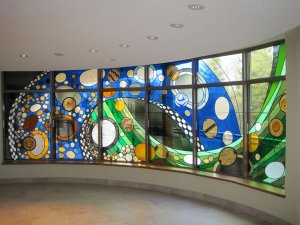
I couldn't take photos of the chapel except for the alcove above because a couple of sisters were in prayer ,but it is both modern and beautiful. The font at the entrance is a spiral, a symbol of the feminine. The windows at the front look out on woods. A sister who was in the chapel came out with us and was warm and welcoming as she described how one Good Friday the stark trees visible beyond the cross were so representative of the mood of the day.

I love that while many Roman Catholic orders are committed to justice and compassion, they understand that Christian faith is rooted in worship and beauty. The window above celebrates both the molecular and cosmic wonder of creation. They are aren't stuck in the past either, and are often bold and innovative in both art and architecture.

We can be so earnest about are approach to justice in the United Church that there is no room for creativity and beauty as a celebration of the holy. In these days when we are so fretful about our future we need the reminders that the places in which we gather are meant to lead us into a sense of worship and praise.

Thoughts?

Tuesday, January 27, 2015

We Must Remember

Oswiecim January 26, 2015 (Reuters / Laszlo Balogh)

A decade ago a Holocaust or Shoah survivor made the rounds of schools in Durham, including Bowmanville, where we were living. I can't recall where she was a prisoner of the Nazis. One of the teachers who organized her visit was in the St. Paul's congregation and invited us to her home to meet this remarkable woman over supper. We were impressed by her message that living with purpose is the way to overcome such unspeakable evil. If I recall correctly she was approaching 80, so there is a strong possibility she is no longer with us even though she was remarkable energetic. We bought a copy of her autobiographical book that evening, but I have no idea where it has gone.

On this day of the 70th anniversary of the liberation of the Auschwitz extermination camp a number of survivors returned to commemorate the end of that terror and those who died. They have also affirmed that despite what they experienced, including the loss of family members, they were not snuffed out, nor was the Jewish religion.


One of the returnees, Angela Orosz (above) is only 70. Somehow her mother's managed to hide her pregnancy and Angela was born shortly before the camp was liberated. She is one of only two babies born in Auschwitz. As the more elderly survivors reach their late eighties and into their nineties the question is being raised as to who will be left to gather a decade from now, and who will tell the stories. Ms. Orosz has no direct recollection of what happened there and the numbers of those who can recall diminishes. Will the world remember as effectively and respectfully once these remarkable survivors have died?

While this dark period in human history is so ugly we might be tempted to put it aside we can't. We can't forget the refusal of governments to take in Jewish refugees who often perished as a result. We can't forget that Christians in Germany and other countries ignored the plight of Jews or that some participated in their extermination.


Sunday, January 25, 2015

Inequality


Today in worship we will hear of how Jonah reluctantly preached repentance to the people of Nineveh. I will mention that our understanding of "wickedness" or sin goes beyond the traditional personal trangressions to include sexism, racism, inequality, and environmental degradation.

It happens that during this past week Oxfam issued the sobering contention that within two years one percent of the world's population will have as much wealth as the other ninety-nine percent. That is an extraordinary disparity between rich and poor, inequality on a mind-boggling scale.

Later in the week Archbishop Welby of the world Anglican communion spoke about  inequality during an interview with the New York Times.

Q. Why is income inequality a religious issue?
 
A. It tends to result in the development of overmighty areas within society, and at the same time of people who are excluded and forgotten. Therefore it becomes an issue about the nature of the value of the human being, the dignity of the human being, which is a religious issue. The human being for whom Christ died is of equal value, whoever they are.

Not everyone, including David Cameron  appreciated Welby's critique of wealth. Cameron likes to describe Britain as a Christian nation but apparently not if it involves following Jesus' teaching on wealth. Jesus doesn't say it is categorically bad. He does point to the perils of wealth including greed and disregard for the poor.

Of course most of us would prefer to view others as wealthy but not ourselves. Yet when I speak with folk at Inn from the Cold or respond to one of the individuals who comes seeking help in the church office I become very aware of my own prosperity and the struggles of so many.

I have written a reminder on the blotter in my study at the church:

I am wealthy
My wealth is not my own -- it is God's
If I horde my wealth, I am impoverished

Did you read the Oxfam statement?  Is it difficult to admit you're wealthy? Are we answering God's call to address inequality?

Saturday, January 24, 2015

Mental Health & Spiritual Health

I have downloaded the report by the Mental Health Commission of Canada called Informing the Future: Mental Health Indicators for Canada. It is a wide-ranging report whichemploys a number of mental health indicators and focus areas to address the multi-faceted realities of mental illness and mental health. These include the effect of care-giving on mental health, seniors and mental health, children and youth and mental health, and the effects of mental illness on economic prosperity. This last focus area notes that nearly 30% of Canadian workers report high work-related stress and about 100,000 of us receive CPP pensions for mental health reasons. A Canadian Press news release offers these highlights from the report:   
 
OTTAWA — Canadians who care for chronically ill family members are experiencing extreme stress at a time when an aging population means more people will need such care, says a mental health study.
The report by the Mental Health Commission of Canada also found that suicide rates are higher here than in some other G8 nations.
Among those 15 and over who provided care to an immediate family member with a long-term health condition, 16.5 per cent reported very high levels of stress, the report found.
The commission’s findings cover 13 indicators that provide a glimpse of how Canadians are faring mentally. By April, the commission will provide details on close to 60 indicators involving children, youth, adults and seniors in a variety of settings.

We know that mental health concerns are also pastoral concerns within congregations. So many members in every congregation I have served have struggled with mental illness, including depression and suicide. Either they are figuring out how to provide loving and practical support for family members or are dealing with these issues for themselves.

I see this report as one more step toward bringing mental illness and mental health out of the shadows of shame and misunderstanding. I hope that faith communities can be supportive of these initiatives and create safe places for those who are addressing mental health issues themselves.When I read the gospels I hear Jesus addressing mental health with many who approach him. Jesus is a beacon of hope and spiritual healing.

What are your thoughts about this report? Have you heard about it? Are you encouraged by its approach?


Friday, January 23, 2015

Thou Shalt Not Yik Yak


Thou shalt not bear false witness against thy neighbour.
                                                  The Ten Commandments

21 “You have heard that it was said to those of ancient times, ‘You shall not murder’; and ‘whoever murders shall be liable to judgment.’ 22 But I say to you that if you are angry with a brother or sister, you will be liable to judgment; and if you insult[ a brother or sister, you will be liable to the council; and if you say, ‘You fool,’ you will be liable to the hell of fire.
                                                        Serm on on the Mount  -- Jesus of Nazareth


Some of you will remember that at the last General Council of the United Church in 2012 there was a resolution regarding gossip and its corrosive effects on individuals and Christian congregations. It got a lot of press coverage, although lots of people including members of my congregation at that time wondered if this was a serious discussion. It was, and I wrote a blog around that time in which I named how destructive gossip has been in churches.

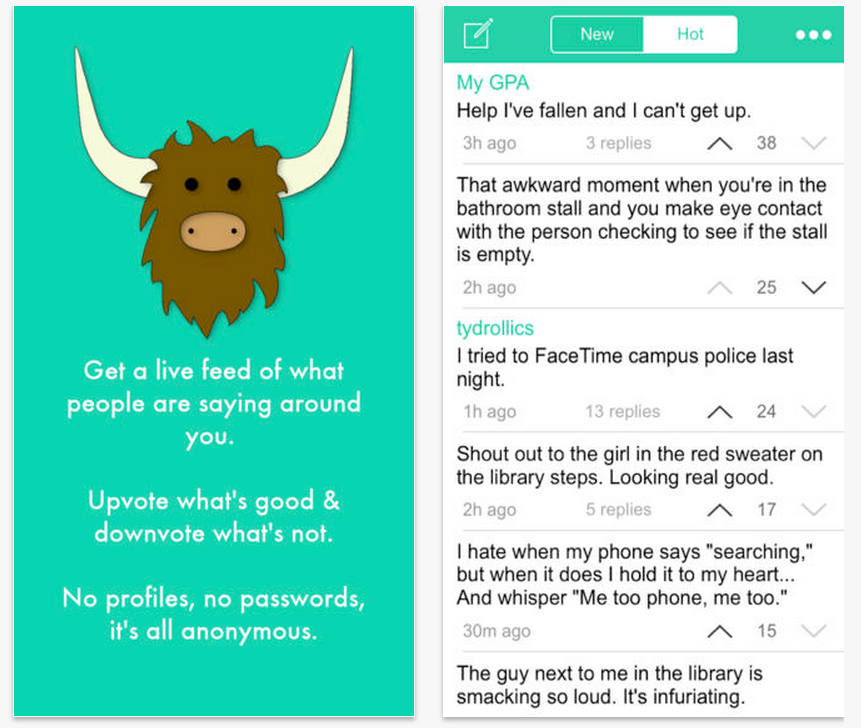
I thought of this when I read about the concerns regarding a new phone app called Yik Yak. This is an anonymous (first flag) messaging venue in which unregulated information can be shared. That anonymity has had serious consequences. It has resulted in bomb scares at a number of schools and universities. It has also provided the opportunity for online character assassination. While we use terms such as cyber-bullying, this is gossip and bearing false witness and it is terribly destructive. Some school boards are now warning parents about Yik Yak and others are finding ways to block it on school property

The resolution from General Council was no joke. This is serious stuff, whatever labels we attach to it. Whether it is "old-school" or high-tech, gossip is wrong and painful and a sin. Here is an anonymous (wouldn't you know) reflection on gossip.

My Name Is Gossip. I have no respect for justice. I maim without killing. I break hearts and ruin lives. I am cunning and malicious and gather strength with age.
The more I am quoted the more I am believed. I flourish at every level of society. My victims are helpless. They cannot protect themselves against me because I have no name and no face.
To track me down is impossible. The harder you try, the more elusive I become. I am nobody's friend. Once I tarnish a reputation, it is never the same. I topple governments and ruin marriages. I ruin careers and cause sleepless nights, heartache and indigestion. I spawn suspicion and generate grief.
I make innocent people cry in their pillows. Even my name hisses.

Are you inclined to gossip? Have you been the subject of gossip, or have those you love been affected? Have you experienced it in your congregation?

Thursday, January 22, 2015

Unmasking a Gospel


Because most of us have grown up with something called the bible we forget that this biblios, or book hasn't always had this form. In fact is a compendium or collection of 66 books, probably more because certain books and letters might have been two or even three which were eventually combined. We can be almost certain that many began in an oral form, eventually written down. There are lengthy sections of books which appear almost verbatim in others.

Some Christians find this threatening, because they feel it undermines the authority of scripture. I find it fascinating because it reminds us that our scriptures were always living, breathing documents. Somehow they have stood the test of time and bear witness to a God of love and justice and salvation in Jesus Christ. Surely that is the work of the Holy Spirit rather than slavish commitment to a particular view of inerrancy.

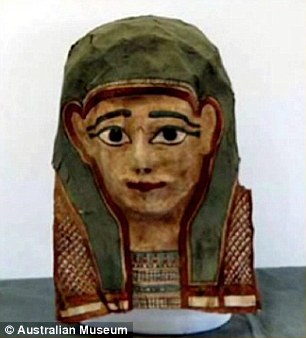
I am intrigued by the recent efforts to unravel, almost literally, one of the earliest extant copies of the gospel of Mark, which is the gospel of this year in the lectionary cycle.  Many of the earliest New Testament documents date from the second and third centuries. This gospel, or fragments of it, is contained in a mask, a re-purposing of the original papyrus sheet. As you read this description you'll see the Canadian connection:

The Story: A text found on papyrus used on a mummy mask may be the oldest copy of a gospel known to exist—a fragment of the Gospel of Mark that was written during the first century, before the year AD 90. Until now, the oldest surviving copies of the gospel texts date to the second century (the years AD 101 to 200).
The Background: In 2012 Daniel Wallace, a New Testament scholar at Dallas Theological Seminary, mentioned in a public debate that researchers had found a fragment of the earliest copy of the Gospel of Mark. This weekend, another scholar, Craig Evans, a professor of New Testament studies at Acadia Divinity College in Wolfville, Nova Scotia, reconfirmed the existence of the fragment. This text was written on a sheet of papyrus that was later reused to create a mask that was worn by a mummy. Although the mummies of Egyptian pharaohs wore masks made of gold, notes LiveScience, ordinary people had to settle for masks made out of papyrus (or linen), paint, and glue. Given how expensive papyrus was, people often had to reuse sheets that already had writing on them.
Scientists have developed a technique that allows them to remove the text from the mask without harming the ink on the paper.
Why It Matters: Andreas J. Köstenberger and Justin Taylor have argued that the evidence suggests the exact date of Jesus crucifixion was April 3, AD 33. A fragment from before AD 80 would establish that the Gospel of Mark had not only been written within 50 years of Jesus’ death and resurrection, but that it would have already begun to circulate widely.

Cool! I'm sure we'll here more about this fragment as the process unfolds.

What are your thoughts about this? Is it a yawner or of interest? Has your own perception of scripture changed over time?