Wednesday, September 23, 2015

People are People

We know that fundamentalist followers of virtually any religion can be obnoxious, dangerous, and even deadly. It can be deeply disheartening and many have been either turned off religion or are deeply antagonistic because of these "ambassadors' of faith. This piece in the New York Times by Paul Krugman yesterday was so sensible I'll let it speak for itself.

Religions Are What People Make Them

The current crop of Republican presidential candidates is accomplishing something I would have considered impossible: making George W. Bush look like a statesman. Say what you like about his actions after 9/11 — and I did not like, at all — at least he made a point of not feeding anti-Muslim hysteria. But that was then.

Reason probably doesn’t do much good in these circumstances. Still, to the extent that there are people who should know better declaring that Islam is fundamentally incompatible with democracy, or science, or good things in general, I’d like to recommend a book aIrecently read: S. Frederick Starr’s Lost Enlightenment: Central Asia’s Golden Age From the Arab Conquest to Tamerlane. It covers a place and a time of which I knew nothing: the medieval flourishing of learning — mathematics, astronomy, medicine, philosophy — in central Asian cities made rich by irrigated agriculture and trade.

As Starr describes their work, some of these scholars really did prefigure the Enlightenment, sounding remarkably like Arabic-speaking precursors of David Hume and Voltaire. And the general picture he paints is of an Islamic world far more diverse in its beliefs and thinking than anything you might imagine from current prejudices.

Now, that enlightenment was eventually shut down by economic decline and a turn toward fundamentalism. But such tendencies are hardly unique to Islam.

People are people. They can achieve great things, or do terrible things, under lots of religious umbrellas. (An Israeli once joked to me, “Judaism has rarely been a religion of oppression. Why? Lack of opportunity.”) It’s ignorant and ahistorical to claim unique virtue or unique sin for any one set of beliefs.

Thoughts?

Tuesday, September 22, 2015

Corporate Greed Stinks


Well, yet another corporate apology which rings hollow, to say the least. Volkswagen, one of the world's leading vehicle manufacturer's has been caught in willful and sophisticated deception involving half a million diesel car in the United States and eleven million worldwide.  The onboard computers were installed with a program to provide impressive data regarding emissions of CO2.  It turns out that the program was only activated during E-testing and that it fact --in truth-- vehicles were emitting up to forty times the acceptable levels.

The CEO of Volkswagen, Martin Winterkorn,said the company had “broken the trust of our customers and the public.” Hmm. When our kids were young there were occasions when their apologies for wrongdoing seemed less than sincere. We sternly asked "are you apologizing because you are sorry, or because you were caught?"  Doesn't it seem as though some of these corporate bosses are sociopathic four-year-olds? They are richly compensated to deceive the public, and there doesn't seem to be a lick of morality.

We saw that General Motors chose not to fix a problem in vehicles which led to the deaths of a number of people, even though the corporation knew the dangers. BP took shortcuts in the Gulf of Mexico which resulted in an environmental disaster. Canadian companies such as SNC Lavalin are accused of paying huge bribes to the despotic Gaddafi family and some Canadian mining interests are involved in practices which violate human rights and international environmental law. Apparently Exxon projected the effects of global climate change back in the early 1980's. http://insideclimatenews.org/news/18092015/exxon-confirmed-global-warming-consensus-in-1982-with-in-house-climate-models

Ya, ya, not all corporations are immoral or unethical. It's just that too many are. Greed stinks. It's a noxious and persistent gas. While BP, GM, and VW have lost or will lose billions of dollars for their sins, it seems to be an accepted cost of doing business.

Perhaps we should all go back to the award-winning documentary The Corporation which asks hard questions about our virtual idolatry of institutions which are "persons" by law in many jurisdictions yet are not expected to have a moral conscience.  https://www.youtube.com/watch?v=Z4ou9rOssPg


Scripture and Jesus strongly suggest that we have a responsibility as Christians to be a conscience in our world, but it can be so daunting in a "David and Goliath" world.

Are you just cynical, or should we be chirping away as people of faith and people of conscience?

I hope that the caption for the cartoon above is not something terribly rude in German!

Sunday, September 20, 2015

Pope Francis in Cuba

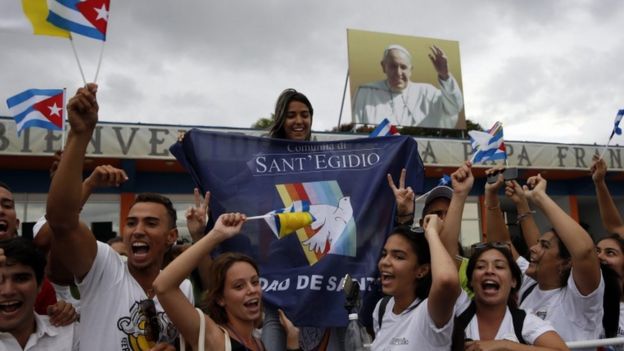
Cubans celebrate the arrival of the Pope, 19 Sept

Pope Francis is on his way to the United States and the United Nations later this week but at the moment he is in Cuba for four days.

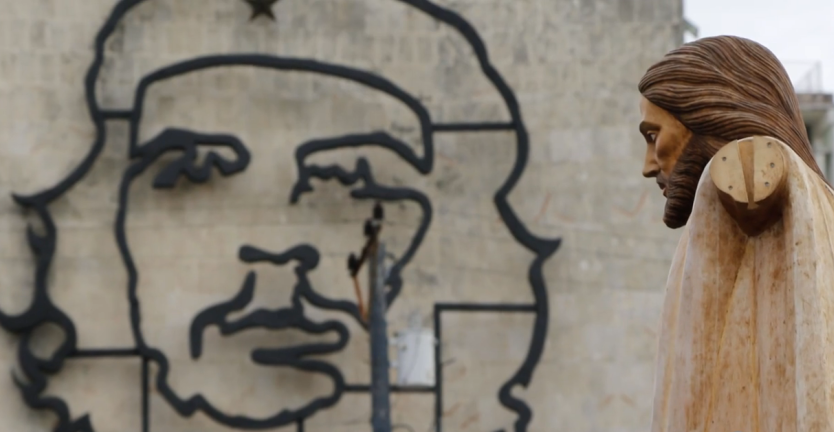
It's interesting that considerable efforts were made to pretty up Havana and Holguin in anticipation of the pope's arrival. Christianity has not been welcome in Cuba for more than half a century. Under the communist and atheistic regime of Fidel Castro practicing Christianity was suppressed, despite essentially false claims of freedom of religion. To worship regularly or even to have a child baptized might mean lost opportunities for advancement in the workplace or surveillance.

When Pope John Paul II made his historic visit a number of years ago there was great hope that it would bring about change, and to some degree it did. However, we need to realize that there has been a faithful and determined Protestant Christian community in Cuba through all the difficult years. Our United Church of Canada has been in partnership with that community and the seminary in Matanzas which has upheld the way of Christ and the way of the cross in some respects.

Embedded image permalink

Pope Francis will walk a challenging line, praising Cuba for opening the diplomatic conversation with the United States while pushing for greater religious freedoms and human rights . He hasn't ruled out meeting with dissidents while he is there.

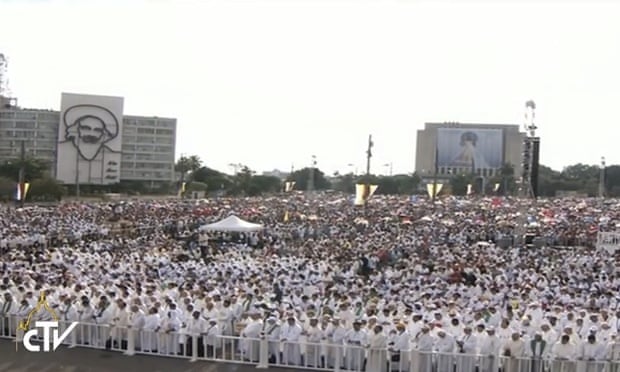
As I write this blog entry the pope is celebrating a Christian mass in what is called Revolution Plaza in Havana. May this visit will have positive and even revolutionary results.

Comments?

crowds

Friday, September 18, 2015

Unsung Saints and Heroes

May the Christ who walks on wounded feet
    walk with you on the road.
May the Christ who serves with wounded hands
    stretch out your hands to serve.
May the Christ who loves with a wounded heart
    open your hearts to love.
May you see the face of Christ in everyone you meet,
    and may everyone you meet see the face of Christ in you
. Amen. 


My plan was to reflect on the importance of Pope Francis' visit to North America today. Then I cycled past an elderly man and a wheelchair-bound younger man I see often along the paved waterfront trail. The old guy has the suspenders which haul his baggy shorts up near his armpits. The younger man, who I assume is his son, appears to have cerebral palsy, or some other affliction which contorts his limbs. I suspect that they are there every day as part of their routine, the loving pattern of father and son as the elder pushes the younger out toward the water.

I also regularly see an elderly couple moving slowly along the same path. She uses a walker, he is beside her keeping a patient pace. Again, I know nothing about them, but I imagine they have been together for a lifetime, in sickness and in health.  

The father and the husband will never be "saints" in the traditional definition. They will never be featured on an icon for their deeds of faith. Nor will they be feted as heroes, the way we do with those who play games and are compensated with huge sums of money for their prowess. Yet they are faithful and quietly heroic in simple ways which touch me every time I see them.

I say hello as often as I am able. I wish I could have a deeper conversation. I do have a sense that Christ is there.

Thursday, September 17, 2015

Essentials Under Review

We are not alone,
    we live in God's world.

We believe in God:
    who has created and is creating,
    who has come in Jesus,
       the Word made flesh,
       to reconcile and make new,
    who works in us and others
       by the Spirit.

We trust in God.

We are called to be the Church:
    to celebrate God's presence,
    to live with respect in Creation,
    to love and serve others,
    to seek justice and resist evil,
    to proclaim Jesus, crucified and risen,
       our judge and our hope.

In life, in death, in life beyond death,
    God is with us.
We are not alone.

    Thanks be to God.


The latest issue of the United Church Observer magazine includes an article about the review of a United Church minister, Gretta Vosper. I am reluctant to use the term "Rev." because Vosper is a self-described atheist. http://www.ucobserver.org/faith/2015/09/essential_expectations/

I am encouraged that this review is taking place for several reasons. We are still a Christian denomination in all statements of faith, and it seems absurd to me that someone in a position of leadership is neither a follower of Christ or a theist. Even in the loosest definition of the commitment ministers make at ordination, both of these are essential. It also rankles me and many of my colleagues that Ms. Vosper is often approached as a spokesperson by the media. The perception is that her views are widely held in the United Church, and I don't think they are. The review will invite discussion about what core values are for leaders within our denomination.

I chatted with son Isaac about the review, and while he supports it he also wonders whether we are inclined to function in worship and in our congregational decision-making as though we are defacto atheists. Are we really prayerful, worshipful communities open to the leading and direction of a God who is active in the world? It was an interesting discussion.

Vosper's approach calls people to be good and compassionate without God. I imagine we all know exceptional individuals who are kind and generous and atheists. Still, we have chosen to shape our communities around the person of Jesus, who is the Christ, or so we hope. We trust that the empowering Holy Spirit enables us to be "more than the sum of our parts." 

I figure we should be "loose around the edges and solid at the core." That core is Christ, even as we explore who Christ is for us openly and honestly.

What are your thoughts on the review? Should an atheist be a minister in a Christian denomination?

Wednesday, September 16, 2015

The Healing Power of Music

Bonnie Le Lyons-Cohen

My almost-90-year-old mother had a beautiful, confident singing voice as a younger woman and a commanding presence in front of a congregation. She often sang solos in worship and her singing and piano playing were amongst her gifts from and to God. She doesn't sing much anymore. She no longer gets to church, where she could join in singing hymns. Her singing may also be affected by her Parkinson's Disease, which affects motor control, facial affect, and memory as it progresses.

I was interested to see that there is a choir in Toronto for those with Parkinson's and it is making a difference for the 28 participants. They feel that their confidence has been boosted by the experience, not to mention making a joyful noise. It may also affect how others perceive them:

"Within a hundred milliseconds of seeing someone else smile or frown, we are smiling or frowning," said Frank Russo, a psychology professor at Ryerson University in Toronto. "We're mirroring what the other person is doing. And that's one of the things that is absent in Parkinson's. It's the absence of mirroring that is leading to some of the deficit in understanding other people's emotions."
 
Having a static face can leave people with Parkinson's seem cold and aloof as they also show deficits in understanding other people's emotions. The patient can then become emotionally disconnected from others.Studying the 28 members of the Parkinson's choir has bolstered Russo's thinking that singing, facial expressions and social communications are interconnected.

There are choristers, music ministers, and other church musicians who read this blog. You already know the benefits of making music as praise. It's good to hear of yet another benefit of music.

Comments?

Tuesday, September 15, 2015

Our Common Home


Image result for the illegal lawrence hill

Serendipity? Providence?

Last evening I started into Lawrence Hill's new novel, The Illegal. I managed only a few pages before the physical labour of the day overwhelmed me. The timeliness of the release of this story of an "illegal" immigrant is astonishing in light of the recent world developments with migrants and refugees. The news is filled with stories of displacement and movement by desperate human beings seeking a better life. We all wonder how to respond compassionately, and Christian communities are attempting to mobilize.

What does it mean to be "illegal" in a world where we tout our global reach? What do the human constructs of borders mean anymore? We used to speak of illegitimate babies, those born out of wedlock, and often the term came with considerable judgement and even exclusion. Who uses that term anymore? We have come to realize that there is no such thing as an illegitimate child in God's eyes. Can anyone really be illegal

In Pope Francis' environmental encyclical, Laudato Si: On The Care of Our Common Home he emphasizes that tending and mending Creation invites and even demands a new way of thinking and acting. He calls for a collaborative vision for Planet Earth as our common home. This challenges me to consider my vision of the world every day and who is kin.

Thoughts?

Sunday, September 13, 2015

Thank you Grandparents!


I heard this morning that this is Grandparents Day, and I took note because I am one. At the beginning of August --five weeks ago today -- our second grandson Roger came into this world. We were there to look after our other grandson, Nicholas, as his parents hurried off to the hospital for Roger's birth. We have loved the role with one grandchild, so having another should at least double the pleasure.

I listened to a grandmother who founded an organization to support grandparents who find themselves raising grandkids, sometimes on their own. She also spoke of grandparents who are denied access to grandchildren or find themselves in other difficult situations, often because of divorce. They never chose to divorce their grandchildren but they live through the pain of separation.


Over the years I have appreciated the grandparents who bring grandchildren to church and other activities of congregational life. They have deep convictions about the Christian formation of their grandkids, so they take on the role of practical spiritual mentors. I have been touched by the devotion they display, even though it isn't always easy.

I have also been impressed by the congregations I have served where elders welcome youngers with warmth and encouragement, as a cadre of honorary grandparents.

Congratulations to the loving grandparents out there. Keep up the fine work!

Comments?

Friday, September 11, 2015

Let's Make a Deal


A significant political battle was won by President Obama's administration this week, and while this happened in the United States it is of global importance. A six-nation nuclear arms deal focussing on Iran's stockpiles of uranium cleared its final hurdles despite fierce opposition by Republicans and some Democrats. There was also a strong anti-deal lobby from a segment of the American Jewish community and of course Israeli's Benjamin Netanyahu was vocal in his criticism.

I see this as significant on several counts. The United States has finally chosen negotiation over armed conflict or military action. While claiming to be a Christian nation, military might has prevailed over diplomacy again and again, often with dismal results. This is not a deal predicated on trust. If anything the checks and balances are rooted in distrust, but it is step in a different direction.

This is also a significant blow to the politics of fear which seem to have gripped the American psyche. Often it is the theological right, or at least certain branches, which claims allegiance to the Christ whose love casts out fear and yet enthusiastically endorses military muscle. Fear-mongering was weakened by this deal, even if it isn't defeated.

Finally, for me anyway, there is hope that the United States will develop a new role on the international stage, one where there is credibility as a negotiator rather than the world's policeman. And can you imagine what might happen if some of the trillions of dollars spent on the military in the US was used for social programs at home and abroad? Why, they might even sponsor a few more refugees!

I know, silly talk. But the gospel of Jesus Christ is rather odd, with all that "blessed are the peacemakers" blather, and such.

Thoughts?

Thursday, September 10, 2015

World Suicide Prevention Day


Today in Canada …11 people will end their lives by suicide.
210 others will attempt to end their lives.
77-110 people will become newly bereaved by suicide.


Today is World Suicide Prevention Day, an important reminder to us all that we can support those living through serious depression. I have been in this role during my 35 years of pastoral ministry, sitting alongside those who are certain that life has no meaning and that ending the pain could only come through terminating this life. More than once it was in bleak psych ward rooms, which are often the most depressing in any hospital. Go figure. Those were occasions of gentle talk and gentler prayers.

I am also aware today of being involved with a number of families who have lost loved ones to suicide. How does a pastor offer consolation or speak of the love of God to those who feel abandoned and inconsolable? It is difficult not to feel helplessness and even defeat in those circumstances.

I can say that within Christian community there are individuals who were convinced that they are beyond hope have returned to mental stability and health. Some live through the cycles of mental illness and are supported by brothers and sisters in Christ who love and uphold them. Those who have suffered loss realize that they are not alone.

Please say a prayer today for those who are dealing with depression. Consider who you might call or visit. Ask God to remove any sense of judgement or criticism in your heart toward those who "just can't get on with life." Reach out to those who have experienced loss to suicide, even if it happened years ago. Live the love of Christ.

Wednesday, September 09, 2015

Stillness is an Art


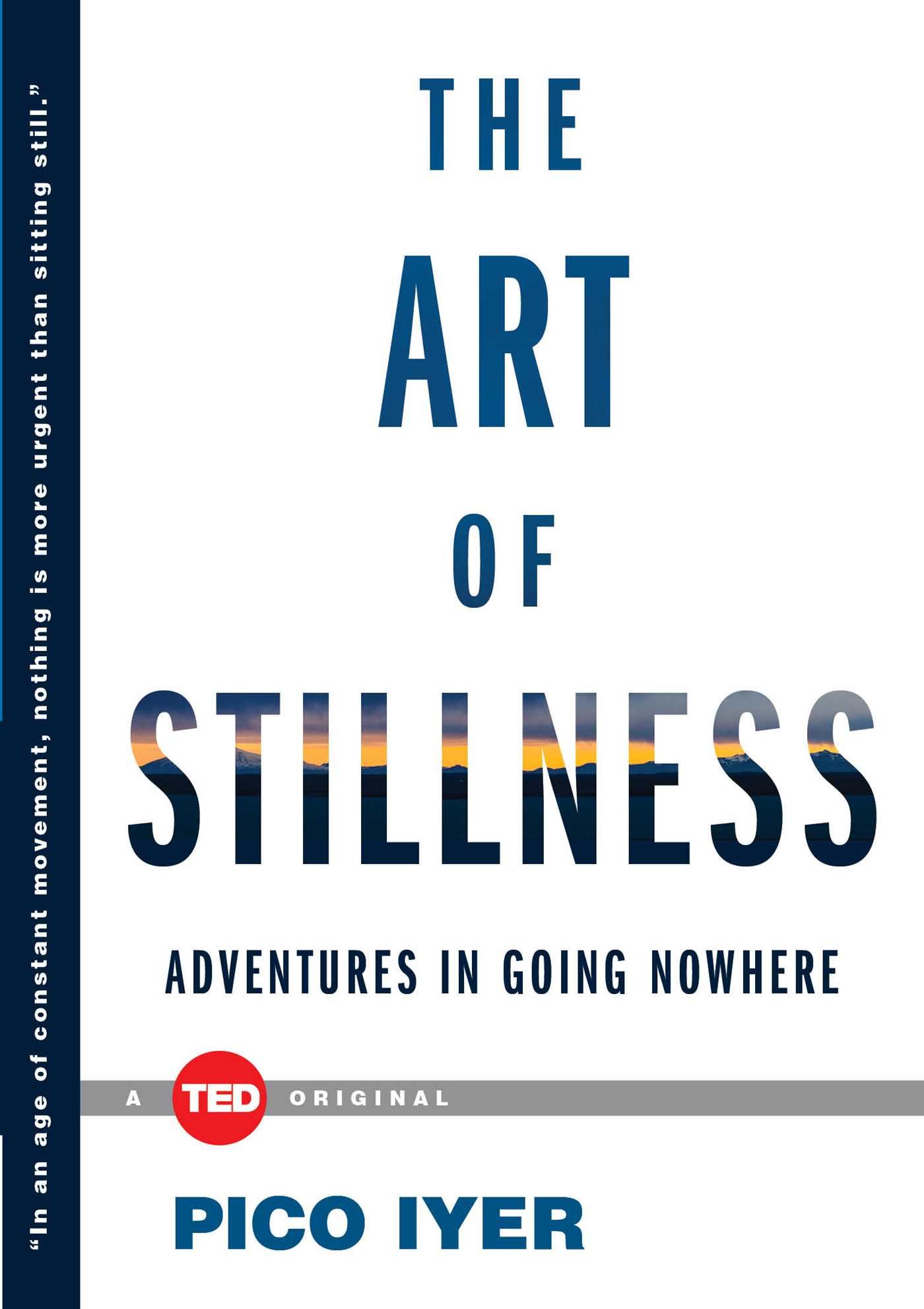
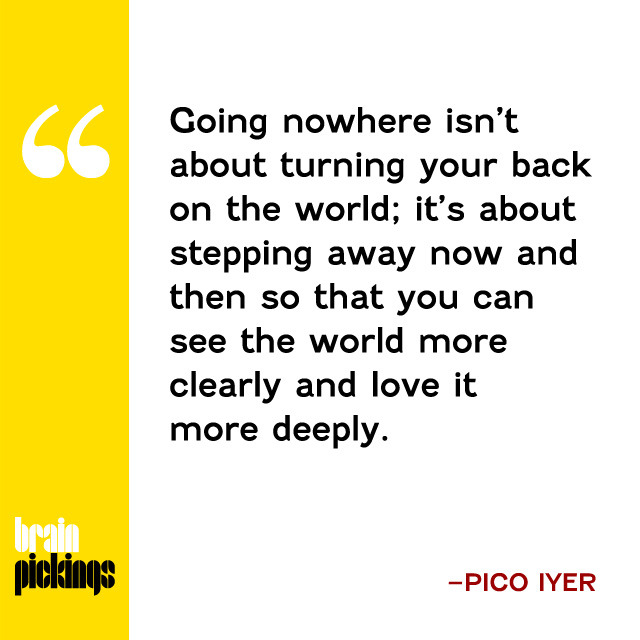
When I read a review of Pico Iyer's latest book, The Art of Stillness: Adventures in Going Nowhere I was intrigued and impressed and decided that I have far too many books so the review was sufficient. Needless to say, I eventually purchased it because book addiction is powerful and irrational.

It is a blink of a read in some respects, only 66 small format pages, an extended essay really. Iyer is a fine essayist though, and the book is a gem. He extols the virtue of going nowhere in an age when just about everyone assumes that we ought to be going somewhere, although that destination is increasingly unclear. Iyer is also a devotee of  Canadian Leonard Cohen, the Jewish, Buddhist contemplative song-writer and poet.

One of his chapter's is called A Secular Sabbath but I had to smile. Iyer quotes two excellent Jewish writers on the Sabbath, Judith Shulevitz and the iconic Abraham Joshua Heschel. He also makes reference to the biblical Ten Commandments and one of the longest of those commandments which is about keeping the Sabbath holy. In making the case for a secular sabbath he gets 'ligion.

I agree with Pico Iyer that nothing and nowhere are admirable choices in a culture of frenetic media and empty diversion. My choice is to find the times to do nothing and go nowhere with the God who rested on the seventh day and directed us to be Sabbath-keepers.

Are you accomplished at keeping the Sabbath? Are you okay with going nowhere as an aspect of your spiritual life?

Here is Pico Iyer's TED Talk on stillness. https://www.ted.com/talks/pico_iyer_the_art_of_stillness?language=en

Tuesday, September 08, 2015

Amazing

Click for Options

i thank You God for most this amazing
day:for the leaping greenly spirits of trees
and a blue true dream of sky; and for everything
which is natural which is infinite which is yes

(i who have died am alive again today,
and this is the sun’s birthday; this is the birth
day of life and of love and wings: and of the gay
great happening illimitably earth)

how should tasting touching hearing seeing
breathing any–lifted from the no
of all nothing–human merely being
doubt unimaginable You?

(now the ears of my ears awake and
now the eyes of my eyes are opened)

e.e. cummings
1894-1962


I led worship at Bridge St UC on Sunday and friends joined us from out of town so that we could paddle a portion of the Salmon River in the afternoon. The day before we travelled up to Depot Lakes and paddled in to see our adult daughters and their partners who were camping there. We swam both times, which was wonderful on those hot muggy days.

Click for Options

Yesterday we set out early to paddle a stretch of the Moira River north of Belleville, up to a set of rapids which are a torrent in springtime. This far into the year they are still noisy -- no, make that musical. We found a somewhat precarious spot to pull up our kayaks, then eased ourselves out into the rapids. We did a fair amount of hooting and laughing because the combination of cool water and current made the situation comical. 

We worked up our courage to move into increasingly faster water, then lay back so that only our faces were above the turbulent surface. Ruth is so much smaller she had to hang on to rocks for dear life to stay in one spot. The sky was a wonderful, cloudless blue, but it was the submarine sound of the water roaring past us that was the thrill. We hung out for fifteen minutes or more, getting our full body massage, eventually leaving reluctantly.

This may sound like a goofy expedition for a couple of sixty-somethings, but we loved every minute of the paddle and the baptism.

We are so fortunate in this country to have access to water all over the place. We can glide across it, immerse ourselves in it, delight in what lives alongside it and within it.

Our experience yesterday was physical, but it was also deeply spiritual and just plain fun. This month is Creation Time in the church year, and while we won't focus on water this year, as we did last year, it is always worthwhile to celebrate the gift of water.

Sunday, September 06, 2015

Death Without Killing


We have watched all three seasons of the American series called Rectify, something like twenty-two episodes in total. It is the story of Daniel Holden, convicted of raping and murdering a friend when he is eighteen years old and sentenced to death. After twenty years on death row and multiple appeals Daniel is released, although not exonerated, based on DNA evidence.

The story of his return to society unfolds slowly, with flashbacks to his time of incarceration in a bleak cell. We have friends who gave up on the series because they felt it crawled along, yet it asks some important questions about how supposedly advanced societies treat those in prisons, and what happens when those incarcerated find themselves out in the "real world" again. I have been surprised by how much religion and God-talk there is in the episodes. I got a kick of out of the prison chaplain, named Charlie, who Daniel calls Charlie Chaplain.

We don't have a death row in Canada because we don't have a death penalty. But we do send people away for a long time when they have committed serious crimes, and a very few will never be released. An article entitled Death Without Killing  in the most recent Christian Century asks if it is much more ethical to incarcerate human beings for decades without efforts at rehabilitation or an opportunity to eventually leave prison. In the US there is LWOP - "life without parole" in some states. We don't have a similar sentence in Canada although the federal Conservatives are back to the tough-on-crime rhetoric during this election campaign, including the notion of "life means life."

I figure there are some individuals who should never leave prison because of the nature of their crimes or their threat to society. Yet if I feel that if killing a person for killing a person is inhumane, how is incarcerating a young person for until he or she dies much better? Pope Francis equates the two and calls LWOP a "hidden death sentence." In both Canada and the United States the poor and people of colour tend to receive longer sentences, so the injustice goes even further.

We need to remember that we imprison inmates in penitentiaries, which suggests that they may eventually be penitent, and change. Supposedly Christians are convinced that God can be part of the process of change and redemption for any human being.

Are you willing to weigh in on this one?

Saturday, September 05, 2015

The Strength of our Convictions


I would like to consider myself a person of conscience who is willing to stand up for my convictions and beliefs as a Christian. Well, I can also be something of a chicken, but I have taken unpopular stands at times and even taken part in a rally or three for various issues, although I've never been locked up for doing so. Of course because these are my convictions, my stances are noble and true. It's the other guy who may be a little sketchy, or dogmatic, or prejudiced.

There has been a lot of coverage of a clerk in Kentucky who refused to issue marriage licenses to gay couples. In the end she was jailed for what she claims is a Christian conviction. This is the way the Toronto Star reported the story:

ASHLAND, KY. —A defiant county clerk was sent to jail for contempt Thursday after insisting that her “conscience will not allow” her to follow a federal judge’s orders to issue marriage licenses to gay couples.“God’s moral law conflicts with my job duties,” Kim Davis told U.S. District Judge David Bunning. “You can’t be separated from something that’s in your heart and in your soul.” The judge said she left him with no alternative but to jail her, since fines alone would not change her mind. A deputy escorted her out of the courtroom, although not in handcuffs, to be turned over to the custody of federal marshals. “Her good faith belief is simply not a viable defence,” Bunning said, noting that allowing an individual’s beliefs to supersede the court’s authority would set a dangerous precedent. “I myself have genuinely held religious beliefs,” the judge said, but “I took an oath.”
“Mrs. Davis took an oath,” he added. “Oaths mean things.”
 
 
I figure the judge made the right call. He even gave Ms. Davis an "out," saying that she could be released if she let other staff issue the licenses. Nope. She wouldn't budge. Eventually licenses were granted to couples, but Davis wasn't involved.
 
I do not agree with her interpretation of scripture, and I appreciate why the judge found her in contempt of her oath of office. It has got me wondering how far I would go to uphold my own convictions. Bill C-51 may put lots of us to the test on this one.
 
What do you think?

Friday, September 04, 2015

Knowing Boo About Heaven


I was waylaid in writing today's blog entry by two inquiries from Bridge St. UC members about the possibilities for sponsorship of a refugee family. I was encouraged that they took the initiative to contact me. I spoke with a Belleville colleague earlier this week about the same concern.

My plan was and apparently still is to blog about an intriguing novel I read this summer called Boo, by Neil Smith. I doubt I would have sought Boo out if I hadn't heard Smith interviewed by the CBC's Sheila Roger's and been charmed by him.

The story is of a  precocious 13-year-old boy who is cruelly nicknamed Boo by bullying schoolmates because of his pale complexion. He is a ghost to them and ironically becomes one, or so he offers, when he gunned down in a school shooting.

Boo is an atheist, as are his parents,  but to his surprise he ends up in heaven. He ends up in a colony of the afterlife which is populated entirely of 13-year-olds who have died young from a variety of causes over the course of many decades. This heaven isn't all that palatable in any aspect. The food is bland and they are sequestered in structures that are very much like a middle school back on Earth. Age thirteen can be an awkward time of life. Imagine a gaggle of early adolescents living together.

Boo doesn't know who his murderer and that of a classmate was. Much of the story is devoted to solving that mystery and exploring the rumours that there are portals back to their first lives. It was both entertaining and insightful.

Ruth, my wife, also read it and enjoyed it. We agreed that it required suspension of any notions about heaven, but what do we really know anyway? As I am inclined to say, I have a resurrection hope in Christ, and trust that there is an afterlife, but no one sends postcards. I am a Christian pastor but I don't have a lick of control over eternity and it would be wrong to claim great knowledge about it, or attempt to manipulate it as either carrot or stick.

I am reasonably sure that the heaven of Boo is not an accurate portrayal but I'm glad it got us talking. What are your thoughts about heaven? Don't know boo about it? Are you living this life with a sense of eternal promise?

Thursday, September 03, 2015

Suffering and Hope

Image result for grief

Yesterday I received a phone call from a friend who has been asked to preside at a very challenging memorial service. Any funeral or memorial includes loss and grief, even when the person who has died lived a long and meaningful life. It is so much more difficult when those who gather know that the loss has been tragic, in this case a suicide.

The person who died was an atheist, while the parents are Christian and a sister is Buddhist. This is the reality of our culture. People come together for a service because it is important to do so, but there aren't necessarily shared convictions about what comes after this life, if anything.

In our conversation we spoke about the importance of affirming the support of friends in the midst of great loss, including those who are part of our faith community. We also acknowledged the importance of naming suffering, not as something we skirt around but as a reality we all must travel through in life.

This is an underlying theme in Buddhism but I have reminded Buddhist friends that the cross of Jesus names our Christian mystery that God has entered into human existence, sharing our suffering, and the agony of death. We are resurrection people, but "beneath the cross of Jesus I fain would take my stand."

I know this lovely family and they are not strangers to suffering and sadness, even before this death. They have also demonstrated remarkable resilience and never stopped being kind and caring to others. I have confidence that the friend who called me will be honest and hopeful in her role. I pray that the God of peace and new life will be the sustaining strength for the family.

Thoughts?

Wednesday, September 02, 2015

The Refugee Crisis Grows


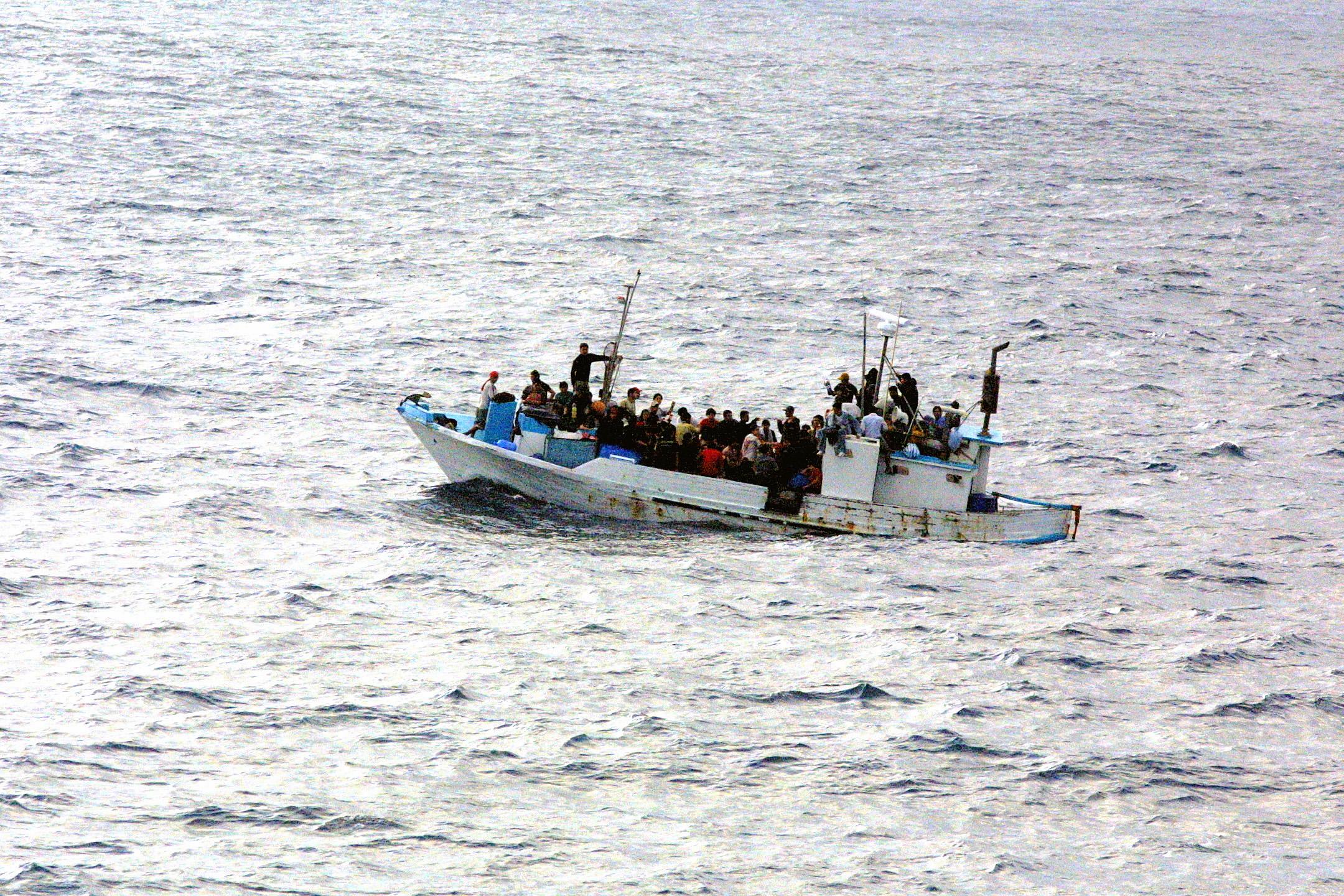
I have blogged a couple of times about the refugee crisis in the Mediterranean, including the efforts of a Texas couple to save those in peril employing a ship they purchased through their personal wealth. http://www.express.co.uk/news/world/572193/Chris-Regina-Catrambone-rescue-3k-Mediterranean-migrants-rescue-boat  It might be considered a drop in a leaky bucket but it was a visceral human response to a terrible crisis.

This year the number of migrants has doubled according to UN reports. Or are they asylum seekers? Or refugees? All these terms are used interchangeably, although they don't mean the same thing. One writer has helpfully pointed out that migrants are running to something while refugees are running from something. Of course nations have their own definitions for these terms.


Along with the growing number of migrant/refugees the body count rises. We hear about drownings, and bodies found in the hulls of ships and in the back of abandoned trucks. Earlier this summer a young man fell to his death from the wheel well of a jetliner as it approached Heathrow airport. The death toll is staggering.

Increasingly there are clashes between police and asylum seekers along European borders. And we have heard Donald Trump claim that he will build a ridiculously big security fence between the US and Mexico to keep migrants out.


What can we do as Christian individuals and communities? This year the Bridge St. Foundation made a grant to a refugee sponsorship initiative underway at St. Thomas Anglican Church across the street. I'm gratified that we did so, yet I feel that our congregation and others must become more active in sponsorship. The Canadian government claims it will allow several thousand Syrian refugees entry to this country, yet only a few have actually been permitted in. Perhaps we should see this as an election issue as concerned Christian voters.

All I know is that this is an international tragedy and we must respond, somehow.

What are your thoughts?

CBC The Current continues to cover the refugee crisis  http://www.cbc.ca/radio/thecurrent/the-current-for-september-02-2015-1.3212382/migrant-crisis-follow-the-path-of-refugees-seeking-eu-asylum-1.3212395

Tuesday, September 01, 2015

Creation Time & Pope Francis


Terry Head, the music minister at Bridge St. UC has asked for the themes of Creation Time this Fall so he can prepare for worship. Terry is so organized that he would have preferred this info six months ago, but I did let him know where I was headed. We will be looking at the papal encyclical released by the Vatican in June. Pope Francis' document called Laudato Si: On the Care of Our Common Home. Laudato Si means "praise be," words which Pope Francis, has taken from a hymn of Francis of Assisi, the patron saint of the environment. While a number of popes have addressed environmental issues, this is the first encyclical, a designation which carries extra weight. The implication is that cardinals and bishops and parish priests will take this directive seriously. There has certainly been plenty of media attention to the encyclical.
 
Beginning with Sunday, September 13th, the start of Creation Time, we will ponder aspects of the document. I read the 67 pages while in Newfoundland during July and I made a point of sitting outdoors, with a view of the sea as I did so. This was a big commitment because July was a chilly month on The Rock! Here is what I offered to Terry:

 The four themes I will develop out of Pope Francis’ encyclical will be something like this:

 Praise Be to You – I will do an introduction of the encyclical which uses the Canticle of the Sun supposedly penned by St. Francis as the foundation. All Creatures of our God & King was inspired by the Canticle.

 Our Common Home – Pope Francis uses this phrase a number of times, a reminder that we are all in this together regardless of our religious convictions or lack of them. He also reminds us that we are part of a greater web of creation and that humility rather than hubris is essential.

Human Justice, Earth Justice – Francis rightly points out that the disparity between rich and poor in the world must be addressed, and his commitment to justice for the poor is evident in the document.

 From Covenant to Conversion – There is a strong call to action and new habits at the conclusion of the encyclical and I will follow the pope’s lead. This will be world communion Sunday, so I will figure out a way to tie this in.

 Now to find the scripture passages to support my preconceived notions!
 
We will also explore these themes in our morning bible study at Bridge St, beginning Wednesday September 9th at 8:00 AM. Please join us.
 
Comments?


Saturday, August 29, 2015

Your Cheatin' Heart & Soul


Recently the cheating-on-your-partner website Ashley Madison was hacked and the secret lives of millions of people revealed. There are reports of suicides as a result of the information being made public. Now the found and CEO has resigned, and I'm not shedding a tear for his demise.

The police in this country are investigating the breech of security, which is illegal, and have spoken of the harm this has done to so many. Not all that long ago adultery was considered a sin and there was a moral judgement in our legal system against those who were caught cheating on a spouse.  While the latter has changed, the commandment against adultery hasn't been expunged from the bible yet. It's still there, short and blunt.


I have no interest in thundering away about the moral decline of our culture, yet I was struck by how rapidly our mores have changed. If it is true that individuals have taken their own lives because of exposure then cheating and telling still matters for some. And I have to wonder how many marriages will end up on the rocks because of the cheatin' hearts of well, millions. Maybe the outrage will come from the pulpits of more conservative churches and mainline congregations should take it a little more seriously. As a pastor I have certainly seen the tremendous damage to families resulting from unfaithfulness in marriages.

Jesus actually upped the ante when he said that lust was a form of adultery. He was uncomfortably radical at times. He seemed to want us to be faithful in every aspect of our lives. Thank God for grace!

What has been going through your mind as the Ashley Madison hack has unfolded. Do faith communities still have a responsibility to address morality and immorality?

Friday, August 28, 2015

Katrina Recovery?


Today marks the tenth anniversary of Hurricane Katrina and there will be plenty of public spin about the recovery of the city of New Orleans and the triumph of the human spirit. No doubt little will be said about how human hubris created this catastrophe in the first place. The growing intensity of storms due to climate change and the destruction of natural barriers created a recipe for disaster.  Nor will there be much attention given to the neighbourhoods of the city which have not recovered from the devastation, not to mention the tens of thousands who left New Orleans. The population of the Big Easy has decreased by roughly 100,000, or twenty percent. Billions have been spent on restoration yet there is little evidence of this in the poorest neighbourhoods such as the Lower 9th Ward.  

Katrina Changing City

Pope Francis' recent environmental encyclical addresses the effect of climate change on the poor, who are and will be the most vulnerable as weather becomes less predictable and sea levels rise. Many of the migrants who are dying as they seek new homes are environmental refugees.

I wonder if religious groups will offer a memorial service today, remembering those who died, those who were displaced, and the groaning of God's creation? I hope so. This is a profoundly spiritual issue and one we should all keep in the forefront of our thoughts and prayers.

Thoughts?

Thursday, August 27, 2015

Deducing Loss


This week we saw the film Mr. Holmes starring the remarkable Ian McKellen as the infamous detective with almost preternatural deductive powers. Except that in this story Holmes is aged, and his memory is failing. He makes a wry joke about senility at one point, but his dementia isn't funny. The film is quite good, in no small part because of the fine cast. Milo Parker plays the son of Holmes' housekeeper and is the elderly man's protégé, and caregiver in certain respects. McKellen's face is so able to express the range of emotions related to his loss of memory.

After decades of an upward trajectory for dementia and Alzheimer's there are new studies suggesting that dementia is now on the decline.  http://www.irishtimes.com/news/science/dementia-rates-lower-than-feared-in-europe-research-shows-1.2323425 While this is encouraging, we are all aware of someone in our circle of care who suffers from dementia, and in so many congregations there are once vibrant and active members who are now in the shadows of memory loss from different causes. From my experience the most heart-wrenching situations are those where the sufferer is aware of decline, and is living through the grief of their cognitive decline. While science is making strides for treatment, there are still so many situations where pastoral care, spiritual care, is essential for those living with the disease and those supporting them.

The film is well done and worthwhile and invites us to ponder the realities of dementia for so many, including those with remarkable minds.

Wednesday, August 26, 2015

Not Up For Debate


I see that the scheduled debate on women's issues by the leaders of the federal parties has been cancelled. It seems that the September 21st event, which was meant to be broadcast live, has suffered from the domino effect. Prime Minister Harper decided not to participate. Mr. Mulcair withdrew because he won't take part in a debate without Harper. The other leaders concluded that there wasn't any point without these two. As a result the coalition of women's groups called Up for Debate will have to find other avenues to get a sense of where the parties stand on aspects of this important discussion. http://upfordebate.ca/our-vision

Are any of you disappointed that this has transpired? We know that Canada is a wonderful country for women in many respects. We regularly score in the top ten nations of the world in terms of women's rights, education, healthcare. In some surveys we are at the top of the list for G20 countries.
 
Still, women in Canada make about two thirds of what men make in the workplace. We don't do as well as other advanced nations as far as women leading corporations or being elected to public office. Domestic violence and sexism remain as ugly realities. And an issue which might have been prominent in the debate is the lack of response to the disappearance of more than a thousand aboriginal women over the past thirty years. There is no national strategy for addressing this grim statistic.
 
Religious institutions have too often supported misogyny and the subjugation of women. Women have been excluded from leadership because of gender, not merit. Our United Church has worked to address and counteract this, finding ways to open our eyes to the gifts and strengths of women. You may have noticed that our newly elected moderator, Jordan Cantwell, is a woman. We certainly can't claim to have arrived, just the same.
 
I hope the UCC will express regret about the cancellation of this debate and challenge leaders to make their positions clear on women's issues. The importance of this discussion is not up for debate.

Tuesday, August 25, 2015

Inside Out


This is my first day back at Bridge St. UC after eight weeks of absence, a combination of vacation time and continuing education. I had no intention of disconnecting from this blog or social media beforehand, but it was what happened.

 This was a rare opportunity for which I am very grateful. When I moved to Belleville two years ago I relinquished my planned sabbatical at St. Paul's, so gathering these weeks provided a much needed oasis, a restorative time to renew my body and spirit.

These eight weeks may have been the most physically active period of my adult life. I cycled, rambled, kayaked, camped, swam, gardened,  and canoed. I was fortunate that the weather allowed me to be outside virtually every day, and that while wife Ruth was working through many of these weeks we did a lot together. I also went to the gym faithfully but in some respects that was the necessary evil of the summer. I wanted to be outside and was so aware of how this feeds my soul and connects me with God.

I spent two weeks in outport Newfoundland and the weather was raw -- this has been the coldest summer in twenty years. For a week I was alone in an old saltbox home on Change Islands, thanks to the generosity of long-time friends. The painting by Therese Frere is actually the view I had every morning.  Fortunately we lived in Newfoundland decades ago and I went prepared with appropriate clothing, including winter gloves. I needed them! The morning I flew home from Gander it was six degrees Celsius and I could see my breath while waiting in the boarding lounge. I still explored each day I was there, regardless of weather. Just over the hill in the painting is the beginning of a rugged waterside trail. I walked it three times in the week I was there, never seeing another human being. I decided that the robins and chickadees I encountered on those raw days were truly courageous creatures.

I have reflected during this time on what it means to be an "insider" and all that this term means. I have been deeply aware during this time that Jesus was an intentional "outsider" in so many respects. He was outside the religious and political power structures of his day, and he also chose to live much of his ministry outside of established places of worship. He walked and climbed, he preached and taught and prayed out-of-doors.

I have been an outsider during these weeks and revelled in it. I will say more in the days ahead. For now I will offer my hello and hope that you will all reconnect with me.

Saturday, June 27, 2015

A Spoonful of Grace

A member of Bridge St directed me toward a Facts and Argument piece in the Globe and Mail recently. She thought it was a lovely first-person story and there was also the hook that it came out of Belleville.

Elizabeth McLellan went back to school in her late thirties, training at Loyalist College to become a developmental services worker. During her training she worked with a elderly woman named Gloria, or Glo, who was non-verbal. One day while carefully feeding Glo she had what I might describe as a holy moment of service to another:

Glo held my gaze steadily, and for a moment I thought I saw something flash in her eyes. It was knowledge. It was connection. It was intimacy that I’d never known existed, before her. It was grace, and it humbled me more than anything else ever has, including the births of my children and the death of my brother. Grace from Gloria.
 
I knew then that to serve my fellow human beings and to tell their stories is both a privilege and my calling. For that moment of connection and truth and grace, I will always be grateful to Glo. Without a single word, she said everything that matters most.
 
I have experienced a deep sense of God's presence in settings where folk have "lost their senses" in terms of communication and cognition. Often it is in the acts of practical kindness from support workers or family members that there is a sense of the holy. Grace is one of those religious words which is often tossed around thoughtlessly but McLelland uses it well.
 
Here is the link if you would like to read Elizabeth's piece.
 
http://www.theglobeandmail.com/life/facts-and-arguments/finding-myself-and-my-calling-with-a-spoonful-of-grace/article24944281/