Wednesday, June 22, 2016

World Refugee Day


This has been one of those "and, and, and" days with a whack of commitments. It is officially summer, isn't it?

Yesterday I had a conversation with one of the coordinators of our Syrian Refugee Sponsorship group about the exciting subject of dental care for our family, the Al Mansours. The subject isn't glamorous, but it is part of our commitment to their overall healthcare. The government covers part of the costs, and the Al Mansour family and our group pay for the rest.

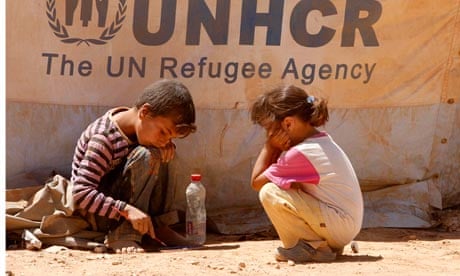
This seemed so mundane given the news on World Refugee Day this past Tuesday that there are 65 million displaced persons around the world, the most ever identified in human history. Syrian refugees represent one of the largest national groups, which was why the Canadian government sponsored 25,000 in recent months. Given that there are an estimated 4.8 million Syrian refugees our Canadian sponsorship seems meagre, except that it is one of the more generous responses amongst world nations. We have all heard that xenophobia is equated with "making America great again."

Our sponsorship group which involves three United Church congregations, members of the Belleville mosque, and many others, isn't done yet. The feds have begun processing five households --18 individuals-- related to the Al Mansours which we applied for in a feverish 24 hours at the end of March. We are confident that we can reunite them with their Belleville family. We are praying that they don't all land here at once!

When we consider the staggering numbers of asylum seekers and refugees around the world and the growing tendency to close borders we can be overwhelmed. Instead we can make our decisions to act practically and compassionately, one (or even five) family at a time.

Attempting to build walls, figuratively or psychologically, will not the crisis go away. We may not have ready solutions to a global challenge, but we will not lose heart.

Thoughts?

Tuesday, June 21, 2016

National Aboriginal Day


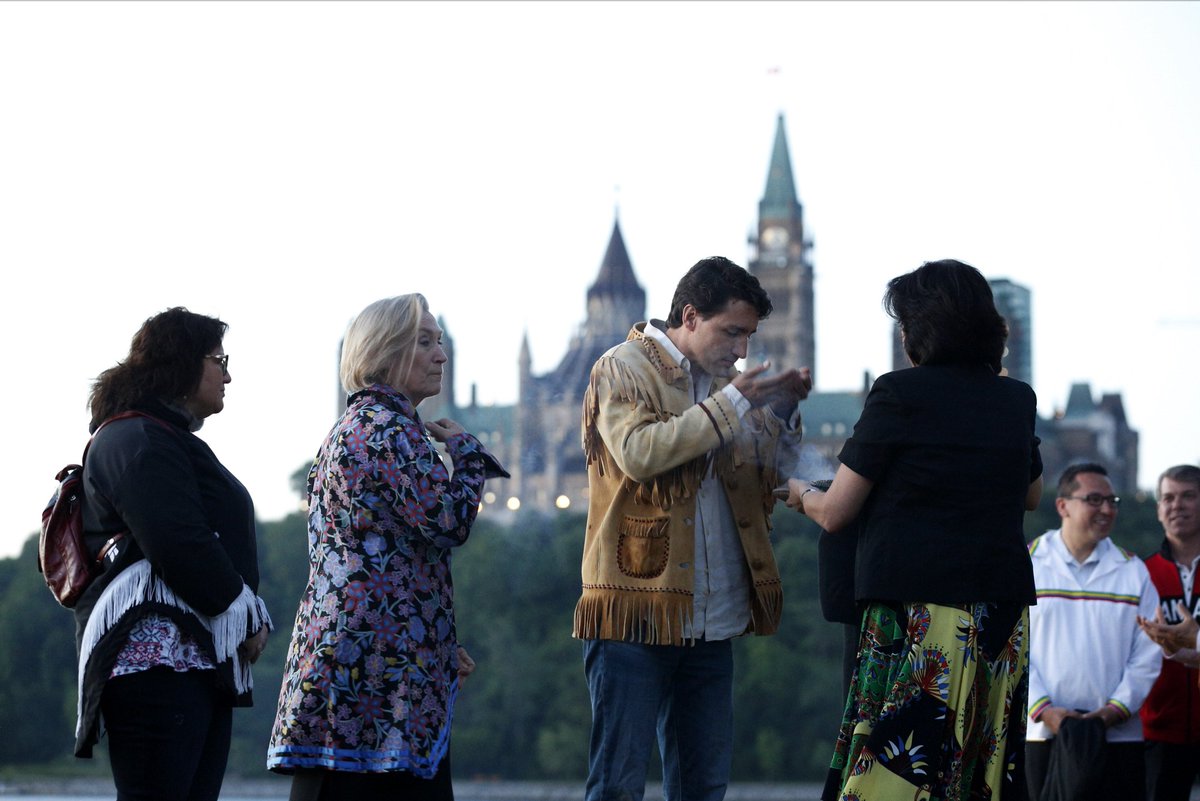
Prime Minister Justin Trudeau participated in a sunrise ceremony and paddle to begin National Aboriginal Day in Ottawa. The PM appears to be wearing Papa PM's buckskin jacket -- Pierre Elliot that is.

Many United Church congregations celebrated First Nations Sunday on the 19th, but Bridge St. will incorporate the theme on the 26th. The congregation has historically celebrated Canada Day with a service the weekend before, often with a guest speaker. This year David Mowat, former councillor and speaker from Alderville First Nation will join us. The United Church has been an active participant in the Truth and Reconciliation process and it seemed right to invite a descendent of the First Canadians to reflect on what this means for us. David was a cast member in the dramatic presentation called The Circuit Riders during our 200th anniversary year.


                                                                                            Bill Reid

I'm inclined to agree with the Toronto Star editorial calling for a national holiday on Aboriginal Day. It makes a lot more sense to me that celebrating the reign on a 19th century British monarch. Declaring a holiday won't make up for the shame and heartbreak of the Residential Schools. nor will it institute the 94 Calls to Action in the Truth and Reconciliation Commission final report. But it would be a meaningful recognition of our First Peoples.

Thoughts?


                                                Kenojuak Ashevak


Friday, June 17, 2016

Prayer Posse

I have long been intrigued by the Jewish tradition of the minyan, at least ten men gathered in a group to pray. I don't like the notion that it must be men, and I deplore the aggressive resistance to women coming together at the Western Wall in Jerusalem for the purpose of prayer.

Still, this commitment to prayer as the work of the gathered faithful resonates strongly with my perception of corporate prayer.

In a delightful piece in the Washington Post Eric Brand describes the challenge of finding ten Jewish men in an airport for the purpose of prayer.

“Mincha!” That’s what you’ll hear when someone’s trying to gather an afternoon Jewish prayer group at the airport boarding gate, striding up and down the rows of seats in the waiting area, looking for volunteers.
Orthodox Jews need to pray in a group of at least 10 men — called a minyan — morning, afternoon and evening. There are specific time limits for each service, so we’ll often grab the moments before boarding to get it done. (I’m still looking forward to hearing “Mincha!” someday and seeing someone who happens to be named Brian Mincha look up and say, “Yes?”)

Most Christians struggle with whether to say grace at a meal in a public place, let alone calling out to others for the purpose of collective prayer. In the specific instance which is the focus of Brand's article a non-Jewish woman from Iowa joins the group of men he eventually rounds up because she is hoping for a safe trip. He doesn't have the heart to kick her out, which is heartening. His conclusion is: "Who knows if the merit of making the minyan kept 200 tons of steel in the air until we reached New York? I don’t know how God does his job. I just try to do mine.

What do you think of this tradition? Would it be good if Christians rounded up a posse for prayer from time to time?


Thursday, June 16, 2016

A Change of Heart

Angela Kennedy and Brian Kennedy

This morning I listened to a CBC Metro Morning interview with Angela Kennedy, chair of the Roman Catholic school board in Toronto and one of her sons, Brian. She has been on Metro Morning in the past, speaking against the imposition of the Ontario sex education curriculum on Catholic school kids, insisting that taking sex ed out of the context of marriage and love was contrary to the values of the church.

Then Brian, now 30 and a teacher, revealed that he had been sexually abused by a neighbour as a child, which caused serious soul searching on Ms. Kennedy's part about what might have made a difference. She now feels that that the curriculum is worthwhile:"My position has changed because of what happened to Brian. A very sensitive and disturbing revelation to us has caused me to pause and to reflect on my own attitudes."  All her children support this changed perspective.

I have written before about the importance of open and honest education about human sexuality, including the boundaries children can establish for themselves to remain safe. It is actually a sin not to provide that education, which often leads to worthwhile conversation at home. Ignorance does not honour God.

I appreciate Brian's courage and Angela's change of heart.  I hope that parents in the RC school board and those from other religious backgrounds get the message, for the wellbeing of their children.

Thoughts?

Wednesday, June 15, 2016

Lightning Awareness


Surely God is great, and we do not know him;
   the number of his years is unsearchable.
For he draws up the drops of water;
   he distils his mist in rain,
which the skies pour down
   and drop upon mortals abundantly.
Can anyone understand the spreading of the clouds,
   the thunderings of his pavilion?
See, he scatters his lightning around him
   and covers the roots of the sea.
For by these he governs peoples;
   he gives food in abundance.
He covers his hands with the lightning,
   and commands it to strike the mark.
Its crashing tells about him;
   he is jealous with anger against iniquity.


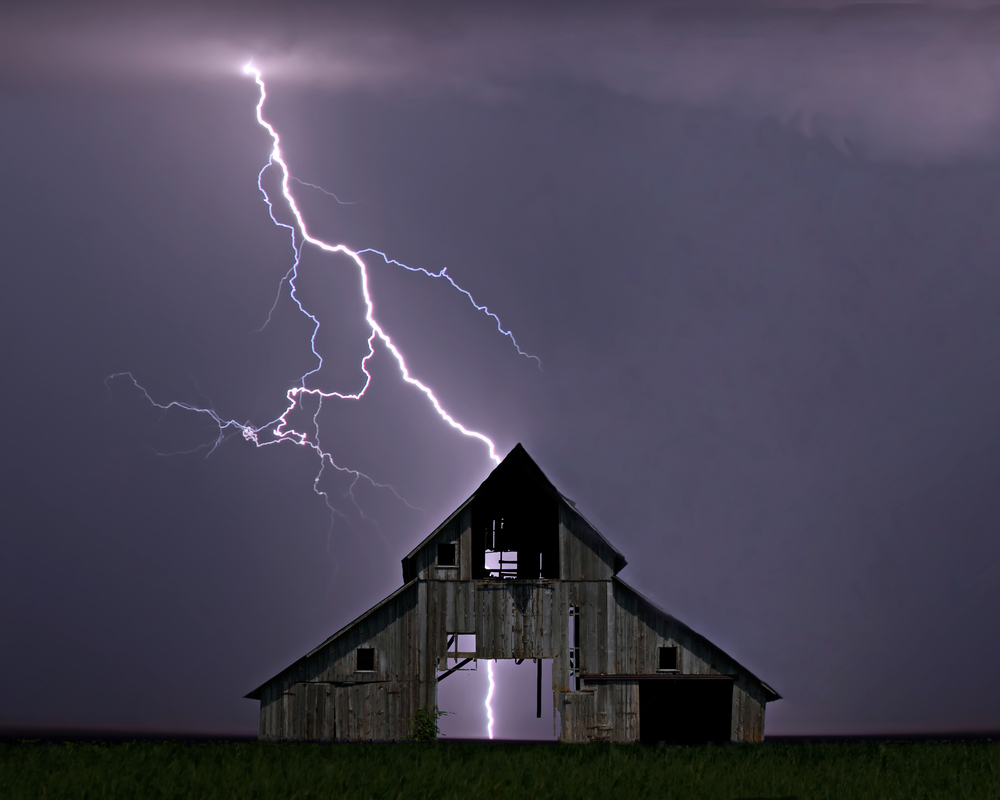
I wondered if I had jinxed our June 5th Outdoor Service and Picnic by choosing a rain theme. It poured rain that morning, but Plan B was a spacious tent at a local golf course and we had an impressive turnout, given the circumstances. There was no thunder or lightning, which would have changed our plans again, but the passage I chose from Job 36 speaks of lightning coming from God's hand, punishing the bad guys and girls.

That's often the way in scripture. Thunder and lightning are mighty portents related to Yahweh, the God of Israel. This Sunday our 1 Kings passage is about Elijah in the midst of a violent storm, before he hears the "sound of sheer silence." Other religions have a lightning god, including Zeus in Greek mythology and Thor in Norse legend.


This is Lightning Awareness Week, and we are offered stern warnings about seeking shelter as soon as we hear the rumbles of thunder. Excellent advise, but that isn't always possible. We have been in the midst of some fierce thunderstorms while canoe tripping, and one particularly violent storm occurred when we were far from safety with our three kids. We love a good thunderstorm, but not under those circumstances. Our most impressive lightning storm experience was sitting safely on a veranda watching hundreds of strikes while atop Mesa Verde in the American Southwest.

Here are some facts about lightning.

one hundred million volts of electricity in a single bolt.
temperature range, 15,000 – 60,000 degrees Fahrenheit, is hotter than the surface of the sun.          
lightning travels about 100,000 kilometres per second, or one-third the speed of light.


Gulp. Little wonder that lightning is associated with untameable and therefore God-like power.


Do you have favourite or scary (or both) lightning experiences? Do you enjoy that sense of energy and power beyond your control? Has God ever hurled a lightning bolt your way? (Hey, I had to ask)

Tuesday, June 14, 2016

Making Sense of Horror


Sunday morning on Twitter there was news that 20 people had been shot in a night club in Orlando, Florida. By the time I got to church the word was that 20 had been killed, and at least 50 injured, a terrible loss of life. When we got home early in the afternoon the death toll had soared to fifty, the worst domestic loss of life in such an incident in American history.

Apparently the killer called 911 to claim affiliation with ISIS or DAESH, and while they enthusiastically agreed (pure evil) there is little evidence that he was connected to any terrorist group/ We're told by experts that while a fair number of these mass murderers claim religious affiliation, including Islam, their heinous acts are usually related to rage. The young man who killed several black prayer group members at a Charleston South Carolina church almost exactly a year ago had weird white supremacist notions with a quasi-Christian connection -- as did the Ku Klux Klan. Of course Donald Trump was quickly into his racist and anti-Muslim schtick, going so far as to say that foreign and other American Muslims were in on the rampage.

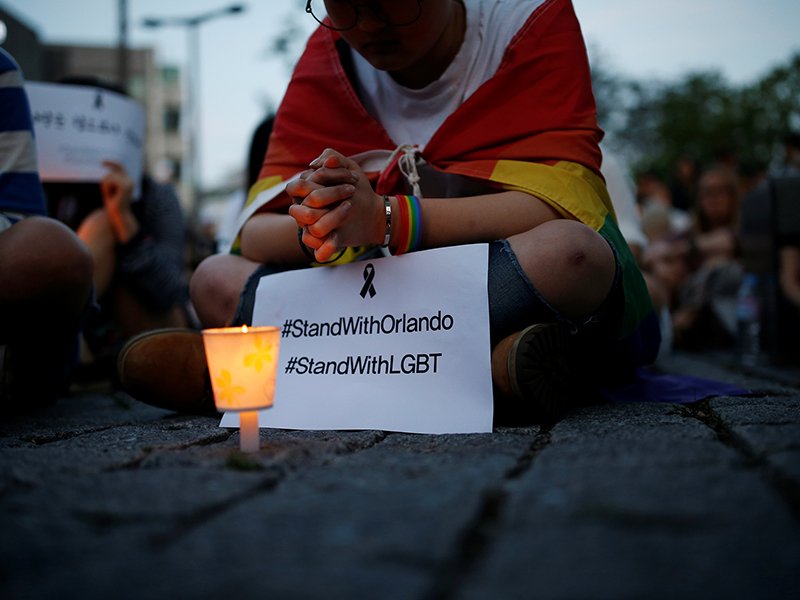
By Sunday evening vigils were organized and held in a number of cities around the world, including Toronto. These events recognized that the rage of the perpetrator was directed toward the LGBTQ community, and people in the night club died because they were gay. Member of Parliament and United Church minister Rob Oliphant was at the Toronto vigil and spoke on television and radio the next day. He reminded people that he is a gay man and is MP for a riding with one of the highest Muslim populations in Canada. He had received many messages of solidarity from Muslim constituents, which touched him deeply.


The other aspect of this story which has received less attention is the mental health of the shooter. His ex-wife identified that she had been abused in their relationship and claimed he was bi-polar. Often those who are mental health advocates shudder when mental illness and murder are associated because it perpetuates the stigmas and stereotypes.

We will open Bridge St. at midday on Friday for a time of reflection and we will ring our bell 49 times in memory of those who died. We need to do something in this community.

Thoughts?

Sunday, June 12, 2016

Vicki and Gary


This morning two colleagues in ministry will be involved in worship in significant ways. The Rev. Vicki Fulcher is our Minister of Pastoral Care at Bridge St. She is very effective in her role, with deep compassion rooted in thoughtful and expansive Christian faith. We will have a conversation about her work with us and her other role as chaplain at Belleville hospital. The gospel passages from Luke in these weeks have been about healing and Vicki has a strong ministry of healing through "sacred accompaniment."

We will also be acknowledging the fiftieth anniversary of ordination for the Rev. Gary Magarrell. Gary calls Bridge St. home, and we are blessed to have him as part of our congregation as a Voluntary Associate Minister. Gary has served Christ's church in many capacities through the years, including as a pastoral care minister at nearby Eastminster United. Today Gary will read scripture and lead us in the Prayers of the People.

I appreciate both Vicki and Gary as persons, and their wisdom and support are invaluable to me as Lead minister.  I know they have touched the lives of many in their essential roles as pastoral care ministers. Pastoral care tends to be a "below the radar" aspect of ministry, and a fair number of clergy see it as secondary. It is vital to congregational health and wellbeing, especially as congregations age.

Thanks to Vicki and Gary, and God bless them both.

Saturday, June 11, 2016

Thou Shalt Not Kill -- Remotely?


Not long ago we saw the film Eye in the Sky starring Helen Mirren and the late Alan Ryckman. It is a taut thriller and not what I expected -- in the best possible ways. It is about the use of drones as weapons of war, and presumably to pre-empt terrorism and large-scale violence. What we realize as the film unfolds is that decisions about using drone launched attacks have a myriad of subtleties and moral dilemmas. What percentage of certainty about targets is necessary in order to strike? What is acceptable collateral damage in order to save many more lives? Can doing evil actually result in a greater good, and who in the chain of command decides?

Meanwhile those who make the life and death decisions go about their mundane lives in distant countries. And so do the "flight crews" who direct the drones to their targets. In this film the pilots are young Americans who are in what looks like a shipping container on a base in the American Southwest. Mirren and Ryckman are the British military personnel who give the order from Great Britain and both are excellent in their roles. The terrorist leaders live amidst innocent people in Pakistan. The story unfolds with great tension and complexity.

A few days later there was a news item about a top Taliban commanders killed by a drone strike in Afghanistan. Previously I might have paid little attention, but all the issues of the film came to the fore when I read about this assassination. Who decided? Where were the decision-makers? Who else died in this strike?

Yesterday I read a review of a book called Drone and the Ethics of Targeted Killing. It noted that drones are now the No.1 counterterrorist weapon for the United States. Thousands have been killed by drones in the past decade. What are the ethics of drone warfare, and does the commandment "you shall not kill" mean when death can be administered by remote control.

We do live in a complex world, don't we? Have you seen the film? What was your response? Have you given any thought to the ethics of drone warfare? How would I work that subject into the Prayers of the People?!


Friday, June 10, 2016

Under a Ramadan Moon


Ramadan, the Muslim month of fasting, began this past Monday. It wasn't that long ago that Canadians, including Canuck Christians didn't know boo about Ramadan. Now we might have a neighbour or co-worker who is quietly observing through the month. Others are making the effort to educate and learn publically.

In Toronto there is a program called "Meet Your Neighbour" in which Muslim families across the city welcome non-Muslim neighbours to their dinner tables.  In Montreal, downtown St. James United Church held an interfaith event at sundown which included music and communal prayer, and Muslim  participants broke their daily fast. Rev. Arlen Bonnar said the interfaith iftar (an evening meal Muslims eat after their daily fast) was a bridge-building event to show the solidarity of the diverse communities in Montreal.

Ramadan isn't just about fasting from food in the period between dawn and dusk. It is also a time to abstain from negative passions -- road rage perhaps? Charity and generosity are also important aspects of Ramadan.

I like the fact that Ramadan is connected to the lunar cycle, which gives us a common thread between the three great monotheistic religions. Our greatest Christian festival is Easter, which is on the first Sunday following the first full moon after the Spring Equinox (got that?) Passover is also lunar dependent, which is why Pesach and Holy Week often coincide. These three religions are very different, and we need to understand both how and why. Yet it is wonderful when we find commonalities. Always, we can be respectful and open to learning from others.

Watch this sweet little musical video called Ramadan Moon by Yusuf Islam (formerly Cat Stevens)  https://www.google.ca/?gws_rd=ssl#q=ramadan+moon+song

Do you know anyone who observes Ramadan? Do you wish you knew more about the observances of other religions?

Thursday, June 09, 2016

Make Me a Channel of Your Peace


Make me a channel of your peace.
Where there is hatred let me bring your  Love.
Where there is injury, your pardon, Lord
And where there's doubt, true faith in  You.
The header for this blog entry is the opening phrase of a hymn attributed to St. Francis which is not his, but certainly worthwhile.
Yesterday I received this year's Global Peace Index, which I always find interesting. And it always prompts me to consider what it means for me as a Christian to actively engage in peacemaking, as a follower of the Prince of Peace who enjoined us to "wage peace" in the world. I am often struck by how fortunate I am to be a Canadian, living in such a peaceful nation. I consider it both a privilege and an obligation as a global citizen. I feel that our sponsorship of a Syrian refugee family and our goal of sponsoring others reflects our commitment to being peacemakers in some small way.
Take a look at the information below and please share your thoughts.
The tenth edition of the Global Peace Index (GPI) finds that many countries are at record high levels of peacefulness, while the bottom 20 countries have progressively become much less peaceful. This creates increased levels of inequality in global peace, and the gap between the most-peaceful and least-peaceful countries continues to widen.


The Cost of Violence 


The world continues to spend enormous amounts on reducing and containing violence, and little on building peace. The economic impact of violence was $13.6 trillion (PPP) in 2015 which is the equivalent to 11 times the size of global foreign direct investment. Since last year commitments to peacekeeping are improving, but global investment in peacebuilding and peacekeeping is less than 2% of the economic impact of armed conflict. 


Decline in Peace 


The ten year deterioration in peace has been largely driven by intensifying conflicts in the Middle East and North Africa region. Terrorism is at an all-time high, battle deaths from conflict are at a 25 year high, and the number of refugees and displaced people are at a level not seen in 60 years.


The GPI 2016 Video


In the 12 months since the last Global Peace Index, increased conflict, terrorism and the refugee crisis suggests a less peaceful world. However, despite the increasingly unequal gap between peaceful and less peaceful nations, there are positive trends where the data tells a different story.

Wednesday, June 08, 2016

I Am the Greatest


I'm so old I remember when the late boxer Muhammed Ali was Cassius Clay. I remember as a kid the fight between Clay and Sonny Liston and his unexpected win. I remember Clay's big-mouth rhyming taunts and braggadocio and not knowing what to think about them. I remember being puzzled and unsettled about his conversion to Islam and criticism of Christianity as "the white man's religion." Then Ali refused to enter into military service while the United States was at war and made what seemed like flippant comments about having no quarrel with the Vietnamese people.

Image result for muhammad ali muslim quotes

It didn't occur to me as a child and a teen that he was actually making principled choices about faith and pacifism. Yet now that he is gone, we are aware that this was the case, and that he paid a huge price for his convictions. At what was arguably the height of his career he was stripped of his heavyweight title and didn't fight for three years. He was reviled by many for his lack of patriotism and there was a considerable financial "hit" during those years. When he returned he was able to win some memorable fights, but he seemed to have lost a step and was pounded in the ring in a way he hadn't been when he was younger. The beating he took may have contributed to his Parkinson's Disease.

I'm hoping that  in the retrospectives we get a deeper look into his spiritual life, and how his faith motivated him. The films about Ali have focussed more on his boxing prowess, but there is so much more to his story. I read in the CBC yesterday the surprising story that in 1983 Muhammad Ali climbed the stage of a packed sports complex in Rouyn-Noranda, a small Quebec town that is a seven-hour drive northwest of Montreal. He spoke about Islam and racism and didn't say a word about boxing. We need to hear about these stories.

Comments?

Please take a look at my Groundling blog for World Oceans Day as well

http://groundlingearthyheavenly.blogspot.ca/2016/06/lament-celebration-on-world-oceans-day.html


Tuesday, June 07, 2016

Justifying Injustice

The Settlers Sundance 2016

I know, I know, I've been MIA the past few days. Life is like that at times.

The United Church of Canada is the denomination  others love to hate until they come alongside. When we were talking about care for creation thirty years ago we were pantheists and pagans. Women's ordination? Prohibited by the bible, until different interpretations were accepted. We were going to hell in a handbasket in terms of LGBTQ acceptance. Now a remarkable number of evangelicals are opening their hearts.

We also seemed to be in the vanguard of concern on behalf of Palestinians, with predictable reaction.  We have figured that it is possible to support Israel without turning a blind eye to the marginalization of Palestinians and the occupation of the West Bank by Israeli settlers. Only a few years ago I was receiving correspondence from pro-Israel groups and individuals deeply offended that the UCC was supporting United Nations resolutions on the occupation and urging the boycott of goods produced by Israeli settlements in the occupied territories. The Unsettling Goods Campaign is worth checking out. http://www.united-church.ca/social-action/justice-initiatives/unsettling-goods-choose-peace-palestine-and-israel

 Again, many denominations have now voiced similar concerns, and some Jewish groups as well.

There is a new documentary called The Settlers which takes a look at the settlements which now dot the territories -- 150 or more. There are 400,000 settlers and most --perhaps 80% --are there because of the inexpensive housing. The rest are there for ideological reasons, often as conservative Jews who feel they are reclaiming the land God promised them in the bible. A small portion of that group are radicals, willing to evict Palestinians and even do harm to others. A lot of them are young and don't actually recognize the state of Israel because it doesn't follow the Torah. They are radicals, and perhaps terrorists, as Islamic extremists are often terrorists. It's the scary thing when any group says "God is on our side" to justify injustice.

I'm glad that there are a growing number of religious organizations and denominations challenging the aggressive settlement practices of the Israeli government and decrying the violence in the territories, whatever the source.

Thoughts?


Friday, June 03, 2016

Nuns of the Universe!


This past Sunday the daughter of one of our senior members was at church, spending time with her mom after returning from Turkey. Her husband has a new job in British Columbia -- as an astronomer and she's awaiting his return to Canada. Cool.

I commented that astronomy is a deeply spiritual enterprise in some respects, and thankfully she agreed. I mentioned that despite the whole Galileo thing, the Roman Catholic church has been quite committed to the study of the heavens, with astronomers in New Mexico and Italy. I have blogged about the RCs chief astronomer in the past.

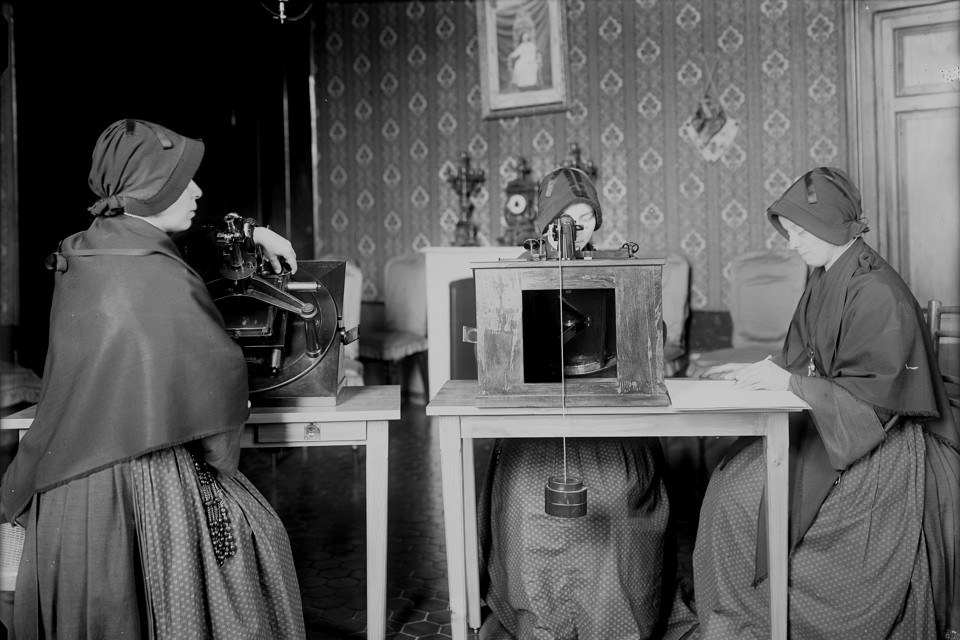
Now I learn about some remarkable nuns from the 19th century who were part of a huge project to map the night sky. Read this from The Atlantic

At a convention in Paris in 1887, the world’s best astronomers hatched an ambitious plan. Harnessing the emerging technology of glass-plate cameras, they would photograph and map every star in the night sky, plotting each star’s position in an enormous catalog. This massive undertaking would require the participation of 20 observatories across six continents, each of which was assigned to chart a corner of the cosmos...

Shortly after the initiative was launched, in something of a symbolic gesture of support for scientific research, Pope Leo XIII permitted the Vatican Observatory to help the project along. (Yes, such an observatory exists to this day; various iterations have been operating since the late 18th century.) A series of astronomer-monks were put in charge of the Vatican’s obligations to the Carte du Ciel, but the labor largely involved rote number-crunching and tedious data transfer. Not every high-profile brother-scientist was up to the task.

That’s why in 1909, the archbishop in charge of the observatory wrote to the nearby Sisters of the Holy Child Mary community, reportedly asking for “two sisters with normal vision, patience and a predisposition for methodical and mechanical work.”

You guessed it, when in doubt, get women to do the grunt work. Apparently they did it exceedingly well and two more sisters were added to the team. The Atlantic article goes on to say

As for the nuns, the mapping techniques they used were made obsolete by leaps forward in telescopic technology. But as the Catholic News Service reports, “modern-day scientists eventually discovered that comparing the star positions recorded a century earlier with current satellite positions provided valuable information about star motions for millions of stars”—essential for understanding the arrangement of the cosmos. Perhaps that’s a service to a higher power. Most certainly, it was a service to humankind.

I'm not entirely sure why I'm sharing this information, other than that it intrigued me that these nuns were involved in such an ambitious enterprise and did it well.

Comments?


Thursday, June 02, 2016

The Struggles of Faith


A few days ago there was an article in the Globe and Mail newspaper about several people who will receive compensation through the fund established by the federal government for those living with the effects of the drug thalidomide. Thalidomide was widely prescribed to pregnant mothers in the early sixties as a safe drug for morning sickness. Instead it produced significant birth defects, often truncated or non-existent limbs. Some of the babies died at birth but many survived. There was a young person in my school from that era with shortened arms. 

Last year the Canadian government gave lump sum payments to those who had already been identified as affected by the drug, but since then a small number of people have come to realize that their malformed limbs were as a result of thalidomide. They too will be compensated.

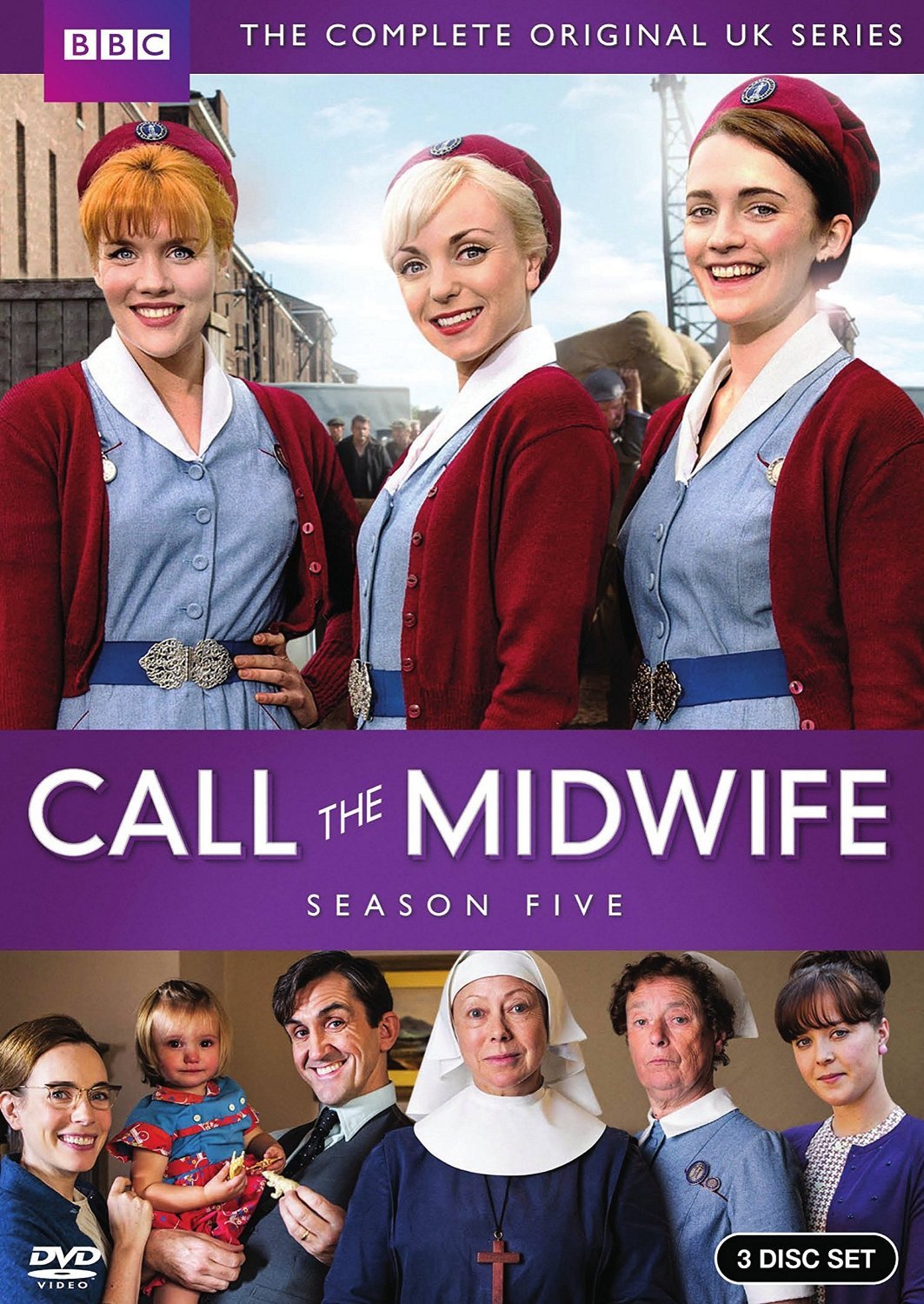
I was interested to see this because a British series on PBS, Call the Midwife, addressed this subject during this season. As the title suggests, it is about a group of midwives, some Anglican nuns and others working with them, in post-war Britain. My wife Ruth finds it amusing that I am a devotee of a drama about midwives. Hey, sue me!

It can be a bit formulaic -- there is a medical challenge, a groaning woman giving birth, and a heart-warming conclusion for every episode. Still, I like the issues addressed, including the struggles of faith for the nuns.


In one of the thalidomide episodes a baby is born with terrible deformities and no chance for survival. At the hospital the newborn is left to die as an act of mercy. Sister Julienne, one of the midwives, keeps vigil with this baby and baptizes it, saying the Aaronic Blessing (the Lord bless you and keep you.) She is overcome with emotion and I was as well. It was a touching exploration of how we perceive "the least of these," not to mention intimations of the assisted dying debate.

Well, I've confessed my Call the Midwife secret. Anyone else a fan? Did you see that episode? What were your thoughts?


Tuesday, May 31, 2016

More Than Sorry


In keeping with the final report of the national Truth and Reconciliation Commission Ontario Premier Kathleen Wynne has issued an apology to the aboriginal peoples of this province for what were essentially the genocidal injustices of the past. It was an appropriate step to take, and one I fully support as a citizen of the province. This paragraph from the text of Wynne's speech gives us the essence of the apology

As Premier, I apologize for the policies and practices supported by past Ontario governments and for the harm they caused. I apologize for the province’s silence in the face of abuses and deaths at residential schools. And I apologize for the fact that the residential schools are only one example of systemic, intergenerational injustices inflicted upon Indigenous communities throughout Canada.

We will now see whether our provincial and federal governments fulfill the promises of their apologies and  verbal commitment to a reciprocal relationship with First Nations.

I continue to follow this discussion with great interest, as a concerned citizen, as a United Church member, and as the pastor of a congregation with a direct history with aboriginal peoples. Bridge St. Methodist Church established a First Nations community on Grape Island in the Bay of Quinte during the early 1800s, but it was short-lived and likely ill-conceived. The group of more than one hundred moved to Alderville within a couple of years.

We have invited David Mowat of the Alderville First Nation to be our guest speaker at this year's Canada Sunday service at Bridge St UC.  David participated in the Circuit Riders dramatic presentation during two performances last year and he did an excellent job of offering an aboriginal perspective consistent with the era. He was pleased to be invited because he has been involved in the Truth and Reconciliation process. I look forward to his presence with us.

Do you feel the apologies of governments are worthwhile? Are they a step toward reconciliation? Have you read the recommendations of the Truth and Reconciliation Commission report? Will you join us for the June 26th service at which David Mowat will speak?

Sunday, May 29, 2016

The United Moose of Canada

This weekend Conference meetings of the United Church of Canada will meet across the country. Our Bridge St. congregation is part of Kente Presbytery of the Bay of Quinte Conference, which this year will meet in Pembroke. I won't be there this weekend because...I won't. I will lead worship at Bridge St. while Rev. Vicki Fulcher is attending from our congregation. I have attended conference in Newfoundland, Toronto, Northern Ontario (Manitou,) various places in the Maritimes, and across Southern Ontario. I also dropped in to Montreal and Ottawa Conference for our son Isaac's ordination. To be honest, I've been a Youth Forum leader and a table group discussion facilitator, and honestly, I've had my fill after 30+ meetings.

The format for Bay of Quinte looks good this year. They won't be meeting in an arena (kiss of death) and there will be lots of interesting workshops. There will also be discussion of how the structure of the United Church will change. The "if" of change is over, and we are on to the "when" and "how." Changes to our congregation/presbytery/conference/general council four-court system of governance have been on the agenda since my ordination year, which was 1980.

There is the old chestnut that a moose is a horse designed by a committee. Our United Church of Canada is the equivalent of a moose, an amalgamation of three denominations in 1925 which incorporated elements of all three. It was always somewhat unwieldy and became ponderously so over time as our numbers have shrunk and we have become more congregational in outlook.

We hope that the United Moose of Canada will find a new form of expression which allows us to uphold our commitment to inclusivity and social justice in Christ's name. The UCC is unique and oddly faithful in a number of ways. It would be a loss to the Canadian social fabric if we simply faded away, like the Cheshire Cat.

Let's say a prayer for all these Conferences across the country, shall we?


Saturday, May 28, 2016

The Other Elbowgate


Polls are indicating that Canadians really don't care about the so-called Elbowgate incident in which a testy Prime Minister Justin Trudeau made like Gordie Howe and body-checked an NDP MP from Quebec. Elizabeth May said it was an accident, so it must be true.  In fact, it seems that more people are annoyed with the hapless MP than the dastardly PM, claiming she blew the incident out of proportion. When in doubt, blame the victim.
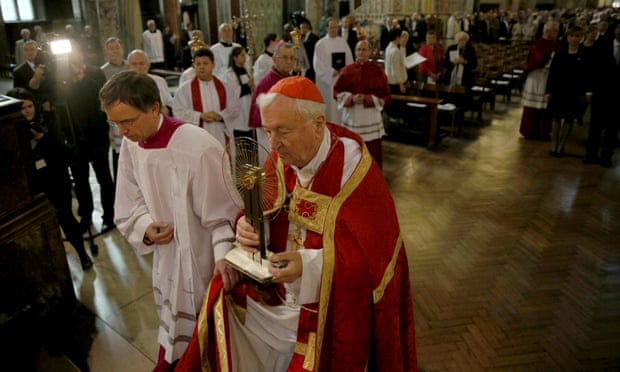
Archbishop of Westminster Cardinal Vincent Nichols at Westminster Cathedral in London.

Another Elbowgate surfaced this week, this one involving a fragment of an elbow bone purported to belong to Thomas Becket, who was famously murdered in Canterbury Cathedral in 1170 by those loyal to Henry II. Becket challenged the king, who was supposedly his friend, and in a time-honoured tradition the monarch had the cleric offed. Becket is recognized as a martyr and saint by both the Roman Catholic and Anglican churches. This bone chip has been displayed in splendour in Hungary - I kid you not -- and will be repatriated this weekend, as sort of a cameo appearance before returning to Hungary.  According to The Guardian

For almost eight centuries, the tiny sliver of bone has been venerated by distant devotees of England’s famous “turbulent priest”. But this weekend, Thomas Becket's elbow will make a solemn, if fleeting, return from Esztergom, in Hungary, to Canterbury, the seat of his clerical authority – and the scene of his brutal murder...It will be the culmination of an extraordinary week in which Becket’s bone has toured Westminster Cathedral, Westminster Abbey, Rochester Cathedral and other churches associated with the 12th-century archbishop of Canterbury.

This probably seems rather goofy to most of us, something out of Monty Python. Although, perhaps we  shouldn't be too quick to judge. Venerating relics -- bones and wooden slivers from the "true cross" -- is certainly not a Western nor a Protestant tradition. But if we're honest we tend to tend to venerate our buildings, as though they are God, rather than the places where we worship God. We spend countless millions to shore up the bricks and mortar of the places in which we assemble, often starving active ministry as we do so. It is one of my great frustrations at this stage of ministry, the seemingly unending discussions about the buildings of our United Church of Canada. Meanwhile we are fading away as an aged congregational base dies off.

Ah well, let the bone chips fall where they may.

Comments?