Saturday, October 08, 2016

Thought Control?

Image result for intervarsity christian fellowship of canada
When I was in my teens and early twenties I had some connection with InterVarsity Christian Fellowship, an evangelical campus ministry with a presence across North America. My theology took a different direction but I've always been aware that they were still active with students in different settings.

I was deeply disappointed to hear that IV in the United States has decided to give the boot to staff members who are LGBTQ friendly or support gay marriage. This new policy has received international attention, including coverage by TIME.

One of the largest evangelical organizations on college campuses nationwide has told its 1,300 staff members they will be fired if they personally support gay marriage or otherwise disagree with its newly detailed positions on sexuality starting on Nov. 11. InterVarsity Christian Fellowship USA says it will start a process for “involuntary terminations” for any staffer who comes forward to disagree with its positions on human sexuality, which hold that any sexual activity outside of a husband and wife is immoral.

It's rather chilling that a Christian organization wants to fire employees for their thoughts and convictions, even if  they are not openly expressed, or reflect personal life choices. How can InterVarsity possible believe that this will be viewed as anything but cult-like? IV is not alone amongst faith groups attempting to stop a shift in perception of what it means to live the inclusive gospel of Jesus Christ. All this will do is confirm the suspicions of some in a secular society that churches and another faith organizations are judgmental and controlling. So much for evangelism.

It may be that our human rights and employment legislation in Canada won't allow for a similar witch hunt, but who knows?

Thoughts?

Friday, October 07, 2016

Prizing Peace


I am always curious about the choice of the Nobel committee for the annual Peace Prize. I still think awarding the prize to President Obama back in 2009 was puzzling and even embarrassing. What had he and the United States achieved toward peace at that time? What will Obama's legacy be in that regard?

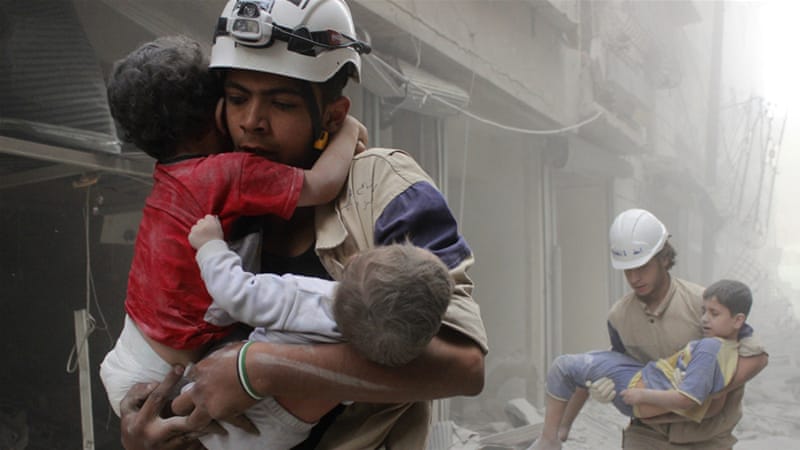
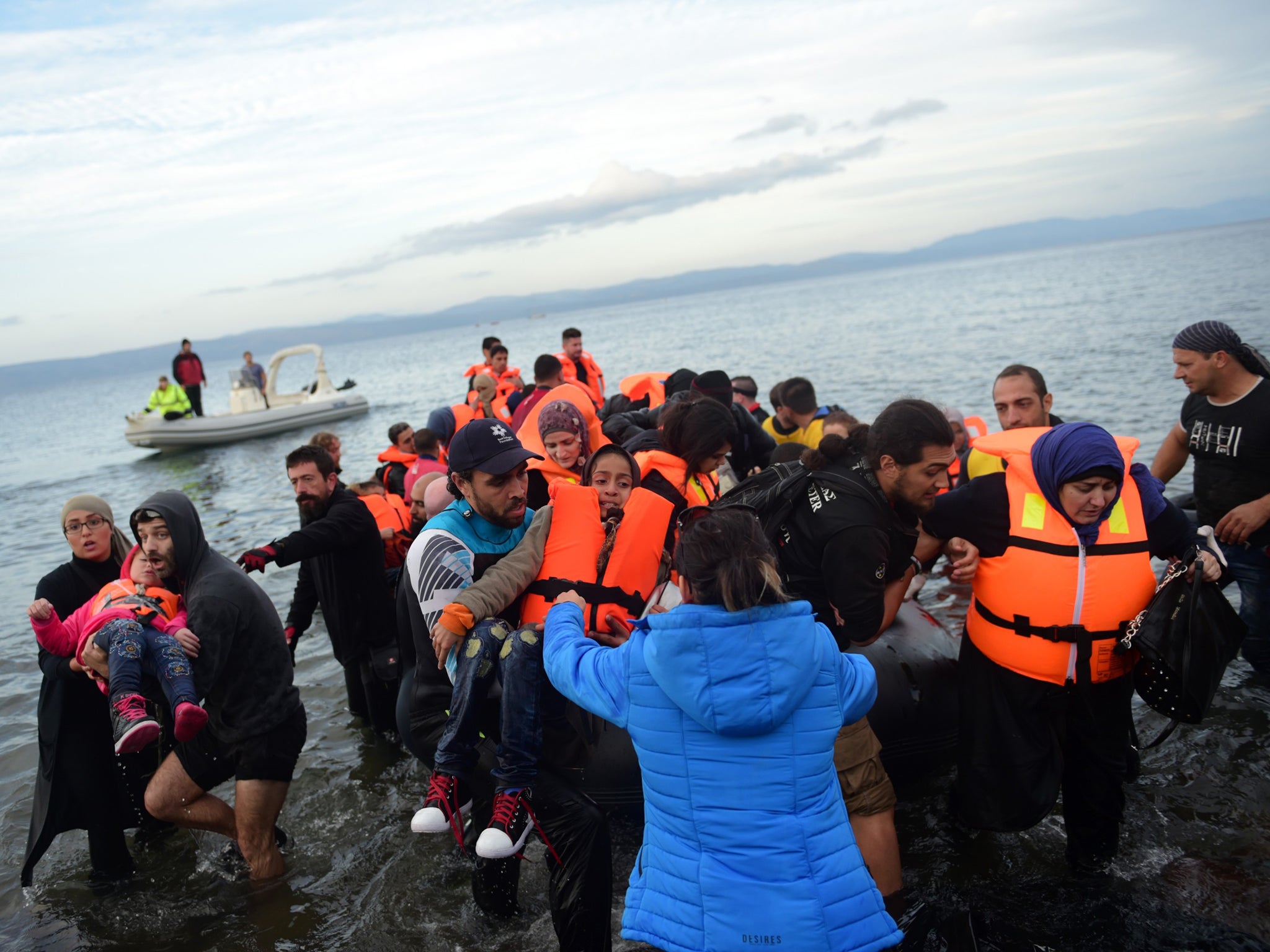
This year there were interesting candidates. Pope Francis received honourable mention, but the specifics of his peace-making were a little thin. The residents of the Greek island of Lesbos were considered, for their remarkable work in addressing the tsunami of asylum seekers washing up on their shores from across the Mediterranean. The White Helmets of Syria, the rescue group which responds to the carnage in that beleaguered nation were in the running.

Image result for syrian white helmets

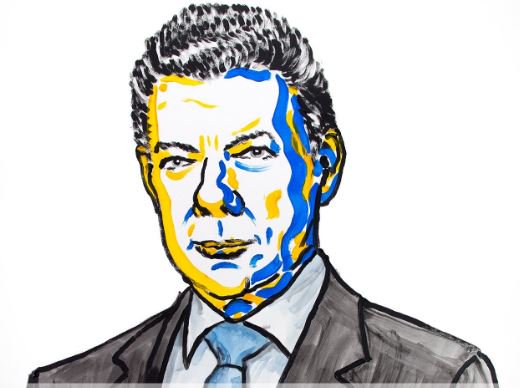
In the end it was Colombian President Juan Manuel Santos who received the honour for negotiating a peace agreement after more than five decades of civil war in his country. Curiously, the FARC rebel commander Timochenko was not included. This choice was a true surprise because last Sunday Colombian voters narrowly rejected their peace deal in a referendum. Santos accepted the award in the name of the Columbian people and the millions of victims of the conflict. Some are hopeful that the Nobel prize will renew the impetus for a process that was stalled by the rejection vote.

The Nobel Peace Prize can be rather political, it seems to me, and sometimes nonsensical. Yet it is important to uphold all efforts for shalom, a true and lasting peace. As followers of Christ, the Prince of Peace, these initiatives and the people who represent them should be honoured.

Do you pay much attention to the nominees for peace prizes? Are these awards important? Who would your choice have been this year?

Image result for Greek islanders help asylum seekers

Thursday, October 06, 2016

Praying for a Happier Ending


Wednesday evening we went to see the film Dheepan, winner of the Palme D'or at the Cannes Film Festival in 2015. It is about a fighter in the Tamil Tigers rebel group in Sri Lanka named Dheepan who flees the country after the Tigers are defeated. His wife and children were killed in the conflict but he teams up with a woman who is a total stranger and the child she has taken on to be more attractive for immigration approval as a family.

They end up in France, in a run-down tenement complex full of refugees and immigrants from around the world. Some of them are simply trying to get by while others have become involved in gangs and illegal activities. Its not enough that they must contend with the challenges of culture and language barriers. Nor that they are total strangers who have all experienced deep losses yet are attempting to keep up the pretense of being a family. And after fleeing violence they live in the midst of more, and must make choices for survival.

This is both a harrowing and moving story, and we were so glad we saw it, in part because it is a worthwhile film but also because of what we are living with our Syrian refugee sponsorships through our coalition of faith communities.  Next week the family we welcomed last December will be joined by a grandmother and a sibling family of five. We anticipate another twelve relatives in three households.

As with the nine-year-old girl in Dheepan, conflict and life in a camp has made education impossible for these children, and we really have no idea of the burdens of loss experienced by the adults or the kids.

A recent poll of Canadians discovered that many of us figure refugees should "fit in" quicker and adopt our values. How would we do if we were plunked in an unfamiliar culture after living through trauma and privation? How is that speedy integration possible when there are so many barriers to doing so?

We are excited about the arrival of these Syrian relatives and will do our best to make them feel welcome. It's important that we pray for their transition and are determined to do whatever practically possible to begin a meaningful life in Canada.

In Dheepan the family of necessity gradually becomes a family of the heart. A late venture into action-film violence near the end seems excessive, but the story is still affecting. There are glimpses of a happier ending after the moments of despair. We ask God for the same in our real-life situation.

Comments?

Wednesday, October 05, 2016

Christ-quorum


Image result for yarmulke
Yesterday I found myself at a street corner in downtown Belleville standing next to a fellow I see around the community regularly. Sometimes he's in the yard of his century brick home which always has a "for sale" sign out front. We've exchanged pleasantries on a number of occasions. He is a cheerful guy, a bit of a character --in a good way. I noticed for the first time his yarmulkah, or kipah, the skull cap worn by Jewish men.

I said hello and observed that he must be one of the last men standing in what I know is a very small Jewish community in Belleville. For a moment he was uncharacteristically at a loss for words, then he conceded that my comment was true. I asked whether it was difficult to get a minyan, and then he looked truly perplexed. A minyan is essentially the quorum for Jewish worship, a minimum requirement of ten men -- not ten people, orthodox men. I could tell he was wondering who this relative stranger was, and how did I know about a minyan?

He admitted that it can be tough to scare up ten Jewish men for worship in this town. What do you do, I wondered, when there aren't enough. You wait and hope, was his answer. And some days there is no formal time of prayer because there isn't a sufficient number of men. I read an article a few months ago about a Jewish man who travels a lot. He regularly tries to find enough Jews in airports for prayer in the chapel, often asking for an announcement to be made over the public address system. His piece was comical, as he described who shows up to the call. One time an evangelical Christian woman arrived at the chapel. She didn't like flying and figured prayer of any kind would help. He shrugged his shoulders and invited her to join them.

After the light changed at the corner yesterday I thought about the conversation. In these days when fewer and fewer people in our society gather for worship of any background  it's hard not to fret about the future. It is important to wait and to hope, rather than lose heart. For those of us who are followers of Jesus, Jew and Risen One, we choose to be in the moment and celebrate his abiding presence. Whenever two or three are gathered together, we have Christ-quorum.  

Comments.

Tuesday, October 04, 2016

St.Francis and the Pigs

Image result for st francis of assisi

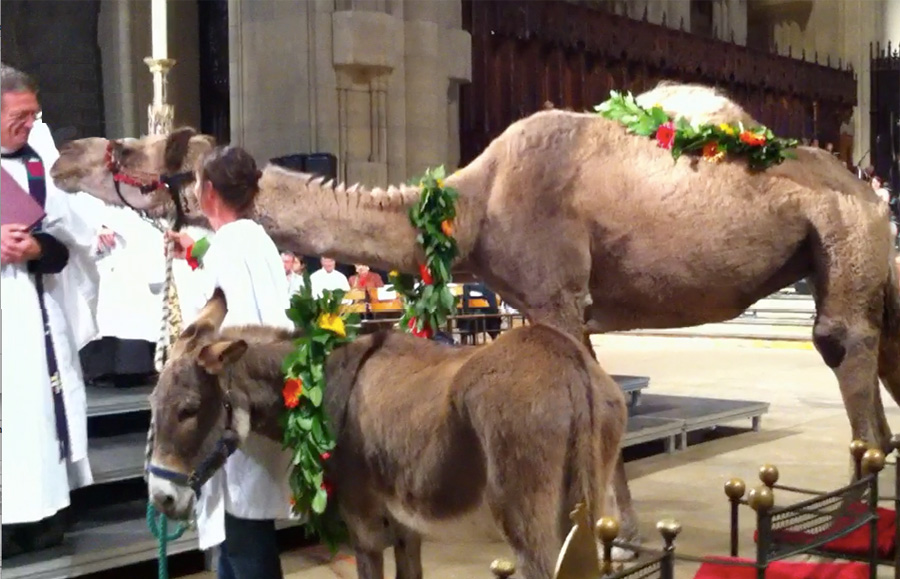
We had a delightful blessing of the animals at Bridge St. UC this past Sunday, and those who didn't bring their companion animal(s) were given the opportunity to call out their names. These blessings are in honour of St. Francis whose actual feast day is October 4th --today.

While we can be rather sentimental about our pets, the Feast of Francis can nudge us to consider the wellbeing of all creatures, including those we eat.


I'm thinking of the trial going on in Burlington Ontario of a woman who was charged with the crime of giving water to thirsty pigs on a hot summer day last year. They were in one of those transport trucks we all see on the highway from time to time. Whenever I pass one I have misgivings about my beloved bacon, for a moment anyway. The woman Anita Kranjic, of Toronto Pig Save (I'm not making this up) walked up to one of these trucks, stopped in the city, and gave the pigs some water. The driver got angry, the police were summoned, and she was charged. Interestingly,  Ms Kranjic invoked Jesus on the day she was charged, and the bible during her testimony. This from the Globe and Mail:


“It’s in the Bible,” she said. “When I was thirsty, you gave me water.”
“So you did it because the Bible told you to do it?” Mr. Apel asked.
“I did it because it’s the Golden Rule,” she said. “It’s written in our hearts.”
Ms. Krajnc’s testimony was rooted in the history and morality of activism rather than the niceties of the law. She spoke about the importance of “bearing witness” during the “vigils” for farm animals that her group conducts and films three times a week, in order to persuade members of the public to become vegan.
“We’re trying to end this mass disconnect in society” between the suffering of animals and the meat that people consume, she said. “When you go to the supermarket, you don’t see their eyes, or you don’t hear their cries. … In the supermarket, you just see cellophane-wrapped meat. ”

Image result for blessing of the animals

This makes me uncomfortable as a carnivore and a Christian, and I figure that's a good thing. I would never eat a dog, but apparently pigs are as intelligent as canines. It's probably too easy to pick up that package of meat and not think of what the animal went through on the way from the farm to the grocery store to my plate. We never see images of St. Francis standing in the midst of an abattoir. We would prefer him to be communing with the birds.

Does anyone else think that this trial is absurd? Does the Golden Rule --"do unto others as you would have them do to you" -- apply to non-humans? Are you ready to give up bringing home the bacon?

Sunday, October 02, 2016

Gravely Sinful Response

Image result for Edmonton Catholic Archbishop Richard Smith
I have made my uneasy peace with the legislation on Assisted Dying in Canada, even though I am uneasy with the Supreme Court and legislators having the final say is such significant territory. And while I'm not convinced that assisted dying will be the right choice in some circumstances, it will be an act of mercy for that very small percentage of Canadians who do avail themselves of this option. We should all pray that the confused and vulnerable are protected from the unscrupulous or indifferent.

That said I think the decision of the Edmonton Roman Catholic diocese to withhold church funerals from those who choose assisted dying is absolutely appalling.

The Catholic Bishops of Alberta and the Northwest Territories issued new guidelines  that say priests should not conduct ecclesiastical ceremonies for people who have died in "high-profile" assisted deaths. The guidelines also say that families who want to celebrate the assisted-death decisions of their loved ones should be denied church funerals."The priest and the church have, as our ultimate concern, the salvation of souls and mercy and compassion can never be separated from telling the truth," said Archbishop Richard Smith in a Friday interview with CBC News."What the church teaches very, very clearly … to die by assisted suicide, euthanasia, these are gravely sinful acts contrary to the will of God."

Of course, the Roman Catholic church doesn't give a damn what I think, but it should! This conjures up all the miserable attempts by religions of every stripe to control the behaviour of others by punishment and fear and banishment. How well has that worked? And where do we stop with this? There are a fair number of funerals I've conducted for those whose character and behaviour leave a lot to be desired. The church can define assisted dying as a "gravely sinful act," but I was under the impression we are all sinners desiring the grace of a merciful God. I wonder how many paedophile priests have been denied Christian burial by the RCs? Those guilty of the "soul murder" of sexual abuse seem to be in far greater eternal peril than those who decide to escape pain and suffering.

Anyone else find this decision disheartening?

Saturday, October 01, 2016

Peres and Peace


Yesterday world leaders gathered in Jerusalem to attend the funeral for Shimon Peres. Peres was involved in the political life of Israel for more than 60 years, essentially throughout the modern era of this Middle Eastern state. Canada was represented by two former Prime Ministers, Jean Chretien and Stephen Harper, as well as Prime Minister Trudeau.

Image result for peres funeral

Peres was recognized as a statesman and leader for a country that emerged from the dark shadows of the Shoah, or Holocaust. President Obama spoke for twenty minutes offering that "Even in the face of terrorist attacks, even after repeated disappointments at the negotiation table, [Peres] insisted that as human beings, Palestinians must be seen as equal in dignity to Jews and must therefore be equal in self-determination."


That wasn't always Peres' approach. In his earlier political life he had few qualms about Israel being a warrior nation in order to survive and he served as defense minister.  As the years went on he realized that aggression from either side was not a solution.  Rather, it resulted in an endless round of violence which was an impediment to peace. Conversation and negotiation were essential to a lasting peace. Some say that this was an example of Peres' pragmatism and even a desire to create a more positive legacy. Others see it as a genuine change of heart

.Image result for peres funeral

President Benjamin Netanyahu of Israel and Palestinian President Mahmoud Abbas met at the funeral and actually shook hands. It wasn't exactly the "wolf and the lamb shall lie down together," but it was a gesture that honoured Peres as he was laid to rest. Yesterday was a reminder that steps toward peace are always possible.

Comments?

Friday, September 30, 2016

The Christian Saga?

Image result for the settlement centre iceland

The Settlement Centre Borganes, Iceland

a long, involved story, account, or series of incidents...a long story of heroic achievement...
                                                                     Saga definition

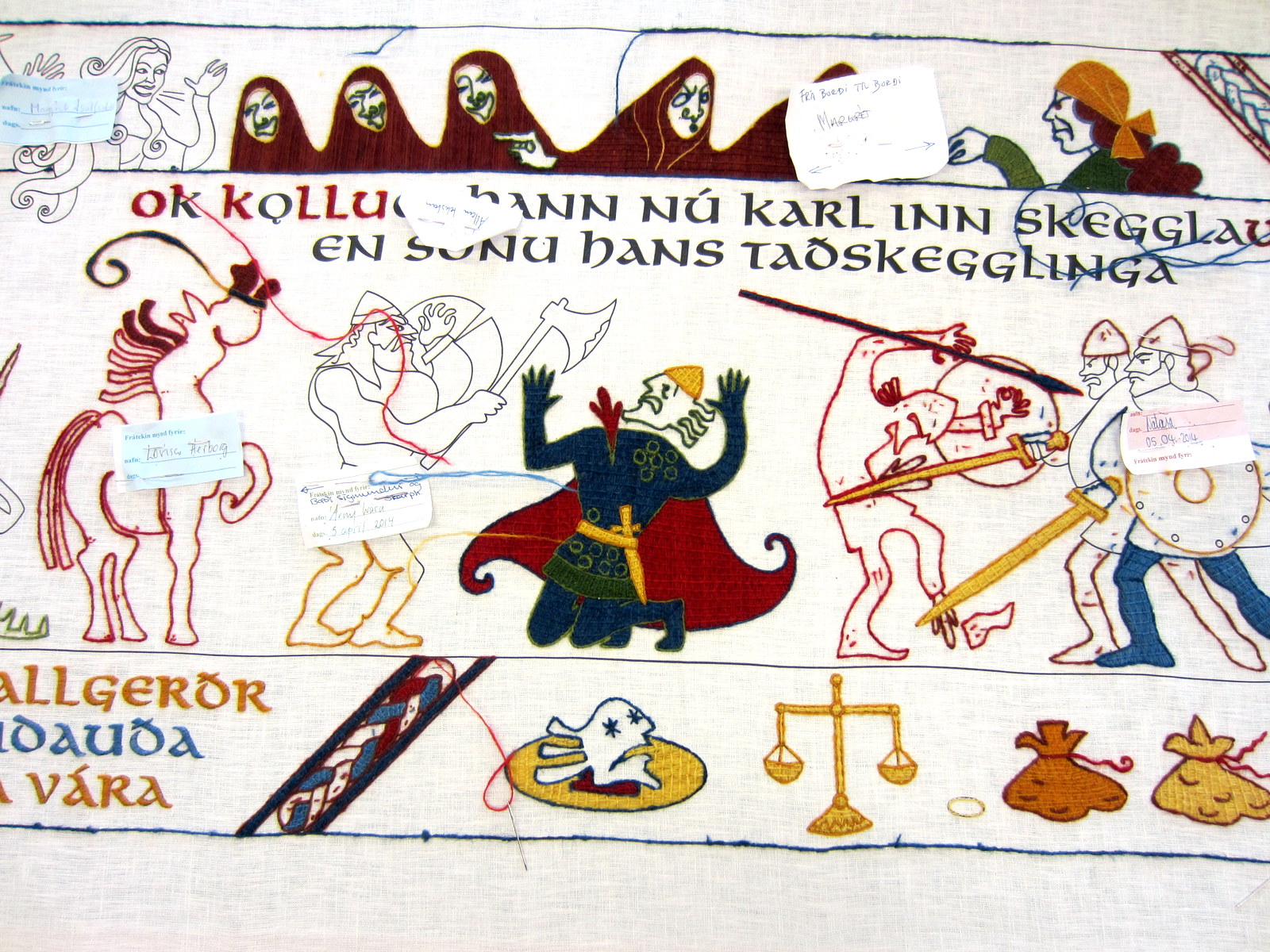
When we were in Iceland earlier this month we revelled in the raw natural beauty which seemed to be around every turn. We also enjoyed learning more about this island nation which was settled from Scandinavia between 1100 and 1200 years ago. We visited the Saga Centre on the south coast, the Settlement Centre on the Western Peninsula, and the National Museum in Reykjavik. At each location we gained a greater sense of the sagas of Iceland, which involve fierce warriors, resourceful women, and blood feuds. The gods show up for good measure.

Image result for the saga centre iceland

The Njál's Saga Tapestry

What struck me is that while we have the bible as our holy book in the Judeo-Christian tradition, we tend to tone down the rich narratives which are essentially our sagas. There are times in the Christian year when we allow those scriptural sagas to unreel, through the lectionary, but they are often in the summer when not many people around. And we tend not to emphasis the narrative thread of the gospels, with the great drama of Jesus, revealed as God-with-us. We are reasonably sure that the biblical narratives were transmitted orally, long before they were written down, much like Norse and Icelandic sagas, as well as the stories of other cultures.

Looking back over nearly four decades of ministry in a  "coulda shoulda way" I realize that we would all have benefited from telling the story of God's presence with Israel and in Christ with a more focussed sense of the saga. Actually, a lot of it was swash-buckling!  Isn't that why we loved certain bible stories when we were kids?

Comments?

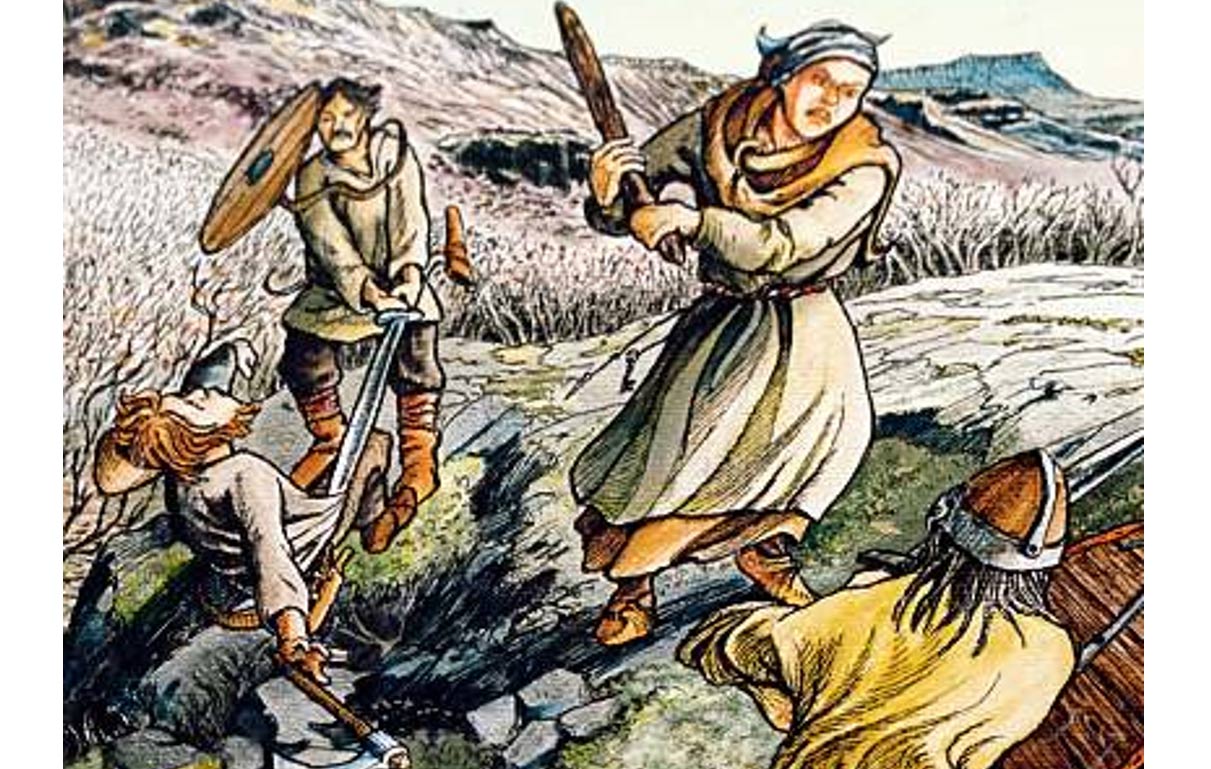
Image result for iceland women saga


Thursday, September 29, 2016

Pipeline to Justice

Image result for great bear rainforest pipeline


"The Great Bear Rainforest is no place for a pipeline.
Too many communities and too many jobs would be put at risk." Justin Trudeau

A few days ago Prince William and Princess Katherine had to cancel a trip to the Great Bear Rainforest in British Columbia because of heavy rain. The missed the opportunity to visit a remarkable and unique wilderness ecosystem which includes bears which are white even though they are genetically black.  

You will recall that there was pressure to push a pipeline carrying oil called Northern Gateway through this pristine wilderness. When our current rime Minister Trudeau was the opposition leader he spoke against that happening. Ultimately Northern Gateway was turned down.

Environment Minister Catherine McKenna speaks in Richmond, B.C., Tuesday while flanked by Natural Resources Minister Jim Carr, from left to right,  B.C. Premier Christy Clark and Fisheries Minister Dominic LeBlanc after the federal government announced approval of the Pacific NorthWest LNG project.

Then we heard this week that the Liberal government has approved in principle the Pacific Northwest LNG (liquid natural gas) pipeline, although that approval includes a hefty list of provisions which must be addressed. And a portion would go through the Great Bear rainforest. This pipeline proposal has support from the BC government and some First Nations groups. But there is still considerable concern, as the CBC has reported:

In a letter addressed to federal Environment Minister Catherine McKenna 90 scientists and policy experts said the proposed plant would make it "virtually impossible" for B.C. to meet its GHG [green house gas] reduction targets, a claim B.C.'s environment minister says is unfounded and "doesn't meet reality."
Some First Nations living in the area have also raised concerns that the terminal will damage local eel grass and salmon habitats, food crucial to their livelihood. A treaty penned by 50 Indigenous groups in Canada and the northern U.S. this week, with a pledge to fight all proposals to build more pipelines, will also be a potential hurdle for all energy infrastructure proponents.

A number of faith groups including the United Church of Canada  have raised concerns about the construction of pipelines in British Columbia. They stand in solidarity with First Nations and will likely continue to do so. We all need to understand that governments must make decisions which stimulate and support economic growth, but not at any cost, and certainly not without the support of those who call regions and habitats home.

Thoughts?


Wednesday, September 28, 2016

Room for More


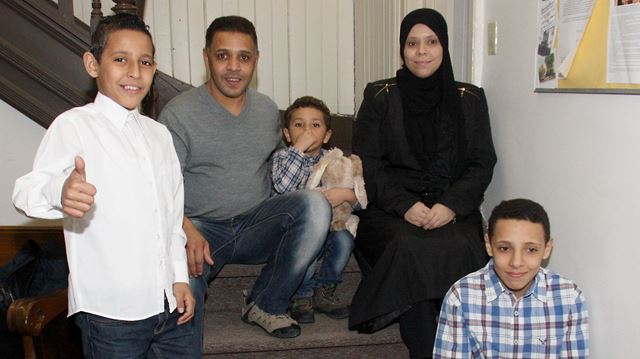
Tomorrow morning I will be interviewed on CBC radio's Ontario Morning with an update on our United Syrian Family Support Belleville sponsorship. The Al Mansour family of five (above) has been with us for nine months now. The collaboration of three United Church congregations, the Belleville mosque and other community partners has been a wonderful experience of faith in action. We have learned from the Al Mansours that other members of their family are living in camps and we agreed to at least endeavour to bring all eighteen of them to Canada.

We managed to apply for the whole fam damily after frantically pulling together the paperwork in 24 hours when the federal government provided a surprise one-day window to do so at the end of March. All were vetted and approved with an estimate that March 2017 would be the timeline for the first arrivals. 

Since then St. Joseph's Roman Catholic parish has joined our sponsorship group after their prospective Syrian family was turned down in Turkey. While this was hugely disappointing for them --they fundraised and rented an apartment -- they feel that God has brought us together in this important initiative.

How true this has turned out to be. We have just learned that the first arrivals will be during the week following Thanksgiving, fittingly. After we recovered from the initial shock we realized that the St. Joe's folk are ready to go with the first family. The apartment they rented is down the hall in the same apartment building as the Al Mansours, which is, well, providential!

In addition, this week the Belleville 100 Men Who Care group chose our sponsorship out of twenty worthy causes to be the recipients of $11,000.

Please pray for us as we welcome these Syrians as new Canadians. We do feel that God was been at work in our undertaking, and we've really just begun.

Comments?

Tuesday, September 27, 2016

Time to Say Farewell

Image result for gretta vosper toronto star

As you will know from earlier blogs I'm quite sure the Rev. Gretta Vosper, a United Church minister, is a decent person who wants to care for her Westhill United flock and live as a compassionate, caring person. She just doesn't want to do so as a Christian, or a theist in any traditional sense. For that reason I have long been of the opinion that she should no longer be a United Church minister. I figure she should have the courage of her convictions, and venture out as the bold leader of a new movement that is freed from the fetters of the still Christian United Church of Canada.

While we were in Iceland I saw that what I'm sure was a thoughtful, prayerful committee from Toronto Conferernce decided Rev. Vosper should be reviewed and declared unfit for ministry because of her views. This wasn't an easy decision and as they put it “The way forward is costly in terms of emotional and spiritual energy. The way forward is costly in terms of time and finances for both Ms. Vosper and the church,” said an online statement issued by the committee.

I am relieved by this recommendation and hope the church has the courage to say goodbye in a way that is both fair and firm. Despite what Vosper claims, I don't believe that a large number of United Church clergy share her views, but if they do, they too should be brave enough to leave.

Where are you on this one? Do you agree with this recommendation, or is it draconian for our "big tent" United Church?

Saturday, September 24, 2016

Like Trees Planted By Streams


Happy are those    who do not follow the advice of the wicked,
or take the path that sinners tread,
    or sit in the seat of scoffers;
but their delight is in the law of the Lord,
    and on his law they meditate day and night.
They are like trees
    planted by streams of water,
which yield their fruit in its season,
    and their leaves do not wither.
In all that they do, they prosper...
                  from Psalm 1

Wednesday of this past week was National Tree Day, planted in the middle of National Forest Day, which concludes today. Got that straight?

I'm a big fan of trees and we've planted a number on our property, even though there are trees all around us. A silver maple which had been coming along nicely appears to have succumbed to the drought-like summer. Sliver maples like wet feet and I wasn't attentive enough. I'm in mourning.

There are lots of tree references in scripture, as I regularly point out, and the Book of Psalms begins with the metaphor of those who are true to God being like a tree planted beside a sustaining water source which gets them through life's droughts. The Old English word for tree is related to being firm, solid, steadfast, true. I like that. There is a "tree spiritual" often sung during the American Civil Rights movement based on Psalm 1.

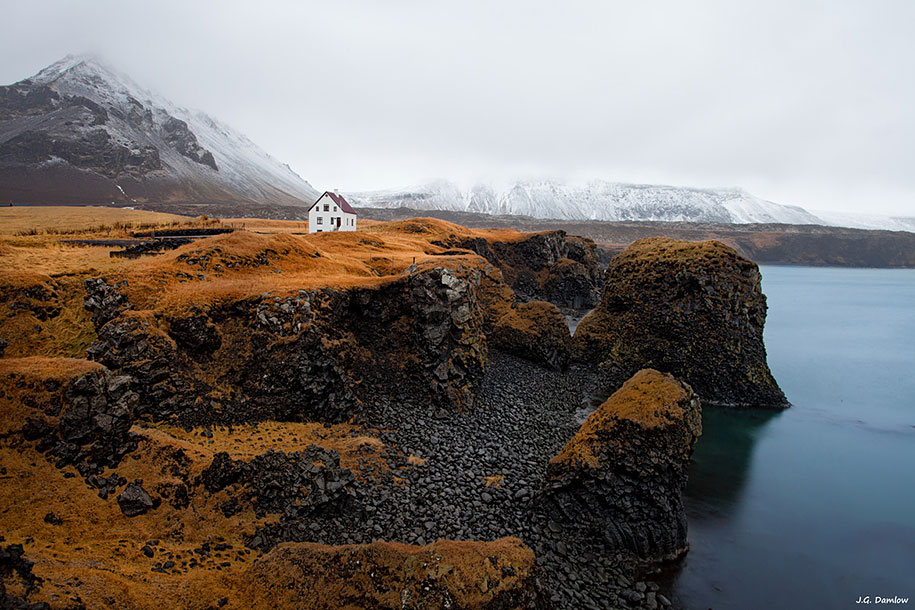
nordic-landscape-nature-photography-iceland-17

We have been much more aware of the trees around us since our wonderful vacation in Iceland, a country of  seemingly unlimited natural beauty and very few trees. Apparently the Vikings were impressed by the trees when they first arrived more than a thousand years ago, but they probably weren't that abundant or diverse -- birch and willow. A million sheep make sure that saplings don't stand a chance, and while there has been some planting for windbreaks and in yards, it is a largely treeless landscape. The colour, the shade, the sound of rustling leaves are all marvelous gifts of the Creator, not to be taken for granted.

Are trees among your circle of friends? Have you planted trees through the years? Where do trees rank amongst the wonders of Creation?


Friday, September 23, 2016

An Anniversary of Violence & a Call to Care

Women stand in solidarity in front of the courthouse in Pembroke, Ont., on Sept. 23, 2015, the day after the murders of three Renfrew County women.

Yesterday marked the first anniversary of a tragic day in Ontario. A man who was known for violence in his domestic relationships systematically killed three women in rural Renfrew County. We are supposed to say that he allegedly murdered these women, and so I will. But he knew them all and if he's convicted, it will stand as the worst case of multiple-partner violence in Canadian history. Of course he blames them and police harassment for the outcome. Abusers rarely want to take responsibility for their violent behaviour.

It's important to note this anniversary for several reasons. It was such a terrible sequence of events and yet it really didn't get much media coverage at the time, as though this is just a grim reality of our society.

It also pointed out the difficulty of providing services and protection for women in rural and isolated settings. When my wife, Ruth, worked as an outreach counsellor for a women's shelter she was instructed to hold events in rural communities to raise awareness of the services of the shelter and the outreach office. Posters went up everywhere and the events were advertised in church bulletins. Essentially, no one came. In one store the proprietor figured women would be reluctant to even look at the poster lest someone think they had problems at home. There is no anonymity in small communities.

The anniversary reminded me once again that churches usually do next to nothing to identify the realities of domestic abuse. When Ruth worked for the outreach program we developed a relationship with the shelter and the congregation became aware of her work. Over a decade nine or ten women from the congregation approached her about concerns for daughters and granddaughters in abusive relationships, or concerns in their own relationships. Church households are not immune from domestic abuse in its various forms.

Perhaps we can all say a prayer for those living in situations of isolation and fear and desperation. And we can resolve to say more and do more as communities of faith.

Thoughts?

Wednesday, September 21, 2016

Talking about Alzheimer's

Image result for can't we talk about something more pleasant

In a few minutes I will head to Mississauga to preside at the funeral of a fine member of the Bridge St. congregation. Life has been hectic since my return to work, hence my blogging silence.

Today is World Alzheimer's Day, which is an invitation to consider the implications of a disease which affects tens of millions of people, not to mention those who provide care in families and institutions. There are somewhere between 25 and 30 people in our aging congregation with dementia in some form, and we are constantly considering how to provide support for these individuals and households. A wonderfully supportive wife has managed to keep her husband at home, despite his deepening dementia. She was recently diagnosed with cancer and now wonders what to do for his care. I am impressed by her strength in the midst of such difficult circumstances.

I plan to do a study series on the subject this year, in the hope that it will provide the opportunity for discussion about dementia. The graphic book pictured above is an award winner, both humorous and poignant. It is one of the resources we will use.

Well, off I go. Comments?

Friday, September 16, 2016

Still Places


Do you remember those KIA Sportage "welcome to the swamp" commercials where they ran around in the bayou hootin" and hollerin'? No? Well, we rented a Sportage in Iceland and it was the ideal vehicle for getting off the road heavily travelled. We did have some moments when we felt we were chasing our tails, but the built-in navigation system saved us a lot of "ei-ees!"

Iceland is spectacular and exceeded our high hopes for natural beauty. The challenge is that the world is beating a path to Iceland's door. There are 330,000 citizens, making it one of the least populated nations, but this year there will be between 1.3 million and 1.5 million visitors. At some sites there is a crush of humanity and Icelanders admit that it is difficult for them, even though tourism is now an essential one third of the economy.

We are early risers and were usually on the road by 8:00, which meant we visited certain popular places before the crowds showed up. At others we discovered that lots of people want to hop out, take their "nature porn" selfies and then boot on down the highway. We would walk to the far end of the beach or promontory to get away from the press of people.

We also ventured on to some rather desolate roads, making our way carefully around potholes and sheep to find truly remote spots. On the recommendation of a local along the southeast coast we travelled inland eight kilometres on a crazy little road to a glacial tongue with it's milky white lake and river at the base. We walked for an hour or so, seeing a couple of other people, and enjoying the silence. The photo below is not ours, but this could be the same place.

Image result for glacier photos iceland

This was one of my most moving experiences (there were so many) and I was aware of the presence of the Creator in that place. In some respects this was the "ugly duckling" of our glacier experiences, although how can any glacier sighting be anything but spectacular? There was something profound and numinous about the "sound of sheer silence," to quote from the story of the prophet Elijah in the wilderness. I felt the emotion rise within me, and it was a combination of gratitude and wonder.

The lonliness and uncertainty of some of those roads and the relatively remote destinations were highlights of our trip.

Does this make sense to you? Do you experience God in the still places? Are there many of those places left?

Thursday, September 15, 2016

Created and Creating...

Image result for Iceland geothermal vents

We are not alone,
    we live in God’s world.

 We believe in God:
    
who has created and is creating,
    who has come in Jesus,
       the Word made flesh,
       to reconcile and make new,
    who works in us and others
       by the Spirit.

We trust in God...

New Creed of the United Church 1968

Yesterday morning we were walking the streets of lovely downtown Reykjavik, Iceland, then drove to the airport through lava fields which look like a lunar landscape. This morning I am at Bridge St. UC preparing for worship and musing about our spectacular vacation.

We loved Iceland with its geothermal hotspots and stories of volcanic eruptions in the not-too-distant past. We visited the geyser pictured above. We were grateful that news reports about the imminent eruption of Katla, one of  those volcanos were exaggerated, especially since two of our guesthouses gave us views of the mountain! Everywhere there is evidence that this island nation is young, at least from a geological outlook, and constantly changing.


At one point I commented to Ruth that it is sad that some conservative Christians hold to the notion of a six-day, finite Creation as a central tenet of faith. All around us was the evidence that creation is still unfolding, and it is wondrous. I had the same sense of awe and connection to the Creator when I was in Yellowstone park in the US several summers ago.

Image result for Iceland lava fieldsWe are in Creation Time in the liturgical calendar and I felt that we were immersed in the marvellous work of the God "who has created and is creating." Why would any of us want to limit the divine imagination and creativity to a matter of days?

Comments?

Friday, September 09, 2016

Georgetown's Shameful Past

You may have heard that one of America's prestigious universities, Georgetown, is attempting to make amends for a terrible wrong of the 19th century. Georgetown is in Washington D.C. and is one of the country's oldest institutions of higher learning. Before emancipation Georgetown had slaves to do much of the menial work. In the 1830s 275 of these slaves were sold to Southern plantations, which were notoriously crueler and harsher places of work. Families were dispersed to various plantations and the labour all but guaranteed shorter life spans. To make this even more disturbing, Georgetown was a Jesuit university, so the ownership and sale of these slaves was sanctioned by the Roman Catholic Church. The school was on the brink of bankruptcy  at that time and the sale was an ungodly godsend, roughly 3.3 million in today's dollars.

Thanks to pressure from students Georgetown will apologize for this sinful behaviour and offer breaks on tuition to the descendants of the slaves. Many are contending that this isn't nearly enough by way of reparations.

This blot of the institution's reputation brings to mind our ongoing efforts in Canada to make right the egregious wrongs of with First Nations peoples. Here it has been a combination of apologies, including by the churches involved in Residential Schools, reparations, commissions, and promises to change our culture. We're still not sure where we are going and what the outcome will be.

Were you aware of the Georgetown situation? Are you shocked to discover that a religious order owned slaves? What needs to happen, and when is enough enough?


Wednesday, September 07, 2016

Illuminating


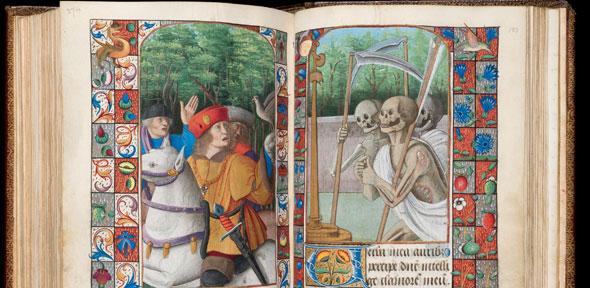
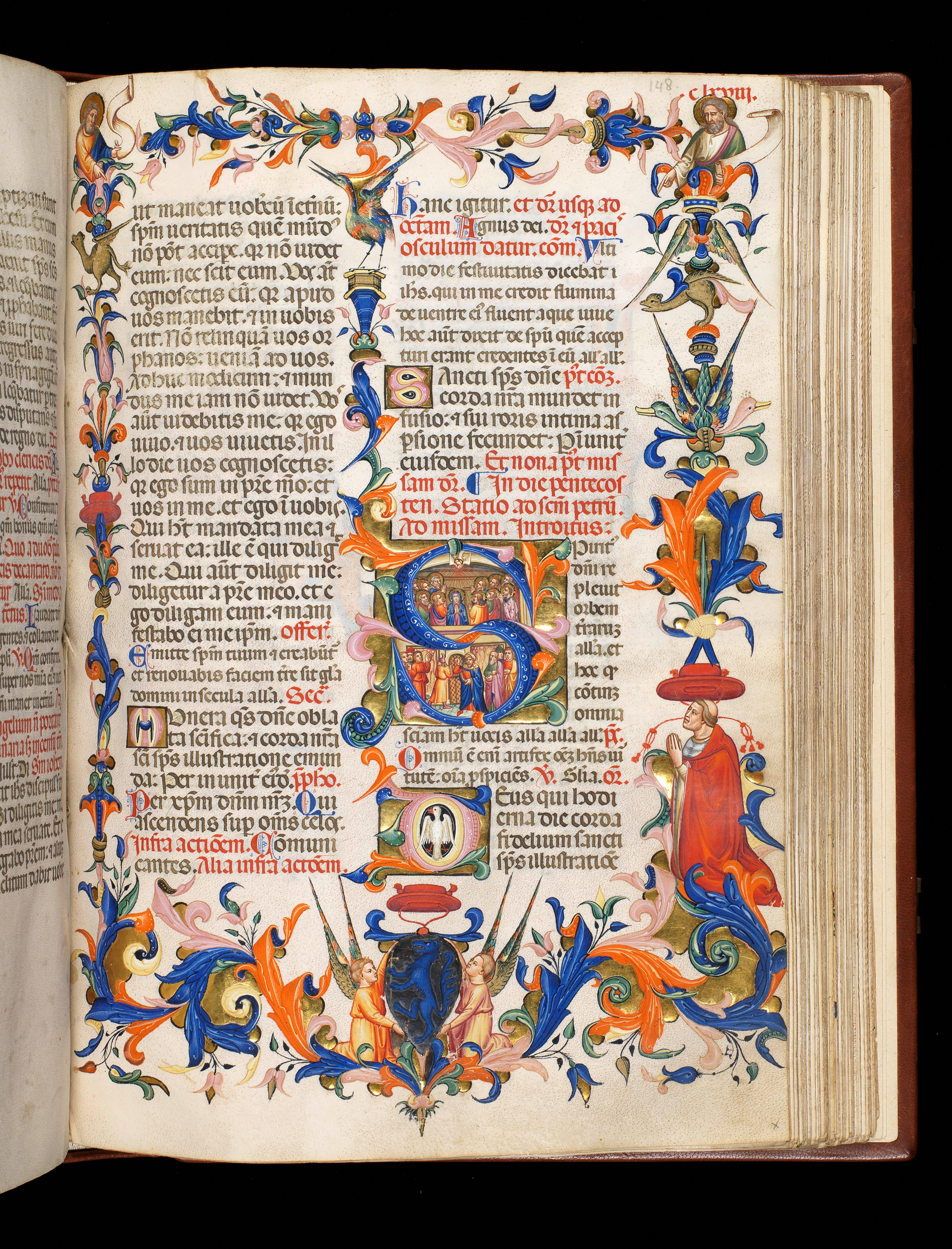
I have been fascinated by illuminated manuscripts, illustrated and coloured prayer books with combinations of scripture and science since I was a university student. They were owned by the wealthy during medieval and renaissance times. Some of their owners were not literate, but they were symbols of both piety and keeping score for centuries. At times it was the women in aristocratic families who could read and used these books for devotional purposes in the chapels of their estates.  It is remarkable that so many have survived the vagaries of time, and now there is an exhibit of 150 of these manuscripts in a museum in Britain I had never heard of until last week. The Fitzwilliam is now part of Cambridge University.


The majority of the exhibits are from the Museum’s own rich collections, and those from the founding bequest of Viscount Fitzwilliam in 1816 can never leave the building and can only be seen at the Museum. For the first time, the secrets of master illuminators and the sketches hidden beneath the paintings will be revealed in a major exhibition presenting new art historical and scientific research.

Spanning the 8th to the 17th centuries, the 150 manuscripts and fragments in COLOUR: The Art and Science of Illuminated Manuscripts guide us on a journey through time, stopping at leading artistic centres of medieval and Renaissance Europe. Exhibits highlight the incredible diversity of the Fitzwilliam’s collection: including local treasures, such as the Macclesfield Psalter made in East Anglia c.1330-1340, a leaf with a self-portrait made by the Oxford illuminator William de Brailes c.1230-1250, and a medieval encyclopaedia made in Paris c.1414 for the Duke of Savoy.


I know, it sounds hoighty-toighty, but what a glimpse into the past.


Tuesday, September 06, 2016

An Ill Wind Blowing Some Good?

Image result for taking a breath


The Hebrew word ruach rolls spirit and wind and breath, all into one. We humans inhale and exhale between 17,000 and 23,000 times per day, although must of don't give our breathing a thought. Of course is a person has COPD or some other respiratory problem breathing becomes an issue, and sometimes a scary one.

I commented to someone recently that despite the disturbingly hot summer we haven't had the smog warnings and air advisories of a few years ago. I wondered if the closure of the coal-fired generating plants was the reason. I'm still mad at the Ontario Liberals for squandering billions on some of those energy decisions for political gain, but in the end we all benefit.

Just to remind you, coal-fired generating stations were entirely phased out in Ontario by 2014. We're told that other air quality initiatives are providing relief as well, including Drive Clean, emissions trading regulations, local air quality regulation for industries, and emissions controls at Ontario smelters. Over the past decade, there has been a 31 per cent decrease in fine particulate matter and a 42 per cent decrease in nitrogen dioxide. In other words, far less smog.  In 2005 there were more than 50 smog advisories, while in most of Southern Ontario there have been none this year  

Hey, there is an expression that "it is an ill wind that blows no good."  Those of us who have lobbied various levels of government to reduce emissions for the sake of the planet can grow disheartened. Plenty of church people were amongst the activists in Durham dismayed when the garbage incinerator was approved a few years ago. While that incinerator just added to the challenge of keeping our air breathable, we can be grateful, that there have been changes for the good.          


Monday, September 05, 2016

Daily Bread and Food Insecurity

Image result for food insecurity in canada

A report released last week offered what is to me a stunning glimpse of the challenges of being healthily fed in one of the most affluent nations on the planet. Read this from the Vancouver Sun:

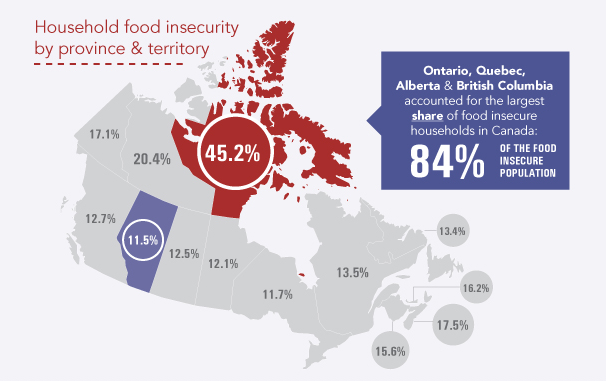
The bank account is empty. There are two days left until payday. There are hungry children to feed and only crackers, peanut butter and a can of soup in the cupboard. In 2011-12, this was the reality for roughly one in 10 B.C. households, or about half a million people, according to a report from the University of Toronto and B.C.’s Provincial Health Services Authority released Wednesday. Many of those people live in rural regions of the province where there are no food banks. Most have jobs. And because food and housing prices have increased significantly since 2012 while incomes have stayed relatively constant, experts say there’s little reason to believe the situation is any better today.Food insecurity, in its mildest form, means not being able to afford healthy, nutritious food at certain times of the month. At its most severe, it means skipping meals or just going without. 

Image result for food insecurity in canada

We don't have to travel to British Columbia to witness the realities of food insecurity. Our Bridge St. congregation has three meal ministries to serve in the heart of Belleville, a community with high unemployment and one of the highest rates of child poverty in the province. Inn from the Cold serves hot meals on 42 consecutive days from mid-January to the end of February. Thank God Its Friday hands out frozen meals every Friday afternoon through the year. In 2015 these two ministries distributed more than 8,000 nutritious and gratefully received meals, in total.

An initiative in 2016 is End-of-the-Month Meals, a response to our realization that meal programs in Belleville are mainly in the winter months. Now we are serving hot meals on the last Tuesday and Thursday of the other months when assistance cheques have evaporated. We have been surprised that even through July and August there have been at least 100 guests at each of these meals, and the demand for TGIF is going up, steadily. The EofM meals will likely be 2,000 or more this year, bringing our total over 10,000.

I am so impressed by the commitment of more than 150 volunteers from our congregation and the community at large. We have been the recipients of tremendous generosity, both financially and through food gifts. While we are grateful that we can respond to the need, and the sit-down meals are an important opportunity for community, this is a grim reminder that food insecurity exist for many around us.

No one should be hungry in Canada. No child should fall behind in school because of inadequate nutrition. No person should lose dignity seeking the basics of their daily bread. These are basic human principles, as well as tenets of our Christian faith.

Thoughts?
Sunday, September 04, 2016

We Ain't No Saints

Image result

Today Mother Teresa will be canonized, or made an official saint of the Roman Catholic church. Most of us are aware of the story of a young Albanian nun who improbably made her way to the impoverished streets of Kolkata, India, where she began working with the cast-offs of society. Eventually she founded an order called the Sisters of Charity. These nuns, now 4,500 in more than 100 countries,  make a vow to provide "whole-hearted free service to the poorest of the poor". Mother Teresa was awarded the Nobel Peace Prize in 1979 and later beatified. Today she is a full-fledged saint.


Except that there are some who question this canonization. While the West has been captivated by her legend, at least one Indian is challenging the mythology. There is a recent New York Times article  about the efforts of 58-year-old  Dr. Aroup Chatterjee, who grew up in Kolkata and wants to set the record straight about the city and Mother Teresa's work.


Over hundreds of hours of research, much of it cataloged in a book he published in 2003, Dr. Chatterjee said he found a “cult of suffering” in homes run by Mother Teresa’s organization, the Missionaries of Charity, with children tied to beds and little to comfort dying patients but aspirin.
He and others said that Mother Teresa took her adherence to frugality and simplicity in her work to extremes, allowing practices like the reuse of hypodermic needles and tolerating primitive facilities that required patients to defecate in front of one another.

Over the next year, Dr. Chatterjee traveled the world meeting with volunteers, nuns and writers who were familiar with the Missionaries of Charity. In over a hundred interviews, Dr. Chatterjee heard volunteers describe how workers with limited medical training administered 10- to 20-year-old medicines to patients, and blankets stained with feces were washed in the same sink used to clean dishes.

Image result for dr aroup chatterjee


This is an unsettling picture of Teresa and does undermine the saintly image. There are other less than complimentary articles about her as well, and of course the late champion of atheism, Christopher Hitchens. despised her.

Perhaps we need to accept that the days of unimpeachable saintliness have come and gone. The present-day challenges to sainthood often focus on the existence of miracles. But the reality is that we are all flawed, and sometimes weird, and intense public scrutiny reveals our often gigantic warts. I feel that Mother Teresa was a person of great compassion and her legacy is the order she founded which responds to those living with HIV/AIDs, and others who are treated as social outcasts in some cultures.

In worship today I'll encourage folk to consider their everyday saints, those who have shaped their lives for the better. And we can be grateful for Mother Teresa, warts and all.

Comments?