Thursday, December 16, 2021

Anne Rice, Vampires, and Jesus


 News this week that author Anne Rice died at the age of 80. I'm now inclined to consider 80 as "taken too soon" and it does seem early for someone who was wildly popular for writing about vampires which, fictionally speaking, can live for hundreds and even thousands of years. 

Rice became famous and wealthy writing the vampire novels but she also took a turn at writing about Jesus. She abandoned Christianity fairly early in life and returned to her faith in her later fifties, never having given up on Jesus. Her first Jesus novel was Christ the Lord: Out of Egypt which begins when Jesus was seven or eight. It was quite good in my estimation and got favourable reviews. I thought her take on Jesus' 40 days of temptation in the wilderness was imaginative and thought-provoking. 

Sadly, a decade or so ago she announced her divorce from Christianity once again. She was fed up with the institutional church which for her was Roman Catholicism. The interesting thing was that lots of Christians agreed with the aspects which caused her to quit the church again. J,S.Park, a chaplain tweeted a couple of Anne Rice quotes which are painfully honest:


I find this rather sad and I get it. I've been a Christian my entire life and between preparing for ministry and serving congregations spent well over 40 years involved in the institution. I still provide leadership as a retiree. I have to be honest in saying that at times I wanted to walk away from the "churchianity" which was too often petty and inane. I wanted to serve Jesus, the Christ, within a community of committed followers and that seemed beyond the ken of some people who treated the church as a club and a mean-spirited one at that. 

I can't give up though, even now, because as Anne Rice says "my faith is central to my life." Thanks Anne, for giving it your best shot, and I hope you've been welcomed home. 


We All Taste Like Chicken


Over the decades I have remained stubbornly orthodox in my Christian outlook, a Trinitarian through and through. At this time of year I delight in the Incarnation, God-with-us, in the fragility of a newborn child. As wildly improbable as our story is, it is mysteriously marvelous, and it's Good News worth sharing. 

Through the years I've also become more appreciative and respectful of other religions and want to honour reverence for the Creator wherever and in whomever it is manifest. There are many other people of faith and those who claim no affiliation whose compassion and generosity far exceed that of some supposed Christians who are mean-spirited and exclusionary. I want to offer a "I'm not with him/her/they" disclaimer about those self-appointed bodyguards for Jesus. Where in the gospels does Jesus kick others to the curb, even on the cross? I've enjoyed learning more about other faiths as I've led study groups using thoughtful guides developed by the United Church. 

So, the photo above tickled my warped sense of humour. I hope it's to your taste as well, so to speak. 


Wednesday, December 15, 2021

Advent Booster & Groundhogday-itis


This is no time for a child to be born,

With the earth betrayed by war & hate
And a comet slashing the sky to warn
That time runs out & the sun burns late.

That was no time for a child to be born,
In a land in the crushing grip of Rome;
Honor & truth were trampled to scorn—
Yet here did the Savior make His home.

When is the time for love to be born?
The inn is full on the planet earth,
And by a comet the sky is torn—
Yet Love still takes the risk of birth.

             The Risk of Birth -- Madeleine L'Engle

 I have felt mildly "under the weather" recently, both in body and spirit. It could be a variant of SAD (no, not Omicron) but I've decided it is actually a case of persistent Groundhogday-itis. In these days of wan light and dusk which seems to arrive just after dawn we're dealing with more of the same when it comes to the pandemic. 

COVID numbers are on the rise, even in regions which have previouslyfared well. There is a highly contagious variant which is giving us the heebie-jeebies. Lots of us are eligible for a booster -- hurray! Yet its just as hard to book an appointment for one as it was for our first shot nine months ago. We're being cautioned to limit the  Christmas gatherings in our homes and congregations are wondering what to do as well. 

Some days I look at the response of governments in our affluent, supposedly technologically advanced society and ask what they have learned during the past two years. As with the film Groundhog Day, we keep repeating the patterns which have made us all so weary.  It's all scramble and snakes and ladders. 

I will take yet another deep breath and remind myself that this season of Advent leads us  toward the light of Christ in the midst of gloom and darkness. And that the improbability of the Incarnation, God-with-us, is not all warm and fuzzy. Ya, I'm grumpy about being kicked off the vaccination website after a long wait, but waiting is part of the season we're told.

Because I can't be an Advent anti-vaxxer I'll reread Madeleine L'Engle's The Risk of Birth and see if I can book a booster jab of Hope, Peace, Joy, and Love. I know they're out there, if I'm patient. Oh yes, the Winter Solstice, then lengthening days, are only a week away. 

Tuesday, December 14, 2021

Injustice in a Quebec Classroom


                                                               Quebec teacher Fatemah Anvari

Tis the season for the Annunciation, the story told in Luke's gospel of the angel Gabriel and his appearance to the young Mary with startling news that she will give birth to Jesus. This intimate scene was a favourite of Medieval and Renaissance painters. As often as not Mary is portrayed as an elegant woman in regal blue, and as often as not she has a head covering.

There is a disturbing irony that Mary, a focus of this time of year, wouldn't be eligible for employment in the province of Quebec. I can't imagine that the BVM (Blessed Virgin Mary) would want a job as a civil servant in Quebec but she wouldn't pass the criteria of Bill 21 which prohibits wearing any sort of religious headdress. 

                                                      Student drawing supporting Fatemah Anvari

You may have seen that last week a teacher named Fatemah Anvari was taken out of the classroom in Chelsea, Quebec, because she wears a hijab related to her Muslim faith. It doesn't matter that she was hired because of her proficiency as a substitute teacher or that she is loved by her students. If she was wearing a head scarf as a fashion statement it would be allowed but she can't display modesty based on her faith. 

Anvari says the hijab is part of her identity: 

Yes, I am Muslim, but for me, [the hijab] holds other meanings of just my identity and how I've chosen to represent myself as a strong person in a world that may not want me to be myself.But it's still a religious symbol at the end of the day, so that's why it has a conflict with the law. 

During last Fall's federal election campaign party leaders tripped over their own tongues claiming that Quebec was not racist and neither Trudeau nor O'Toole have shown any gumption with this situation. It's good to see that parents and students are stepping forward with the green ribbon campaign to support Anvari in the midst of this injustice regarding freedom of religious expression. 


                                                                    Annunciation -- Botticelli


Monday, December 13, 2021

An Angelic Church Lady & Hospitality


                                         Migrant Workers harvesting the food we eat in Ontario

As the last of the seasonal workers leave Ontario after months of labouring in fields and orchards CBC Radio's  Mary Wiens did an excellent series on these essential but often forgotten employees, as well as those who reach out to them. One segment was about two retired men who repair and refurbish bicycles for these workers, providing transportation at minimal cost. There is a hub out of a church which distributes clothing and boots. 

There was a piece about a woman one worker described affectionately as The Church Lady. Nearly twenty years ago he was cleaning up leaves at a home as a family barbecue was underway next door. This woman invited him over to share the meal which began a lasting relationship. Through her congregation many more workers have been welcomed and assisted over the years. They have also been invited to worship with congregations and contributed musically with gospel reggae. 

 The seasonal workers are often away from their families for the better part of eight months and some of them have been doing this for decades. The past two years workers have come to Canada despite the risk of COVID and some have become very ill while several died. They come because this is their livelihood but also because they know that their employers need their labour. Of course, we need them as well for the provision of produce we take for granted in grocery stores.

One of them spoke highly of his employer, but also of the need for the Canadian and provincial governments to give them more than precarious status. There are too many examples of exploitation of workers and in a pandemic they've needed safe housing and healthcare. Even though they are treated as temporary workers what they do is essential to our economy and they should be allowed to apply for permanent residence. 

I should note that in 2020 the Five Oaks Education and Retreat Centre, affilated with the United Church made its space available for temporary foreign workers who were required to quarantine before they were allowed to work, a huge hardship. 

The man who was welcomed by The Church Lady also described her as "an angel of God" and Mother. This is the season for angels, is it not? God bless the various angels who have demonstrated hospitality in a variety of ways. 


Saturday, December 11, 2021

The Powers of the Heavens Will be Shaken


                                                              Kentucky Tornado aftermath

25 "There will be signs in the sun, the moon, and the stars, and on the earth distress among nations confused by the roaring of the sea and the waves. 26 People will faint from fear and foreboding of what is coming upon the world, for the powers of the heavens will be shaken...


34-35  ..."Be on guard so that your hearts are not weighed down with dissipation and drunkenness and the worries of this life, and that day catch you unexpectedly, like a trap. For it will come upon all who live on the face of the whole earth.

36 Be alert at all times, praying that you may have the strength to escape all these things that will take place, and to stand before the Son of Man."

                                                 Luke 21 NRSV

When I presided at worship on the first Sunday of Advent this was the gospel passage, seemingly a strange choice for the Sunday of Hope. I used Eugene Peterson's The Message instead of the NRSV because of his gut-punch paraphrase:  “It will seem like all hell has broken loose—sun, moon, stars, earth, sea, in an uproar and everyone all over the world in a panic, the wind knocked out of them by the threat of doom, the powers-that-be quaking.

I thought of this passage when I listened to the news early this morning with the report of a chain of tornadoes across six states in the American South which had done tremendous damage and taken many lives -- 70 and counting. 

The governor of Kentucky said that this was an unprecedented weather event with one tornado on the ground for more than 300 kilometres. The ferocity of this twister and the death toll were record-breaking for the state. And tornado season in the US is usually from March to July. 

I'm often moved by the faith of those who survive such traumatic events and their determination to carry on. I'm also aware that in many conservative Christian faith communities of the South there is denial of climate change to a degree which is totally baffling. These are people who see the effects of extreme weather and what is likely the permanent alteration of climate. It is literally destroying the world around them yet there is a blind belief that Jesus will not allow environmental collapse to happen. 

In the passage from Luke Jesus tells his followers to be alert and to pray in the face of catastrophic events. I'm all for prayer if it is to be deeply aware of what is transpiring around us and to act. If we're bible-believing Christians shouldn't be paying attention to scripture? 

We are not immune to denial in Canada, and we see governments which are dabbling in change and even declaring climate emergencies yet doing little. I want to be hopeful but it can be a challenge. 

Creator God, be with the people who have lost so much in the wake of theses tornadoes. Allow us all to emerge from the whirlwind to do what is necessary for this generation and generations to come. 


Friday, December 10, 2021

The Other Last Supper


                                                           The Last Supper -- Sister Plautilla Nelli c 1550

Is there any more recognizable painting in the world than Leonardo Da Vinci's Last Supper? Even though it's likely that Jesus and his disciples reclined around a three-sided table for their final meal together this masterpiece has shaped how people perceive this solemn gathering for centuries.

In 1980 I saw Leonardo's Supper which was painted on the end wall of a dining hall or refectory in a convent. It is monumental in size and truly remarkable in execution.

The other evening I watched the first segment of a series called The Story of Women and Art on TVO. https://www.youtube.com/watch?v=FXCiVytbyRU  It explores the legacy of women artists despite living in societies in which they were usually relegated to the background. 

One of the works was another Last Supper, painted perhaps 50 years after the completion of the Leonardo fresco, sometime in the middle of the 16th century,  and again in the refectory of a convent. This one is by Plautilla Nelli, a nun of that monastic community, and it too is an eye-opener. While not as large as Da Vinci's Supper it is huge in scope, two metres tall and seven metres long, huge. After at least 450 years hidden away from public view it has been restored and revealed to the world.


Born in 1524, Nelli became a nun and eventually established an all-woman painter workshop at her convent. The nuns sold works to the nobility of the city of Florence, and as result developed economic self-sufficiency. The signature on her painting reads: "Sister Plautilla -- Pray for the Pantress." 

Once again we are reminded that the creativity of women has emerged over the ages despite efforts to quench their spirits. This work of Christian devotion should be known and celebrated. 


                                                                 Detail from Nelli Last Supper


Thursday, December 09, 2021

Pondering the Value of Land Acknowledgments


This meme has been circulating social media and demonstrates some of the criticisms about land acknowledgments. (Black and Indigenous Alliance/Facebook, @gudim_public/Instagram)

Respectfully, we begin by acknowledging that we are in the ancestral and unceded Traditional Territory of the Algonquin People. We recognize the Algonquins as the stewards of these lands and resources – in the past, in the present and in the future.

I can recall the first time I heard a Land Acknowledgement, a recognition of the traditional territory of the Indigenous people who called the land home before the arrival of settlers, and in many cases call it home and feel that it is their rightful property. This took place at a meeting of what was then the Bay of Quinte Conference of the United Church, perhaps a dozen years ago or more, and I'll admit that I was a bit perplexed and bemused. Was this the latest earnest effort on the part of our denomination? 

Over the years these acknowlegements have become quite common in just about every setting, including Zoom meetings where curiously we're disembodied participants from hither and yon. There is an irony that today starting public meetings with even the most innocuous of prayers (once a common practice) would be regarded with dismay yet not having an acknowledgement would be truly bad form. 

I have come to realize that these acknowledgement are important, and I'm grateful that once again the United Church was out in front in doing so. You may recall that I wrote about searching out the correct one to use before leading a worship service in Algonquin Park a couple of years ago as part of our United Church summer ministry. I contacted those who were finalizing negotiations for a land claim with the provincial government to make sure I got the correct wording (above.) 

There is growing concern and even cynicism amongst Indigenous peoples that these acknowledgements are a form of woke colonizer prayer of absolution which doesn't result in reconciliatory action. Why bother talking the earnest talk if we won't walk the walk of reconciliation and reciprocity? 

You may have heard back in October that the New Brunswick government forbade government employees from making territorial or title acknowledgements in reference to Indigenous lands. That term "unceded" is one which governments don't like because it has implications for contentious land claims. In British Columbia some of the protests against logging and pipelines are by Indigenous peoples who repeatedly point out that they continue to own the land with the treaties to prove it. The trespassers are the extraction companies and the police who arrive to evict those who have claims to the land. 

Let's continue to say the words of acknowledgement, as long as we're willing to change our minds, our hearts, and our systems.

Here is a link to a CBC piece on the subject: 

https://www.cbc.ca/news/indigenous/land-acknowledgments-what-s-wrong-with-them-1.6217931


Wednesday, December 08, 2021

My Love/Hate Relationship With Pipe Organs


                                                           Bridge St. United Church, Belleville 

The other day I saw the New York Times headline 5 Minutes That Will Make You Love the Organ and I couldn't resist taking a look. The title might have been more accurate by using the term "pipe organ" because that's what it's about. The article reminds us the pipe organ is the largest and potentially loudest musical instrument and they can be astoundingly complex. 

I ventured into the piece knowing that I have a love/hate relationship with pipe organs. I have been fascinated by the music and the instruments themselves since my late teens. While moseying about Paris at age 19 I attended an organ recital at Notre Dame Cathedral with thousands of people in the audience. This instrument survived the massive fire of 2019, some would say miraculously. 

I served four congregations through the years which had organs built by the world-famous Casavant Freres company which has been building the instruments since the 1870's. The organ at Bridge St. Church here in Belleville has more than 4,000 pipes and the congregation has another much smaller tracker organ in the chapel. There is a rank of trumpet pipes for the larger one which are aspirated by a separate wind chest so they are truly horns. 

I love the "surround sound" of a pipe organ and I have many happy memories of Easter hymns sung to the swelling music along with tympani and brass -- some larger congregations had substantial music budgets, often a source of contention at congregational meetings.

 Here's the reality, though. Pipe organs are finicky living, breathing entities which require lots of medical attention, sometimes in the ICU.


                                                            St. Andrew's UC Sudbury

At St. Andrew's UC in Sudbury we actually purchased a pipe organ (used, from the States) and I realize now that we might have been one of the last congregations in our denomination to do so. The organ at Bridge St. underwent a major refurbishment which cost most than $300,000, most of which completed before I arrived. The organ at St. A's Halifax was a money pit as well. I have questioned the morality of spending so much money in a world of need and I quickly wearied of the squabbles over the cost of maintaining them.  

And who can actually play a pipe organ with skill anymore? In different congregations we were blessed to have some brilliant organists, although they could be as tempermental as the instruments. In a couple of those churches when these exceptional musicians departed it was next to impossible to find skilled replacements. The ability to address multiple keyboards, stops, and pedals, along with musical sensitivity for leading choral and congregational singing is a rare combination of skills which is fast disappearing. 

I have seen the term "orphan organs", referring to musical instruments which are dismantled and stored when churches are closed and sometimes demolished. 

Attend an organ recital today and there certainly aren't many teens, or those in their 20's, 30's, 40's, 50's...This doesn't mean the end of organ music, but the musical sensibilities have certainly changed. Is this good, or bad? I suppose it just is. 


                                                                 St. Andrew's United Church Halifax

Tuesday, December 07, 2021

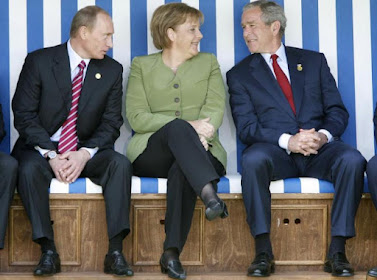
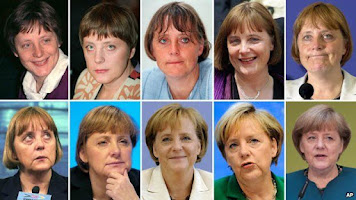
Farewell, & Thank God for Angela Merkel


Credit...Clemens Bilan/EPA

Back in September the Chancellor of Germany, Angela Merkel, stepped down after 16 years at the helm of a country which has been a beacon of democracy during her time in leadership. It was often pointed out that during the dark years of President Voldemort Merkel was the leader of the free world, showing common sense and steadiness while Trump woofed and preened. It is remarkable that in what can be drearily the man's world of politics she chose not to be an "Iron Lady" in the fashion of Margaret Thatcher but managed to be firm and wise and courageous. 

In turned out that there was no rest for the virtuous after the election. As Germany sought to form a coalition government Merkel stayed on and finally, this week, she moves into retirement. 

I have written before about Merkel's Christian faith which began as the child of a pastor in East Germany before the wall came down. She has been open about the importance of her faith both at a personal level and in informing decision-making.

In 2015 she and her Christian Democrat party made the controversial decision to allow a million refugees into Germany. This was met with resistance at the time and the rise of right-wing, anti-immigration parties. It's been pointed out, though, that Germany's economy has remained strong, in part because these immigrants have meant that the country has not experienced the labour shortages of other Western nations. Compassion can make economic sense. 


Along the way Merkel was dubbed the "Climate Chancellor" for her efforts at international climate events to curb global carbon emissions, although she came up against stone walls put up by other world leaders. 

At her farewell event Merkelm who has a doctorate in quantum chemistry, offered that “The last two years of this pandemic have shown how important the trust in politics, science and societal discourse is — but also how fragile it can be... Democracy depends on solidarity and trust, including the trust in facts.”

A military band played three pieces at her farewell, including a punk rock song by Nina Hagen which was a hit during her teen years. The finale was an 18th-century Christian hymn Holy God, We Praise Thy Name: 

Holy God, we praise thy name. God of all we bow down before thee. 

All on earth your sceptre claim; all in heav'n above adore thee.

Infinite they vast domain, everlasting is thy reign. 

The hymn lyrics seems a tad archaic, but she's a Lutheran, so we have to give her some leeway! Thank God for Angela Merkel. We need a lot more leaders like her in these perilous times. 


                                                     Angela Merkel was born in 1954, a very good year. 


Monday, December 06, 2021

Anti-Misogyny Day


Yesterday at church the focus of the second Sunday of Advent was the campaign to end domestic violence called
Orange the World. The gospel passage was the encounter between Elizabeth and the angel, the divine silencing of Zechariah, then the meeting between Elizabeth and her relative Mary. There was an excellent skit involving several women and girls which cleverly told this story and Rev. Isaac interwove the theme through the service. 

Today is the The National Day of Remembrance and Action on Violence Against Women which came about because of the massacre of fourteen unsuspecting young women at Polytechnique Montréal on this date, December 6, 1989. The perpetrator was a misogynistic coward who blamed women for his own failures, a grim reality so often with domestic violence. While that event was staggering in its scope we're told that 58 women have died by femicide in Ontario during the past twelve months -- more than four times the number who died in Montreal that terrible day 32 years ago. Numbers were up across the country and some experts suggest that the confinement of the pandemic may be a contributing factor. 

In December of 1989 I was a minister in Sudbury, Ontario, in my mid-thirties, a husband and father to three young children, two of whom were girls. I participated in a solemn vigil organized by one of my colleagues in ministry, a woman. 

Through the years I have been aware of the grimly matter-of-fact reporting about acts of femicide and extreme violence against women. I also think of wife Ruth's work for a women's shelter, the bullet-proof glass and security systems to secure the building where she worked, and the coordination with police to spirit women out of domestic situations where any intimation that a woman and her children were planning to leave would have been dangerous. There were times when I was concerned about Ruth's safety in her role, including when she went to court with clients who were facing their abusers. 

Perhaps we should call this Anti-Misogyny Day, knowing that what must be addressed in our society are all the systems which subjugate women and continue to empower men who perpetrate emotional as well as physical violence. While physical violence is a threat, so often abuse occurs without one partner even touching another, with control and denigration happening in other ways. 

We can pray and learn and act as people of faith, even though we may prefer "out of sight, out of mind." And we must remember that misogyny often flourishes under the guise of "God's plan." 


Sunday, December 05, 2021

Remembering Agnes MacPhail


I've seen a couple of reminders that tomorrow marks the 100th anniversary of the election of Canada's first woman Member of Parliament, Agnes MacPhail. I was aware of her name, but knew nothing about her personal story, so went on a search. 

MacPhail grew up on a farm in Grey County and eventually became a teacher. She was determined, clever, and had a quick and sometimes biting sense of humour when she was heckled by men. She was a feminist long before that term was coined and was passionate about a variety of social justice causes. 

MacPhail had a rather eclectic religious path which included several years as a Mormon before she became a Methodist. She read the bible thoroughly and was moved by the messages of the Hebrew scripture prophets. In 1925 most Methodists became members of the United Church of Canada because of church union and she was one of them. 

MacPhail served multiple terms in parliament and became an effective orator in the House of Commons. She said that she was guided by prayer as she addressed the challenging issues of her time. 

In an article from the Canadian Encyclopedia of Christian Leaders I found this: 

Agnes supported the Progressives’ anti-imperialism and their quest for Canadian autonomy, but it was her championing of the advancement of women, peace, and prison reform that really set her apart.

By working to remove laws that treated women differently from men in such matters as citizenship and divorce, Agnes strove to enhance the position of her gender. “I desire that women have equal rights,” she said. As a regular on the Canadian Chautaugua circuit in the 1920s, she once was confronted by a male heckler who yelled, “Don’t you wish you were a man?” She retorted, “Yes, don’t you?”

In 1929, her activity in the Women’s International League for Peace and Freedom along with Lucy Woodsworth led to her being appointed as Canada’s first woman delegate to the League of Nations in Geneva. 

Later in life MacPhail was asked the same question about whether she would prefer to be a man and she responded by saying that she was a woman who wanted to be treated equally with men.

Agnes MacPhail was a remarkable Canadian and Christian, peacemaker and rabble-rouser. We can all give thanks for her life and witness. 

Saturday, December 04, 2021

Will an Inuit Kayak Return Home from the Vatican?


Ten days from now a delegation from the Assembly of First Nations delegation will meet with Pope Francis in Rome seeking an apology. on Indigenous land, for the Catholic Church’s role in residential schools. Francis has said that he will visit Canada for an apology which Indigenous peoples feel is required to advance reconciliation. 

This past week, likely in anticipation of this visit, the Vatican shared photos of a collection of 200 artifacts from Arctic Canada which are roughly 100 years old. In 1924, Gabriel Joseph Élie Breynat, the French-born Roman Catholic bishop of the Mackenzie region of Arctic Canada, received a request from Pope Pius XI to send objects for a world exposition. Missionaries from the different continents were instructed to collect religious and non-religious objects made by Indigenous peoples and send them to Rome.

Amongst the Canadian objects is a sealskin kayak, fragile yet enduring, a marvellous reminder of the ingenuity of Inuit peoples. It is one of only six which are known to still exist. Almost immediately there was a call by Inuit leaders for this kayak to be returned. There has also been criticism that the exhibit, first shown to journalists, is another tone-deaf example of perpetuated colonization and cultural theft. 

I heard a moving interview this week by Matt Galloway of CBC's The Current with Indigenous historians and knowledge keepers who are working to repatriate objects which were taken, often brutally, by settlers and representatives of colonial powers, including missionaries. They view these not as artifacts from the past but as the possessions of their ancestors and their living communities. They have also negotiated the respectful return of the remains of Indigenous individuals, which when we consider it, was a particularly barbaric and ghoulish form of theft. Why were Indigenous peoples regarded as "savages" when European invaders were literally body snatchers? 

https://www.cbc.ca/radio/thecurrent/the-current-for-dec-3-2021-1.6272173/these-pieces-are-part-of-us-repatriating-belongings-and-remains-stolen-from-indigenous-peoples-1.6272889

Ruth and I feel deeply indebted to Indigenous peoples for the invention of the canoe and the kayak because we enjoy both activities. As we paddle I am often aware that the waterways we travel have a meaningful history for First Nations. 

We'll see what happens with the kayak at the Vatican, with its powerful symbolism. 


Friday, December 03, 2021

Away in a Manger & Housing for All


                                       Sudbury Homeless Encampment, Memorial Park, Summer 2021

1 Away in a manger, no crib for a bed,

the little Lord Jesus laid down his sweet head.

The stars in the bright sky looked down where he lay,

the little Lord Jesus asleep on the hay.

We lived in the city of Sudbury in Northern Ontario for eleven years, raising our family there as I served St. Andrew's United Church, a downtown congregation. During that time we began a sit-down meal ministry which became a collaborative enterprise involving other congregations and community contributors. We also had a food distribution ministry. 

One of our St. A's members who was involved in that meal ministry, Deb MacIntosh, became a city councillor after we left town and because I check in on Sudbury news from time to time I saw yesterday that she and others on council are working to establish transitional housing for those dealing with homelessness and addiction. Council voted to support the project with $600,000 despite the fact that the provincial government has ignored requests for financial support. The project for 40 units has been scaled back to 20 but the city will proceed. At a meeting earlier this year Deb said: "These are our sons and daughters who are suffering. And it's time for long-term solutions towards a healthy community for everyone"

Several things came to mind as I read about this. The issue of homelessness has obviously become more acute in Sudbury in the decades since we left because of the lack of affordable housing. This past Summer there was a tent city in the public park immediately behind St. A's, something which would have unthinkable 25 years ago. 

The Sudbury situation is a reminder that communities across the province are dealing with the reality of a growing number of precariously housed people and struggling with how to address the demand, including finding funds to pay for it. No one wants homeless encampments but who will provide shelters and more permanent housing? Here in Belleville city councillors have mixed feelings about responsibility and as with Sudbury there is a degree of NIMBYism. 

I also thought about Deb's commendable persistence with this initiative, knowing that her commitment to marginalized persons is motivated, in part, by her Christian faith. Through the years I served four congregations which had meal ministries, In some instances these ministries expanded into other forms of advocacy. In retirement we attend Trenton UC which provides meals (one today) and will be home to a community warming centre for the first time this Winter. Literally hundreds of people from different faith communities have given their time to these various initiatives. I've always been impressed and grateful for their compassion and generosity. 

We might ponder these issues as we nostalgically sing Away in a Manger on Christmas Eve. 

And hang in there, Deb, as you fight the good fight! 

Thursday, December 02, 2021

Praying for the Just Choice about Conversion Therapy


Note: Since I wrote this blog yesterday the vote on banning Conversion Therapy took place in the House of Commons. It passed with unanimous support from all parties. I'm going to receive this outcome as an answer to prayer. 

It took far too long for the federal Liberals to reconvene parliament but MP's are back in Ottawa, mostly, and the minority government has set out its immediate agenda. One of the important pieces of legislation is actually the completion of a previouis bill regarding what is known as conversion therapy. Here is a succint description by CTV of what some regard as coercive brain-washing or even torture:

 On Monday, the federal government will be tabling an enhanced version of their bill to largely ban conversion therapy practices in Canada, moving forward with a stronger version of previously-halted legislation.The version of the bill coming next week is expected to include more teeth and potentially a wider reach when it comes to cracking down on the harmful practice.

Conversion “therapy” as it’s been called, seeks to change a person's sexual orientation to heterosexual or gender identity to cisgender, and has been opposed by numerous health and human rights groups.

It's likely that this bill will bass because it is supported by the NDP and to a degree by Conservatives. The CTV piece notes: 

After 62 Conservative MPs voted against the ban last year, Conservative Leader Erin O’Toole’s platform stated that he wants to see the practice eradicated, though with amendments to clarify that “the ban does not criminalize non-coercive conversations,” a concern pushed by those opposed to the bill.

 O'Toole has announced that he will allow a free vote for the party's MP's but it is disturbing that roughly half voted against this legislation previously. The reality is that many of those Conservative Members of Parliament are also conservative Christians or are beholden to Christians who are anti-LGBTQ2+ within their constituencies. Some have used disturbing language to describe LGBTQ2+ persons, including "unclean." Even though there is plenty of evidence that these attempts at conversion are unsuccessful and psychologically damaging, often perpetrated by people with no credible training, we have elected representatives in our country who continue to support them.

I'll remind you about the film Boy Erased based on a memoir with the same title and which stars Lucas Hedges, Nicole Kidman, and Russell Crowe. It tells the story of the son of Baptist parents in the US who is forced to take part in a conversion therapy program. It is both chilling and hopeful as the family finds its way to understanding and acceptance. 

There is also a highly rated documentary called Pray Away which explores the damage done by conversion therapy and the "pray away the gay" approach. So often these are vulnerable teens who are threatened with God's displeasure as well as ostracization by their families and communities of faith. 

We can certainly pray -- that MP's find the moral courage to respect all people as children of God and pass this legislation. 


Wednesday, December 01, 2021

Pastoral Song of Creation

When you reap the harvest of your land, you shall not reap to the very edges of your field, or gather the gleanings of your harvest. You shall not strip your vineyard bare, or gather the fallen grapes of your vineyard; you shall leave them for the poor and the alien: I am the Lord your God.

    Leviticus 19: 9-10 

On Canadian Thanksgiving weekend back in early October I listened to a CBC Sunday Morning interview with James Rebanks, a British farmer and author. I had been aware of Rebanks before but I was struck by his wisdom and solidity while listening to his voice. 

The interview sent me on a search at our local library for Rebanks' recently published book, Pastoral Song: A Farmer's Journey. It is an honest, gritty lovesong for the hill country in which he was raised, a region where his family has farmed for hundreds of years. Sheep were and still are part of the farm, as are cattle, and since I was a shepherd of a different kind and intrigued by how people survive on the land I read the book and appreciated it -- he is an excellent writer.  

The book doesn't paint an idyllic picture of pastoral landscapes as it acknowledges that modern-day farming is a "rock and a hard place" enterprise. We've come to expect relatively low prices for a huge variety of foods which show up in grocery stores from around the world. Larger scale, industrial style farming has pushed out many smaller holdings yet resulted in crippling debt for many, along with degradation of soil and water, in order to compete. 

Rebanks learned a traditional way of farming as a boy alongside his grandfather, a patient and steadfast man whom he adored. His father was hardworking but often critical, overwhelmed by the endless tasks of each day,  as well as struggling to know which path to take in working the land and raising animals as agriculture changed. 

After time away from the farm to study at Oxford and engage in international work James has returned to the farm. Before his father's untimely death they became friends. They were brought together, in part, by their realization that industrial farming was a dead end, figuratively and literally. 


Rebanks writes about being awakened to the importance of balance by Rachel Carson's Silent Spring, a classic of the early 1960's. As he puts it:

I felt as though I had woken from a long coma. I had almost conditioned myself to exclude nature from the way I thought about the farm.I had begun to view my grandfather's way of farming with contempt, to pity my father's reluctance to modernize. But now I felt like a bloody foolm because my grandfather had been right to resist, and my father was right to instinctively distrust it all.

Rebanks still has to make a living on his farm and there will always be compromises to do so. Still he has begun to put in place practices which are in fact the old ways which allowed his forebears to farm in the area for so long. He is reestablishing hedgerows for birds and creatures. He is working with different environmental groups and government agencies to rewild the river which runs through his property. Even though he has to relinquish control over the land in some respects he is creating a more balanced approach to farming which may be the hope for the future, including his own children. 

Even though he doesn't consider himself to be a conventionally religious person James quotes from the Older Testament book of Leviticus (see above)  when he considers the moral and ethical code of those who came before him which was different from the "total war" on nature which is exploitation. 

Let's pray that society as a whole wakes up from its collective coma for the wellbeing of Creation. 

While I'm on the topic, check out Topsy Farms on nearby Amherst Island. They are folk who are addressing these issues with much the same sensibilities and we admire what they're up to. https://www.topsyfarms.com/